
How to process and heal from relationship betrayal
TL;DR:
Betrayal deeply affects your brain's processing of safety and can trigger PTSD-like symptoms, making recovery complex. Establishing safety, building support, and prioritizing individual trauma-informed therapy are essential steps before attempting to rebuild trust or reconcile. Healing is a gradual, non-linear process focused on regaining self-trust and understanding, regardless of partner participation.
When someone you deeply trust breaks that trust, the impact goes far beyond heartbreak. Betrayal by a partner, close friend, or family member can shatter your sense of reality and leave you questioning everything you thought you knew. Research shows that betrayal can trigger PTSD-like symptoms including anxiety, numbness, and hypervigilance, yet many people have no idea where to turn or what actually helps. This guide gives you a trauma-informed, step-by-step path forward so you can stop spinning and start healing.
Table of Contents
Key Takeaways
| Point | Details |
|---|---|
| Betrayal prompts trauma | Relationship betrayal activates trauma responses similar to physical pain and PTSD. |
| Preparation matters most | Setting up the right support network and self-care routines accelerates recovery. |
| Avoid common mistakes | Don't rush forgiveness, self-blame, or skip individual therapy—these stall healing. |
| Progress has clear signs | Look for emotional resilience and a restored sense of self as evidence of recovery. |
| Professional support helps | Trauma-informed counseling offers proven tools and personalized healing strategies. |
Understanding the trauma of relationship betrayal
Betrayal does not just hurt your feelings. It rewires how your brain processes safety, and that distinction matters enormously for healing. When someone you love and depend on causes you harm, your nervous system responds the way it would to any serious threat. The pain is real, physical, and measurable.
Research confirms that betrayal activates physical pain brain regions and produces PTSD-like symptoms. This explains why you might feel a sharp ache in your chest when a memory suddenly surfaces, or why your body goes into fight-or-flight mode during what seems like a perfectly ordinary moment. Understanding this connection is not just interesting science; it changes how you approach your own recovery.
"Betrayal trauma is not simply an emotional reaction. It is a disruption of your fundamental sense of safety in a relationship that was supposed to protect you. That disruption lives in the body as much as it lives in the mind."
The symptoms people experience after betrayal are frequently misdiagnosed or dismissed. Someone might be told they are being "oversensitive" or urged to "move on," when in reality they are experiencing genuine trauma responses. Learning about betrayal trauma and trust helps you name what is happening inside you, which is the first step to addressing it properly.
Common betrayal trauma symptoms
| Symptom | How it may show up |
|---|---|
| Hypervigilance | Scanning your partner's behavior constantly, checking phones or messages |
| Intrusive thoughts | Unwanted flashbacks, replaying the betrayal repeatedly |
| Emotional numbness | Feeling detached or unable to feel joy or connection |
| Anxiety and panic | Triggered by reminders, uncertainty, or conflict |
| Sleep disturbance | Insomnia, nightmares, or sleeping too much |
| Shame and self-blame | Believing the betrayal was somehow your fault |
To understand more about these patterns and why they persist, reading about betrayal trauma explained can provide valuable clarity and reduce self-judgment. Many people find enormous relief simply in learning that what they are experiencing has a name and is completely understandable.
Setting yourself up for healing: What you need before you begin
Before you dive into any healing process, you need a foundation. Think of it like building a house. You would not start putting up walls without a solid base, and healing from betrayal works the same way.
Start with safety. Ask yourself honestly: Are you physically safe? Are you emotionally safe enough to begin this work? If you are in a situation involving emotional abuse, coercive control, or ongoing deception, stabilizing your immediate circumstances must come first.
Build your support network. Identify at least two or three people in your life who can offer non-judgmental support. These are people who will listen without rushing you toward a particular outcome, whether that is leaving the relationship or staying in it. A trusted friend, a sibling, or a support group all count.
Choose individual therapy as your first priority. This is where many people make a critical early mistake. Skipping individual therapy and relying only on self-help books or couple's work often slows or complicates recovery significantly. You need a space that is entirely yours before you can honestly assess what you want or need from the relationship.
Individual therapy vs. couples therapy: What to prioritize first
| Approach | Best for | Timing |
|---|---|---|
| Individual therapy | Processing your own trauma, regaining clarity and safety | Start immediately |
| Self-help resources | Supplementing therapy with information and coping tools | Anytime alongside therapy |
| Couples therapy | Working on the relationship once both partners are individually stable | After individual work is underway |
| Support groups | Community, normalization, and shared experience | Anytime |
Learning more about individual counseling after betrayal can help you understand how this work creates the foundation everything else is built on. You are not doing individual therapy because the relationship cannot be saved. You are doing it because you deserve your own dedicated healing space.
Key things to line up before you begin the deeper work:
A licensed, trauma-informed therapist who understands betrayal
At least one or two trusted people outside the relationship you can call on
Basic self-care rhythms like sleep, food, and movement
Physical safety confirmed or actively being addressed
A willingness to move at your own pace
Pro Tip: When you first reach out to a therapist, ask directly whether they have experience with betrayal trauma. Not all therapists are equally trained in this specific area, and the right match makes a genuine difference in how quickly and safely you progress.
These emotional healing tips offer additional practical guidance for the early stages when everything feels overwhelming.
Step-by-step: Processing betrayal and beginning recovery
You have gathered your support and your foundation. Now comes the actual work, and it is not linear. Healing from betrayal does not follow a tidy timeline. Expect waves of progress followed by harder days. That is not a sign you are failing; it is a sign your nervous system is doing the difficult work of recalibration.
Here is a phased approach that many trauma-informed therapists use:
Validate your experience without judgment. Your feelings are real, appropriate, and not exaggerated. Resist the urge to suppress pain, minimize it, or manage how others perceive your reaction. Give yourself full permission to feel what is there.
Establish a safe therapeutic relationship. Working with a trauma-informed therapist gives you a structured space to process the shock, confusion, and grief at a pace your nervous system can tolerate. Rushing this stage often causes setbacks.
Set and communicate boundaries. Boundaries after betrayal are not punishments. They are protective structures that tell your nervous system: "I am paying attention to my own safety now." These might include what information you need, how contact happens, or what behavior is a dealbreaker.
Process the grief. Betrayal involves multiple losses: the relationship as you understood it, your sense of security, your identity within the partnership, and sometimes your vision of the future. Each of these losses deserves its own grieving.
Rebuild your sense of self. Long-term relationships often mean your identity becomes entangled with the other person's. Part of healing is rediscovering who you are independent of the betrayal and independent of the relationship.
Assess the relationship with clear eyes. Once you have done enough individual work to feel some internal stability, you can look honestly at whether repair is possible or healthy, and what conditions would need to be met for that to happen.
Research consistently shows that rushing forgiveness and self-blame are among the most common mistakes people make in recovery. Healing is a phased process, not a single decision you make once and stick to. The guide on healing after infidelity walks through this process with additional detail for those navigating partnership betrayal specifically.
There are many trauma therapy options available, including EMDR (Eye Movement Desensitization and Reprocessing), somatic approaches, and cognitive processing therapy, each of which can be tailored to where you are in recovery.
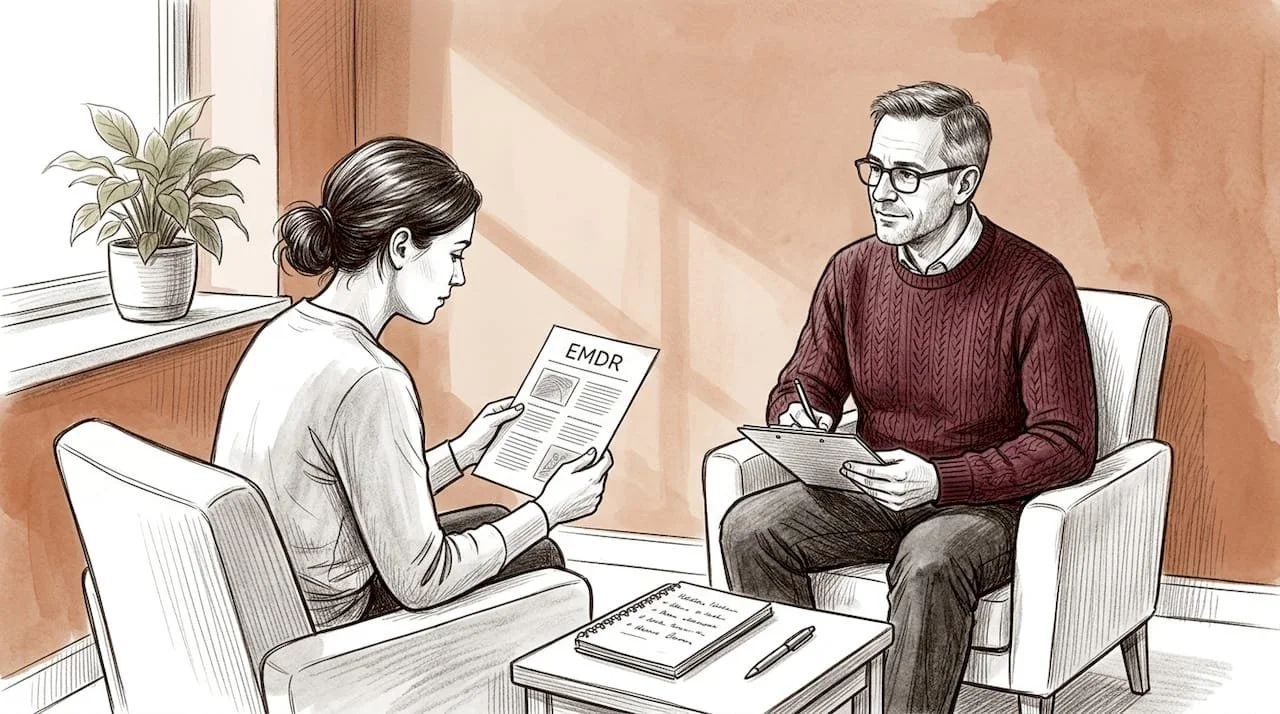
Pro Tip: Write a brief journal entry each week that captures one small moment where you felt more like yourself, even for five minutes. Over time, this creates evidence of your own progress that you can look back on when the harder days come.
Avoiding common pitfalls: Mistakes that hinder betrayal recovery
Even with the best intentions and a genuine desire to heal, certain patterns can significantly slow the process. Knowing what to watch for gives you a real advantage.
The most common recovery mistakes include:
Rushing into forgiveness or reconciliation. Forgiveness is a process, not a gift you give on demand. Feeling pressured to forgive quickly often means the underlying trauma never gets properly addressed, and it tends to resurface later with more force.
Self-blame and minimizing. Telling yourself "I should have seen it coming" or "it was not that bad" are protective responses, but they keep you stuck. The betrayal was real. Its impact is valid. Taking responsibility for your own choices in a relationship is healthy; taking responsibility for someone else's dishonesty is not.
Relying solely on the relationship for healing. Processing betrayal within the same relationship that caused the wound is like trying to treat a burn with the same heat source. Individual support outside the relationship is not optional; it is essential.
Accepting partial disclosure. When a partner reveals information in pieces over time, each new disclosure becomes a fresh trauma. Full honesty, even when painful, is far less damaging than ongoing partial truths.
"Common reconciliation mistakes include partial disclosure, skipping therapy, and allowing self-blame to take root. Each of these patterns keeps the betrayed partner trapped in a cycle of re-injury rather than moving toward genuine recovery."
Understanding the role of couples therapy and trust can help you gauge when and whether joint work makes sense in your specific situation. The relationship healing checklist is also a practical tool to assess where you are in the process.
What does progress look like? Signs of recovery and next steps
Progress after betrayal is quiet at first. It rarely announces itself. But over time, you begin to notice changes that matter.
Signs that healing is happening:
| Early signs of progress | More advanced signs |
|---|---|
| Sleeping more consistently | Reduced frequency of intrusive thoughts |
| Eating and basic self-care feel manageable | Trusting your own perceptions again |
| Able to feel emotions without being overwhelmed | Reconnecting with personal interests and identity |
| Less constant mental replaying of events | Setting and holding limits without guilt |
| Seeking support rather than isolating | Feeling hope or curiosity about the future |
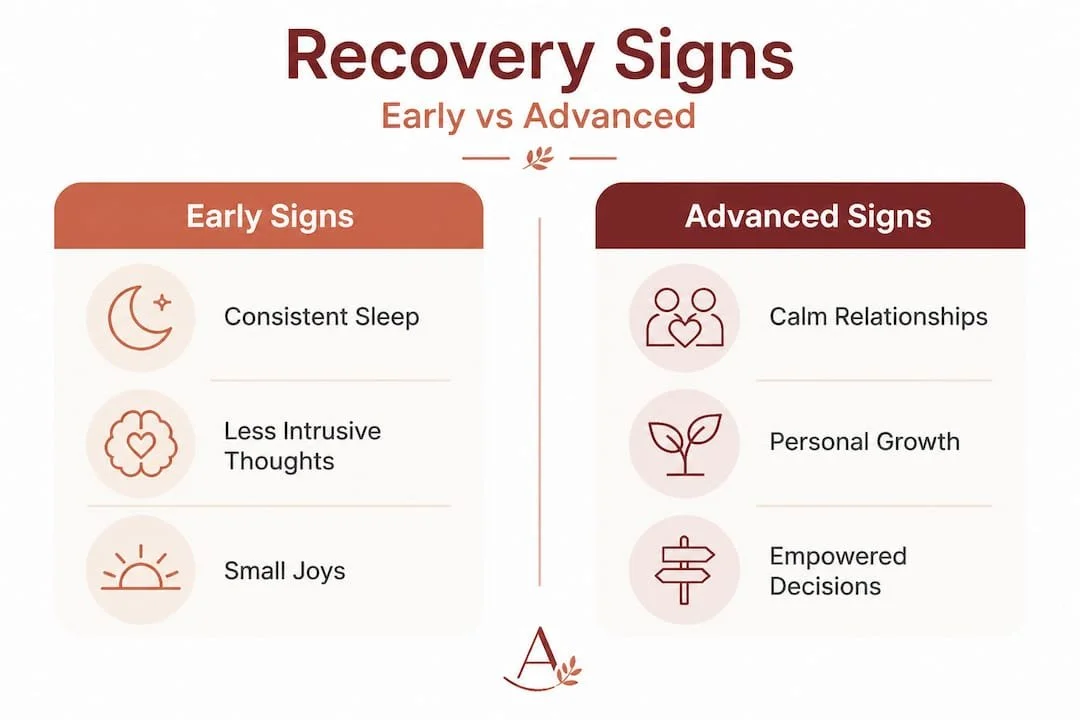
Healing is gradual, and there are visible and invisible signs of progress that deserve to be noticed and celebrated. That last part matters. When you spend so much energy tracking pain, you can miss the evidence that something is genuinely shifting.
Once you feel more stable, the next steps might include deeper trauma processing work such as EMDR, exploring empowering ways to heal after a breakup if the relationship has ended, or, if both partners are committed and doing individual work, initiating carefully structured couples therapy.
Pro Tip: Use a simple "1 to 10" daily check-in with yourself each morning. One means "I am barely surviving," and ten means "I feel genuinely okay today." Tracking this over several weeks often reveals an upward trend you might not notice day-to-day, and that data can be meaningful during therapy sessions.
Checking in regularly with your therapist or a peer support group keeps the healing process accountable and responsive to where you actually are, rather than where you think you should be.
Why real healing from relationship betrayal is deeper than forgiveness
Here is something few guides say clearly: forgiveness is not the finish line.
In our work at Alvarado Therapy, we see this pattern regularly. Someone works through the initial crisis, feels a sense of resolution, and decides to "forgive" as a way of closing the chapter. Then, months later, the unprocessed pain resurfaces, sometimes more intensely than before. Forgiveness that arrives before genuine processing is not healing. It is avoidance with better branding.
True recovery from betrayal centers on something more fundamental: rebuilding your relationship with your own reality. Betrayal, especially long-term deception, destabilizes your ability to trust your own perceptions. You start to question your memory, your judgment, and your worth. The real work of healing is reclaiming confidence in your own inner experience.
We have also seen how the pressure to reconcile quickly can re-traumatize the betrayed person. When the person who caused harm is not doing their own individual therapeutic work, any joint effort tends to put the burden of emotional management back on the person who was already hurt. That is not healing; that is a continuation of the harmful dynamic.
Sometimes closure means rebuilding a healthier version of the relationship. Sometimes it means letting go of the relationship entirely and building a stronger relationship with yourself. Both are valid outcomes. What matters is that the outcome is chosen freely from a place of self-knowledge and safety, not from fear or pressure. Exploring how reshaping trust after betrayal actually works helps clarify that the goal was never to return to who you were before. It is to become someone who can live and love with greater awareness and strength.
Get expert support for betrayal recovery in California
Healing from betrayal is real work, and you do not have to do it alone or figure it out as you go.
At Alvarado Therapy, our licensed, trauma-informed therapists work with individuals across Pasadena, Ventura, and throughout California via secure online sessions. Whether you are in the early shock of discovery or months into trying to make sense of what happened, we can help you build a personalized healing plan. From individual counseling to EMDR therapy and specialized support for PTSD and complex trauma, we offer evidence-based approaches matched to where you are right now. If you are ready to take a supported next step, schedule a consultation to speak with a therapist who understands betrayal trauma from the inside out.
Frequently asked questions
How long does it take to recover from relationship betrayal?
Recovery varies widely depending on the severity of the betrayal, your support system, and access to therapy. Healing can take anywhere from several months to a few years, and both timelines are normal.
Should I forgive my partner to move forward?
Forgiveness is not a requirement for healing, and rushing forgiveness can actually hinder genuine recovery. Focus first on your own emotional safety and wellbeing, and let forgiveness, if it comes, arrive on its own timeline.
What are PTSD symptoms after betrayal?
Symptoms commonly include anxiety, intrusive thoughts, emotional numbness, difficulty trusting others, and hypervigilance. Research confirms that betrayal activates physical pain brain regions and produces responses similar to clinical PTSD.
Is individual therapy necessary for healing betrayal trauma?
Yes. Individual therapy provides a dedicated, safe space for processing your experience, and skipping individual therapy is one of the leading mistakes that slows or complicates recovery. It is especially important before attempting any couples work.
What if my partner won't participate in recovery work?
Your healing is not dependent on your partner's choices. You can make meaningful progress by focusing on your own individual therapy, establishing healthy limits, and rebuilding your relationship with your own sense of safety and self-worth.
