
Betrayal trauma explained: impact, recovery, and healing

TL;DR:
Betrayal trauma involves psychological wounds from harming someone relied upon for safety and support.
It triggers betrayal blindness, causing memory gaps, dissociation, and rationalizing harmful behavior.
High-betrayal trauma from close relationships leads to more severe long-term mental health issues and complex healing.
Betrayal trauma is not simply a broken heart. It's a specific psychological wound that forms when someone you depend on for safety, love, or survival violates your trust. What makes it different from other painful experiences is that the very person who hurt you is also the person your nervous system learned to rely on. That conflict creates a kind of internal chaos that goes far beyond ordinary emotional pain. This guide breaks down what betrayal trauma actually is, how it works in the brain and body, and why understanding it is the most important step toward real, lasting healing.
Table of Contents
What is betrayal trauma? The clinical definition and why it matters
Betrayal Trauma Theory: How dependency shapes the trauma response
High-betrayal vs. low-betrayal trauma: Comparing impacts and outcomes
Recognizing betrayal trauma in romantic relationships and infidelity
A trauma therapist's perspective: What most articles miss about betrayal trauma
Key Takeaways
| Point | Details |
|---|---|
| Betrayal trauma roots | Betrayal trauma is caused by someone deeply trusted and relied on—not by strangers. |
| Adaptive coping responses | People often unconsciously avoid seeing betrayal to maintain important relationships. |
| Severity affects healing | High-betrayal trauma predicts stronger mental health challenges like depression and PTSD. |
| Recognizing the signs | Understanding symptoms is key to seeking support and starting recovery. |
What is betrayal trauma? The clinical definition and why it matters
Most people assume trauma comes from dramatic, visible events: accidents, disasters, violence from strangers. But betrayal trauma works differently. It lives inside relationships you trusted completely.
The formal definition is striking in its clarity. Betrayal trauma is defined as a trauma perpetrated by someone with whom the victim is close to and reliant upon for support and survival. The word reliant is key. This is not just about being hurt by someone you care about. It's about being hurt by someone your wellbeing depended on.
Psychologist Jennifer Freyd introduced this concept in 1994. Her research focused on how children process abuse from caregivers, and what she found was counterintuitive: when the person causing harm is also the person you need, your mind does something remarkable. It protects the relationship, sometimes at the cost of your own awareness.
"Betrayal trauma occurs not just because of the harm itself, but because of the impossible position it creates: needing the very person who hurt you."
This is what separates betrayal trauma from, say, surviving a car accident or a natural disaster. Outside trauma has a clear source you can move away from. Betrayal trauma is tangled up with love, attachment, and need.
Who experiences it? The range is wide:
Children abused or neglected by parents or caregivers
Romantic partners who discover infidelity or emotional deception
Adults betrayed by close friends, mentors, or family members
Employees harmed by institutions or authority figures they trusted
Understanding this definition matters because it changes how you approach healing. If you treat betrayal trauma like ordinary grief or disappointment, you'll miss the deeper layer: the disrupted sense of safety that comes from learning the person you relied on was not who you thought they were. Learning how betrayal trauma reshapes trust is essential for anyone working through this kind of wound.
Betrayal Trauma Theory: How dependency shapes the trauma response
Once you understand the definition, the next question is: why do people respond to betrayal in such confusing ways? Why do some people stay with partners who cheated? Why do adult survivors of childhood abuse sometimes protect the very people who hurt them?
Betrayal Trauma Theory (BTT) answers this directly. BTT, introduced by Jennifer Freyd in 1994, posits that victims dependent on the betrayer may dissociate or exhibit what Freyd called betrayal blindness, a kind of selective unawareness that protects the relationship at the cost of acknowledging the harm.
Here's how betrayal blindness works in practice:
You notice something is wrong but your mind minimizes or reframes it.
Memory gaps appear around the most painful moments of the betrayal.
Dissociation kicks in, creating emotional numbness or a sense of unreality.
You rationalize the betrayer's behavior to preserve the bond.
Help-seeking gets delayed, sometimes by months or years.
This is not weakness. It's adaptation. When a child depends on a parent for food, shelter, and safety, acknowledging that the parent is dangerous could be more threatening than the abuse itself. The mind chooses survival.
In adult romantic relationships, the same logic plays out. If your financial security, housing, or sense of identity is tied to a partner, your nervous system may resist fully processing their betrayal. Freyd's research found that betrayal blindness is more common in women and girls, likely because of socialized patterns around relational dependency and self-silencing.
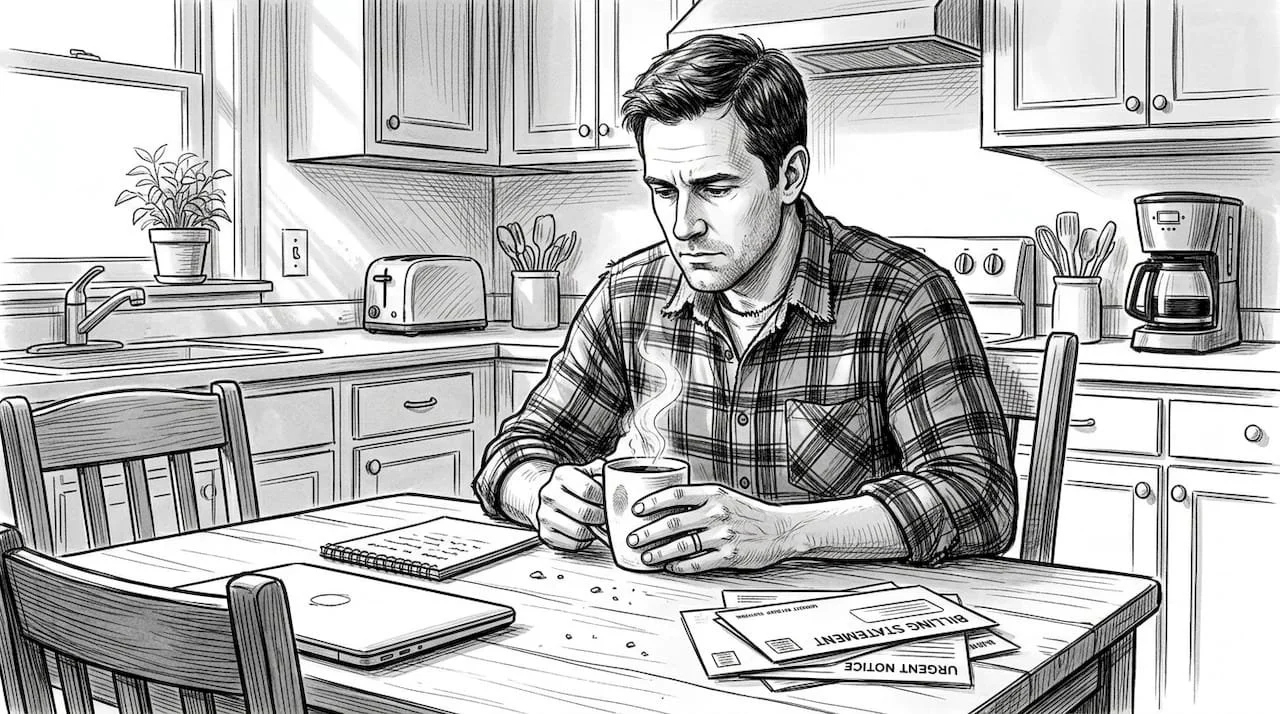
Pro Tip: If you find yourself constantly making excuses for a partner who hurt you, or if you feel confused about whether what happened was even a big deal, that confusion itself may be a sign of betrayal blindness at work. Understanding trauma's impact on relationships can help you name what you're experiencing.
Betrayal blindness also explains why trauma bonding in trusting relationships is so powerful and so hard to break without support. The bond was real. The dependency was real. That's what makes the wound so deep.
High-betrayal vs. low-betrayal trauma: Comparing impacts and outcomes
Not all betrayal trauma is equal. Researchers distinguish between high-betrayal trauma and low-betrayal trauma based on how close and dependent the relationship was.
High-betrayal trauma comes from people you were most dependent on: parents, romantic partners, close family. Low-betrayal trauma involves people with less relational power over you: acquaintances, coworkers, distant relatives.
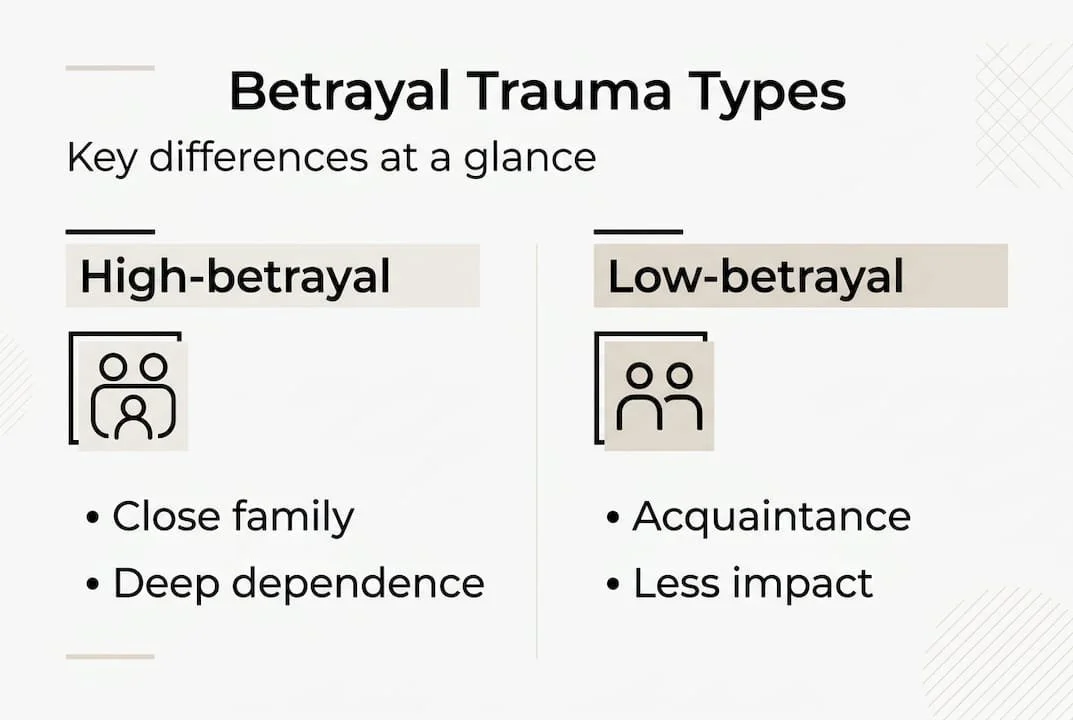
| Factor | High-betrayal trauma | Low-betrayal trauma |
|---|---|---|
| Relationship | Caregiver, partner, close family | Acquaintance, coworker, distant relative |
| Dependency level | High | Low |
| Common symptoms | Dissociation, PTSD, depression | Anger, distrust, anxiety |
| Recovery complexity | Greater, often needs therapy | May resolve with time and support |
| Risk of blindness | High | Low |
The data here is sobering. High-betrayal traumas predict greater depression, dissociation, and PTSD symptoms compared to low-betrayal traumas. This is not just about feeling worse. It's about a measurably different psychological outcome that affects how you function, how you relate to others, and how long recovery takes.
Why does this distinction matter for you? Because it shapes what kind of support you actually need. Someone processing a betrayal by a casual friend may benefit from journaling and social support. Someone healing from a partner's infidelity or childhood caregiver abuse needs structured, trauma-informed care. Recognizing the benefits of trauma counseling becomes especially important when the betrayal was high-stakes and long-term.
The severity of the betrayal also affects your timeline. High-betrayal trauma survivors often report that healing feels non-linear: two steps forward, one step back. That's normal. It reflects the depth of the original wound, not a failure on your part.
Recognizing betrayal trauma in romantic relationships and infidelity
Infidelity is one of the most common triggers of betrayal trauma in adults. But the symptoms don't always look like what people expect. It's not just sadness or anger. It's a full-body, full-mind disruption.
In romantic infidelity, betrayal trauma disrupts attachment, leading to hypervigilance, emotional dysregulation, and notable gender differences in how people cope. Hypervigilance means your nervous system stays on high alert, scanning constantly for new threats. You may check your partner's phone, analyze their tone of voice, or feel a spike of anxiety every time they're late.
Common symptoms after infidelity-related betrayal trauma include:
Intrusive thoughts or flashbacks about the betrayal
Sleep disruption and physical fatigue
Emotional swings from rage to numbness
Difficulty concentrating or making decisions
Shame and self-blame, even when you did nothing wrong
Withdrawal from friends, family, or activities you once enjoyed
| Symptom | Men’s common response | Women’s common response |
|---|---|---|
| Emotional pain | Avoidance, distancing | Rumination, seeking support |
| Trust issues | Withdrawal | Hypervigilance |
| Help-seeking | Delayed | More immediate |
| Coping style | Action-oriented | Relational, verbal processing |
These gender patterns are tendencies, not rules. What matters most is recognizing when symptoms are interfering with your daily life, your ability to work, parent, or simply feel safe in your own body.
If you're experiencing these signs, it's worth exploring rebuilding trust after betrayal as part of a structured healing process. Understanding trust's importance in recovery can also help you recognize what healthy repair actually looks like, whether you stay in the relationship or not.
A trauma therapist's perspective: What most articles miss about betrayal trauma
Most clinical articles do a solid job explaining what betrayal trauma is. What they rarely address is how invisible it stays, sometimes for years.
The clients we work with at Alvarado Therapy often arrive not knowing they experienced betrayal trauma. They describe themselves as "too sensitive," "unable to move on," or "broken." The self-blame is almost universal. And it makes sense: if the person who hurt you was someone you loved and trusted, it's easier to question your own perception than to accept the reality of what happened.
Betrayal blindness doesn't just happen in the moment of betrayal. It can persist for years, quietly shaping how you relate to others, how much you trust yourself, and how safe you allow yourself to feel. Many people don't connect their anxiety, relational struggles, or low self-worth to a betrayal that happened a decade ago.
The most important thing we want you to know is this: naming it changes everything. When you understand that your symptoms have a cause rooted in a real violation of trust, the shame starts to lift. Individual counseling for trauma gives you a space to do exactly that: name it, process it, and begin to rebuild on solid ground.
Get compassionate support and trauma therapy in California
Understanding betrayal trauma is a powerful first step. But knowledge alone doesn't heal the nervous system. That takes time, safety, and the right support.
At Alvarado Therapy, our licensed therapists specialize in complex trauma therapy in California, including the specific wounds left by infidelity, relational betrayal, and childhood caregiver harm. We offer online EMDR trauma therapy for clients throughout California, so you can access trauma-informed care from wherever you are. Whether you're just beginning to name what happened or you've been carrying this for years, you don't have to figure it out alone. Take the first step and schedule a consultation today. Healing is not only possible. It's closer than you think.
Frequently asked questions
What are the main signs of betrayal trauma in a relationship?
Common signs include hypervigilance, emotional instability, difficulty trusting others, intrusive thoughts about the betrayal, and feeling deeply conflicted about the person who hurt you.
How is betrayal trauma different from other types of trauma?
Betrayal trauma is unique because it is caused by someone you relied on for care and safety, creating an internal conflict that outside trauma sources do not produce.
Does everyone exposed to infidelity experience betrayal trauma?
Not everyone, but those with stronger emotional or practical dependency on their partner are significantly more likely to develop betrayal trauma symptoms after infidelity.
Can betrayal trauma cause long-term mental health problems?
Yes. High-betrayal trauma is linked to higher rates of depression, dissociation, and PTSD, particularly when it goes unrecognized or untreated for extended periods.
