
Step-by-Step Grief Recovery: A Trauma-Informed Guide

TL;DR:
Trauma-linked grief requires a structured, safety-focused therapy approach like EMDR or PGT.
Preparation involves assessing readiness, building support, and establishing safety before deep processing begins.
Progress may be nonlinear, and feeling stuck can indicate the need to adjust therapy rather than give up.
Grief after losing someone you love is one of the most disorienting experiences a person can face. It doesn't follow a schedule, and it rarely looks the way you expect. For many Californians, grief becomes even harder to navigate when trauma is woven into the loss, whether that's a sudden death, a history of attachment wounds, or years of complex relationship pain. Generic advice like "give it time" often falls flat. What you actually need are clear, research-backed steps and a therapist who understands how trauma shapes mourning. This guide gives you exactly that.
Table of Contents
Key Takeaways
| Point | Details |
|---|---|
| Grief is non-linear | Healing from loss rarely follows a straight path—expect ups and downs on your journey. |
| Trauma-informed steps work | Using structured, research-backed therapies such as PGT or EMDR can help you recover more safely and effectively. |
| Preparation is vital | Being ready and supported before starting grief work leads to better outcomes. |
| Local help matters | California has trauma-informed therapists and resources accessible both in-person and via telehealth. |
What to expect: How step-by-step grief recovery works
Most people have heard of the five stages of grief. While that model offers some comfort, it was never designed as a clinical roadmap. It doesn't account for trauma, cultural context, or the way grief can loop back and intensify without warning. Structured, trauma-informed grief recovery is different. It starts where you are, not where a textbook says you should be.
Trauma-informed approaches treat grief as something that lives in the body and the nervous system, not just the mind. Therapies like Prolonged Grief Therapy (PGT) and EMDR (Eye Movement Desensitization and Reprocessing) are built around sequential phases that create safety before asking you to process painful memories. EMDR for trauma-related grief follows a structured protocol that includes assessing readiness, building internal resources, reprocessing specific memories, and then monitoring your progress over time. This isn't about rushing through pain. It's about moving through it with support.
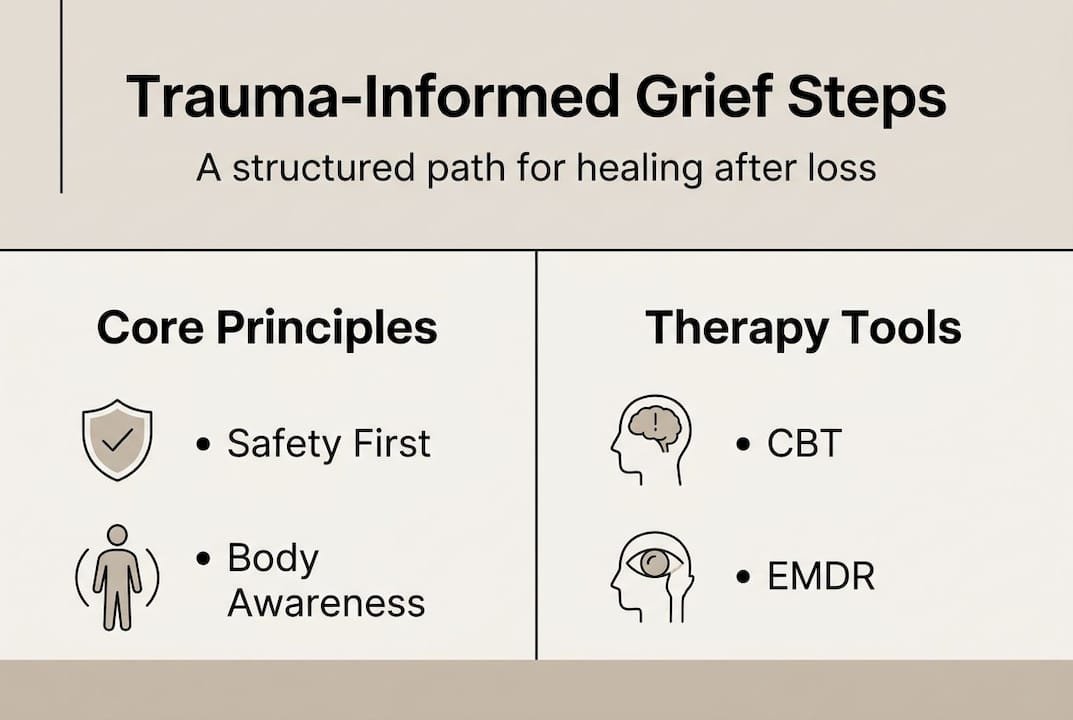
Research confirms that CBT is most effective for PGD, while EMDR shows strong promise for grief complicated by trauma. Both require a trained therapist who can adjust the pace based on your nervous system’s response.
Here’s a quick look at how these approaches compare:
| Approach | Core structure | Best for |
|---|---|---|
| Prolonged Grief Therapy (PGT) | 16 structured sessions, 6 milestones | Persistent, complicated grief |
| EMDR | Phase-based, memory reprocessing | Trauma-complicated grief |
| CBT | Thought and behavior restructuring | Grief with depression or anxiety |
| Integrated care | Combined modalities | Complex presentations |
For more background on your options, the types of grief counseling available in California range from individual therapy to group formats. You can also explore what navigating healing in California looks like across different communities.
Who benefits most from structured, trauma-informed grief work?
People whose grief has lasted more than a year with little relief
Those who experienced a traumatic or sudden loss
Individuals with a history of childhood trauma or insecure attachment
People who feel emotionally stuck, numb, or disconnected
Those whose grief has started affecting work, relationships, or physical health
Pro Tip: Grief work is not a race. If your therapist moves too fast, it's okay to say so. Pacing is a clinical tool, not a sign of weakness.
For a deeper look at PGT's session structure, the Prolonged Grief Therapy details from Columbia University offer a reliable clinical overview.
Preparing for grief recovery: What you need before you begin
Starting grief therapy without preparation is like trying to run a marathon without any training. You might get somewhere, but you're more likely to hit a wall early. Before structured grief work begins, trauma-informed therapies start with a readiness assessment, a safe environment, and a clear plan for how evidence-based techniques will be applied.
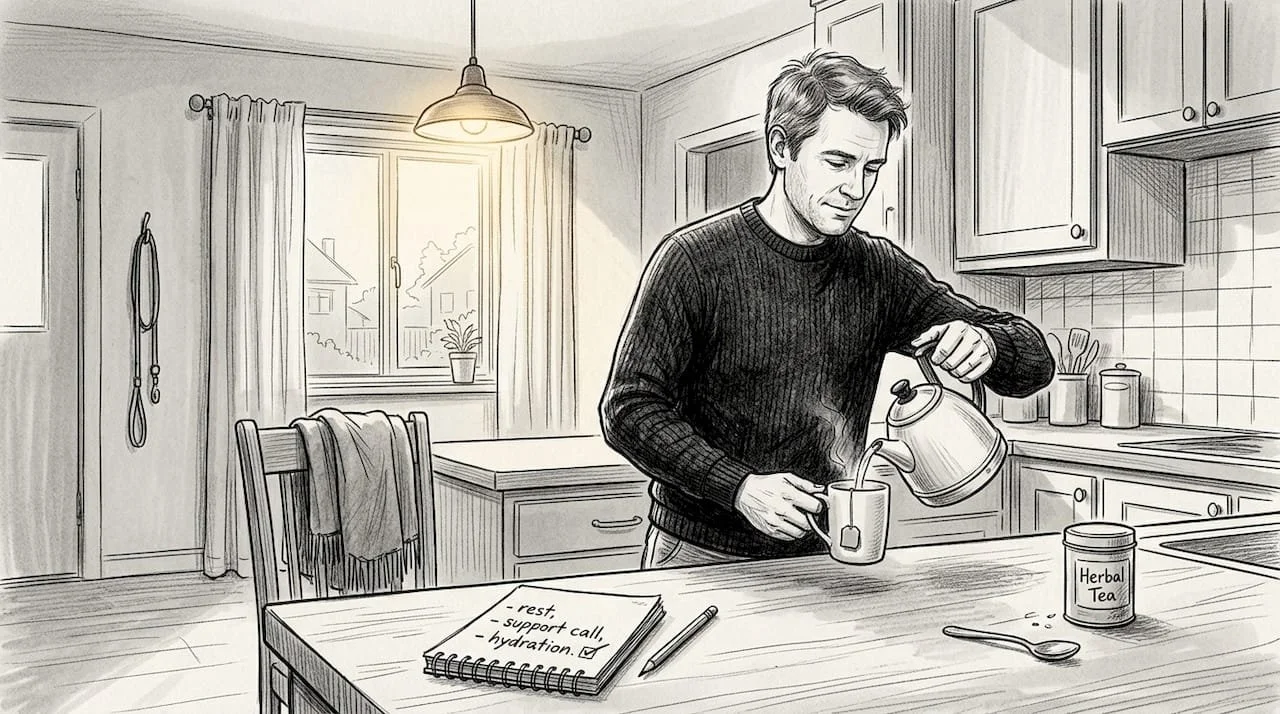
What does readiness actually look like? It means you have enough stability in your daily life to tolerate emotional discomfort without being overwhelmed by it. It doesn't mean you have to feel okay. It means you have a floor to stand on.
Here's what to have in place before you begin:
A support network: At least one person you can call when things feel heavy
A safety plan: Know what to do if you feel a crisis coming on
Basic self-care routines: Sleep, food, and some form of movement
Access to a therapist: Ideally someone trained in PGT, EMDR, or CBT for grief
A stable enough environment: You don't need perfect circumstances, just enough calm to do the work
For Californians looking for culturally responsive care, finding trauma-informed therapists across the state is more accessible than many people realize, including bilingual options in Spanish.
Choosing the right therapy format matters too. Your attachment style, cultural background, and the nature of your loss all influence which approach will fit best. Research on grief and attachment style shows that people with anxious attachment often need additional relational support built into their treatment plan.
Pro Tip: If English isn't your first language or if cultural identity is central to how you grieve, ask specifically for a bilingual or culturally responsive therapist. It changes the quality of the work significantly.
You can also browse examples of grief support in California to get a sense of what's available in your area.
Important: Skipping the preparation phase is one of the most common reasons grief therapy stalls. Jumping into trauma processing before you have adequate safety and support can increase distress rather than reduce it. Your therapist should never rush this stage.
Taking action: Step-by-step grief recovery process
Here is the core sequence used in evidence-based, trauma-informed grief recovery. These steps align with both PGT and EMDR frameworks and can be adapted based on your specific needs.
Assessment and history gathering — Your therapist learns about your loss, your grief symptoms, your trauma history, and your current functioning.
Building safety and stabilization — You develop coping tools and emotional regulation skills before touching painful memories.
Psychoeducation — You learn about grief, trauma, and how they interact in the body and mind.
Grief processing — Using structured techniques (EMDR bilateral stimulation, PGT imaginal conversations, or CBT thought work), you begin to process the loss directly.
Meaning-making — You work to integrate the loss into your identity and life narrative without erasing it.
Future orientation — You and your therapist plan for ongoing wellbeing, including how to handle anniversaries, triggers, and future losses.
Prolonged Grief Therapy is a 16-session structured intervention built around six core milestones, making it one of the most clearly mapped grief treatments available. For a detailed breakdown of the EMDR protocol specifically, the detailed EMDR healing steps guide walks through each phase in plain language.
Here's how the main therapy formats compare in practice:
| Therapy | Sessions | Format | Best audience |
|---|---|---|---|
| PGT | 16 | Weekly, structured | Prolonged grief disorder |
| EMDR | 8 to 20+ | Flexible, phase-based | Trauma-complicated grief |
| CBT | 12 to 20 | Skills-focused | Grief with depression |
| Self-directed | Ongoing | Workbooks, apps | Mild grief, as a supplement |
Research shows 62 to 86% completion rates in structured grief therapies, which is encouraging. Completion matters because the later sessions often carry the most transformative work.
Cultural personalization is not optional. For many California communities, grief is a collective experience shaped by family roles, religious practice, and cultural expectations around mourning. A good therapist will fold these realities into every step, not treat them as footnotes.
Common roadblocks and how to verify your progress
Even with the right therapist and a solid plan, grief recovery rarely moves in a straight line. That's not failure. That's biology. Grief rarely progresses linearly, and emotional fluctuations are especially common when social support is limited. Knowing this in advance helps you stay in the process instead of concluding that therapy isn't working.
Here are the most common roadblocks people encounter:
Anxious attachment patterns that make it hard to tolerate the vulnerability of grief work
Isolation or lack of social support outside of therapy sessions
Comparing your grief to others and feeling like you're doing it wrong
Avoidance of specific memories or topics that feel too painful to approach
Life stressors like financial pressure, caregiving, or housing instability that compete with healing
To verify real progress, use your therapy's built-in benchmarks. PGT tracks movement through its six milestones. EMDR uses session-by-session distress ratings (called SUDs scores) to measure how much a memory still activates your nervous system. Both give you concrete data, not just a feeling.
Pro Tip: If you feel completely stuck after six or more sessions with no shift at all, bring it up directly with your therapist. Feeling stuck is information, not a dead end. It may mean the approach needs adjusting, not that you're beyond help. You can also review tips for ongoing grief recovery for practical strategies between sessions.
Important: Grief and depression can look similar but require different treatment approaches. Prolonged Grief Disorder (PGD) is not the same as major depression or PTSD, even though they can overlap. Misdiagnosis leads to mismatched treatment. Make sure your therapist is using validated screening tools to distinguish between these conditions.
Our perspective: What most grief recovery guides miss
Most grief guides focus on emotional stages or coping strategies. What they consistently underestimate is how trauma physically reorganizes the nervous system and why that matters for recovery. When grief is layered with trauma, the brain doesn't just feel sad. It stays in a state of threat. Standard advice like journaling or talking to friends doesn't reach that level.
From working with Californians across a wide range of loss experiences, we've seen that the biggest predictor of recovery isn't the type of therapy. It's whether the person felt safe enough to actually do the work. Safety isn't soft. It's the clinical foundation everything else builds on.
We also think the "steps" framing is valuable but only when paired with genuine flexibility. Knowing the roadmap reduces anxiety. But the map is not the territory. Real healing involves detours, rest stops, and sometimes going back a step before moving forward. Understanding the why therapy modalities matter can help you advocate for the right fit rather than accepting whatever is most convenient.
Next steps: Getting personalized help with grief recovery in California
Reading a guide like this is a meaningful first step. But grief recovery, especially when trauma is involved, works best with a therapist who can respond to you in real time, adjust the pace, and hold space for the parts of your story that are hardest to say out loud.
At Alvarado Therapy, our licensed therapists specialize in trauma-informed grief work across Pasadena, Ventura, and online throughout California. We offer EMDR, individual counseling, and integrated care in both English and Spanish. Whether you're just beginning to process a loss or you've been struggling for years, we can help you find a path that actually fits your life. Learn what to expect from EMDR therapy, explore our trauma therapy options, or book a consultation to get started.
Frequently asked questions
What is the first step in trauma-informed grief recovery?
The first step is assessing your readiness and ensuring a safe environment before structured therapy begins. Trauma-informed therapies start with this foundation because processing grief without adequate safety can increase distress.
How do I know if I need Prolonged Grief Therapy (PGT)?
If your grief has lasted more than a year with persistent yearning and significant daily impairment, PGT may be the right fit. PGD criteria include death over one year ago, persistent yearning, and at least three of eight additional symptoms.
Can EMDR really help with grief that involves trauma?
Yes. EMDR is recommended for grief complicated by trauma and has shown meaningful symptom reduction across multiple studies, particularly when standard grief therapy alone isn't enough.
Are grief symptoms supposed to improve in a linear way?
No. Grief rarely progresses linearly, and emotional ups and downs are a normal part of the process, not a sign that you're failing or regressing.
Where can I find trauma-informed grief therapists in California?
You can search for licensed EMDR and grief therapists across California, including telehealth options. California resources include trauma-informed therapy, bilingual counselors, and online sessions for those outside major metro areas.
