
Why Seek Individual Counseling for Healing Trauma

Nearly one in five American adults experience mental health challenges each year, underscoring the urgent need for effective, individualized support. With growing awareness across the United States about mental well-being, more Americans are exploring counseling options that offer privacy and personalized guidance. This article looks at why individual counseling matters, how it works, and which unique benefits set it apart for those seeking real personal transformation.
Table of Contents
Key Takeaways
| Point | Details |
|---|---|
| Individual Counseling Provides Personalization | It offers tailor-made therapeutic experiences, focusing on specific psychological needs through one-on-one sessions. |
| Deep Self-Discovery Enhances Growth | Clients develop increased self-awareness and coping skills, empowering them to navigate life's challenges more effectively. |
| EMDR Therapy Facilitates Trauma Healing | This approach actively engages neurological processes to address trauma, reducing emotional distress and improving resilience. |
| Culturally Responsive Care Elevates Treatment | Acknowledging diverse identities in therapy creates a validating environment essential for effective healing, especially in marginalized communities. |
Defining Individual Counseling and Its Purpose
Individual counseling represents a deeply personal therapeutic approach where a professionally trained counselor works directly with a single client to explore emotional challenges, develop coping strategies, and promote psychological healing. Individual therapy involves a one-on-one relationship designed to help clients understand themselves more profoundly and make meaningful life decisions.
Individual counseling is fundamentally about creating a safe, confidential space where individuals can openly discuss their experiences, traumas, and inner struggles without judgment. Unlike group therapy or family counseling, this approach allows for personalized attention that targets specific psychological needs. The counselor serves as a neutral, supportive guide who helps clients unpack complex emotional landscapes, identify behavioral patterns, and develop healthier mechanisms for managing stress, anxiety, and traumatic experiences.
The primary purpose of individual counseling extends beyond merely addressing symptoms. It aims to foster deep personal growth, self-awareness, and emotional resilience. Clients learn to recognize underlying thought processes, challenge negative belief systems, and develop practical skills for emotional regulation. Through this collaborative process, individuals can transform painful experiences into opportunities for healing, empowerment, and meaningful personal transformation.
Therapeutic techniques in individual counseling vary widely, including cognitive behavioral approaches, trauma-informed care, narrative therapy, and emotion-focused interventions. What remains consistent is the commitment to creating a compassionate, client-centered environment where healing can occur at the individual's unique pace and according to their specific psychological needs.
Key Benefits of Individual Counseling Sessions
Individual counseling offers a transformative approach to mental health that provides numerous significant advantages for personal growth and emotional healing. Personalized treatment plans allow clients to address specific mental health challenges effectively, creating a tailored therapeutic experience that meets unique individual needs.
One of the most profound benefits of individual counseling is the opportunity for deep self-discovery and personal development. Clients experience improved self-awareness, enhanced coping skills, and increased emotional regulation, which empowers them to navigate life's challenges more confidently. By working one-on-one with a trained therapist, individuals can explore complex emotional landscapes, identify underlying behavioral patterns, and develop strategies for managing stress, anxiety, and trauma.
The safe and confidential environment of individual counseling creates a unique space for genuine emotional exploration. Unlike group settings, these sessions provide undivided attention and a judgment-free zone where clients can openly discuss their most sensitive experiences. This intimate therapeutic relationship allows for deeper introspection, helping individuals unpack difficult emotions, challenge negative thought patterns, and build resilience.
Beyond emotional healing, individual counseling sessions offer practical benefits that extend into everyday life. Clients learn tangible skills for emotional regulation, communication, and self-management. These skills translate into improved relationships, better stress management, and a more balanced approach to personal and professional challenges. Through consistent, personalized therapeutic support, individuals can transform their mental health journey, turning potential limitations into opportunities for growth and self-empowerment.
How EMDR Therapy Aids Trauma Healing
EMDR therapy represents a groundbreaking approach to trauma healingthat goes beyond traditional talk therapy by directly addressing the neurological impact of traumatic experiences. This innovative therapeutic method helps individuals process deeply embedded emotional wounds, allowing the brain to reframe and integrate traumatic memories in a healthy, transformative way.
Eye Movement Desensitization and Reprocessing (EMDR) works by helping clients reprocess traumatic memories through guided bilateral stimulation, typically involving carefully structured eye movements. The American Psychological Association recognizes EMDR as an effective treatment for addressing post-traumatic stress disorder, offering a unique pathway for individuals struggling with unresolved emotional trauma. Unlike traditional talk therapies that primarily focus on discussing traumatic experiences, EMDR actively engages the brain's natural healing mechanisms to reduce the emotional charge of painful memories.
The therapeutic process involves eight distinct phases that systematically help clients safely confront and reprocess traumatic memories. During these sessions, clients learn to access distressing memories while simultaneously engaging in bilateral stimulation, which helps the brain reframe these experiences. This approach allows individuals to transform the way they perceive and emotionally respond to past traumas, ultimately reducing symptoms like anxiety, flashbacks, and emotional reactivity.
What makes EMDR particularly powerful is its ability to create lasting neurological changes. By helping the brain reprocess traumatic memories, clients can experience significant reductions in emotional distress, improved self-perception, and enhanced emotional resilience. The therapy provides a structured yet compassionate approach to healing, empowering individuals to move beyond survival mode and reclaim their sense of personal agency and emotional well-being.

Culturally Responsive and Identity-Affirming Care
Culturally responsive care represents a critical approach to mental health treatmentthat acknowledges the profound impact of individual identity, background, and lived experiences on psychological healing. This approach goes far beyond a one-size-fits-all model of therapy, recognizing that each person's cultural context shapes their emotional landscape, trauma responses, and healing journey.
Identity-affirming therapy creates a safe, validating environment where clients feel truly seen and understood. Research demonstrates that supporting clients' self-identified identities is crucial for effective mental health treatment, particularly within marginalized communities. This means therapists must actively listen, validate individual experiences, and approach healing with deep respect for each client's unique cultural background, gender identity, sexual orientation, racial experience, and personal narrative.
The principles of culturally responsive care require therapists to continuously examine their own biases, develop cultural humility, and create therapeutic spaces that honor diversity. This approach involves understanding systemic barriers, recognizing historical trauma, and providing treatment that respects cultural nuances. For Latinx, BIPOC, LGBTQ+, and immigrant communities, this means offering therapy that acknowledges systemic oppression, validates intersectional experiences, and provides healing strategies rooted in cultural strength and resilience.
Ultimately, culturally responsive care is about more than just acknowledging differences. It is a commitment to providing compassionate, personalized support that empowers individuals to heal within the context of their full, authentic selves. By creating therapeutic relationships built on mutual respect, deep listening, and cultural understanding, therapists can help clients transform trauma, rebuild identity, and reconnect with their inherent personal power.
Comparing Counseling to Other Support Options
Professional counseling offers a structured, targeted approach to mental health supportthat differs significantly from other support alternatives. While peer groups, online forums, and self-help resources can provide valuable connection, individual counseling delivers personalized, evidence-based interventions designed to address specific psychological challenges with professional expertise.
Mental health support encompasses multiple strategies, each with unique strengths. Unlike medication management that addresses biochemical aspects of mental health conditions, counseling provides comprehensive emotional and psychological interventions. Peer support groups offer shared experiences and community connection, but lack the professional diagnostic and treatment capabilities of individual counseling. These alternatives can complement professional therapy but cannot replace the depth of personalized therapeutic work.
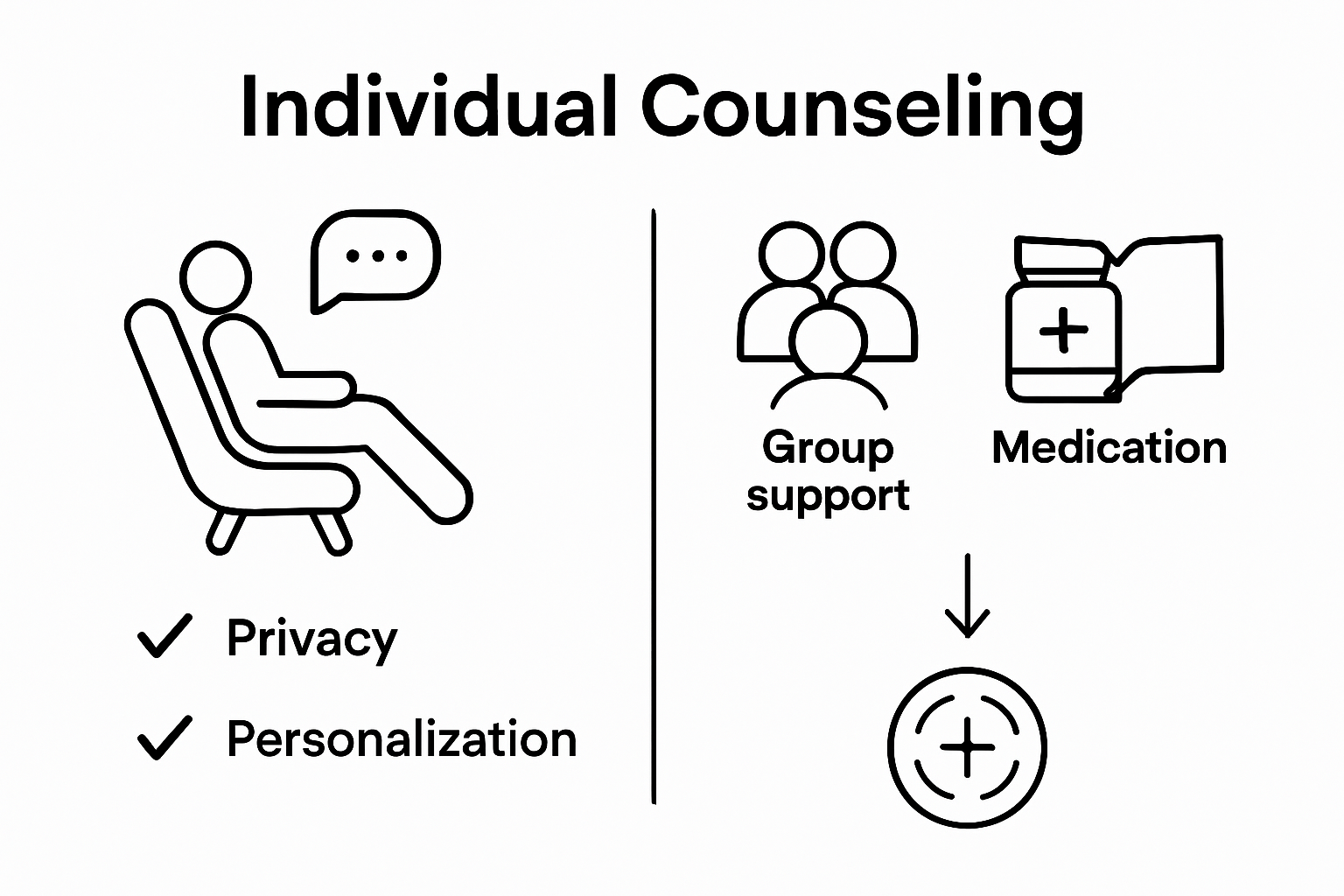
The key distinctions between counseling and other support options become clear when examining their core objectives. Peer support groups create community and normalize experiences, which can be incredibly healing. Online resources provide accessible information and coping strategies. However, professional counseling offers something more profound: a scientifically informed, individually tailored approach that helps clients develop introspection, emotional regulation skills, and transformative understanding of their psychological patterns.
Ultimately, the most effective mental health approach often involves a holistic strategy. For many individuals, this might mean combining individual counseling with complementary support methods like support groups, wellness practices, and potentially medication management. The goal is not to choose one exclusive path, but to create a comprehensive, personalized healing strategy that addresses mental health from multiple perspectives, empowering individuals to achieve genuine, sustainable psychological well-being.
Begin Your Healing Journey with Expert Individual Counseling in California
If you are seeking relief from childhood trauma, PTSD, or complex emotional struggles, individual counseling offers a safe and personalized path toward recovery and self-discovery. At Alvarado Therapy, our licensed therapists specialize in trauma-informed care that embraces identity-affirming and culturally responsive approaches. We understand the challenge of confronting painful memories and work with you to build emotional resilience tailored specifically to your needs.
Explore compassionate and effective trauma healing through EMDR therapy and individualized support in California. Visit our California — Meet Our Team — Alvarado Therapy page to connect with experienced professionals who guide you step-by-step. Take the first step today and find clarity, safety, and empowerment in your healing process by scheduling a session at Alvarado Therapy.
Frequently Asked Questions
What is individual counseling for trauma healing?
Individual counseling for trauma healing is a one-on-one therapeutic approach where a trained counselor helps clients explore and process emotional challenges related to trauma, develop coping strategies, and promote psychological healing in a safe, confidential environment.
How does EMDR therapy aid in trauma recovery?
EMDR (Eye Movement Desensitization and Reprocessing) therapy supports trauma recovery by helping individuals reprocess traumatic memories through guided bilateral stimulation, allowing the brain to reframe and integrate these experiences, significantly reducing emotional distress and enhancing resilience.
What are the benefits of seeking individual counseling for personal growth?
Individual counseling promotes deep self-discovery, improved self-awareness, and enhanced coping skills. It provides a judgment-free space for emotional exploration, helping clients develop practical strategies for managing stress, anxiety, and trauma, leading to meaningful personal transformation.
Why is culturally responsive care important in individual counseling?
Culturally responsive care is vital in individual counseling as it recognizes and respects the diverse cultural backgrounds and identities of clients. This approach enhances the therapeutic relationship and effectiveness of treatment by validating individual experiences and addressing systemic barriers to mental health.
