
Why Choose Online Therapy: Flexibility and Healing Explained

Over fifty million American adults report experiencing mental health challenges each year, highlighting just how common these struggles have become. As digital solutions gain popularity, many are discovering that online therapy offers an accessible path to support and healing. This article clears up confusion about how online therapy works, explores the benefits for American clients, and explains why virtual counseling is reshaping mental health care across the country.
Table of Contents
Key Takeaways
| Point | Details |
|---|---|
| Online Therapy Accessibility | Online therapy provides flexible mental health support through digital platforms, breaking down barriers related to geography and scheduling. |
| Variety of Approaches | Multiple therapeutic modalities, such as Cognitive Behavioral Therapy and Dialectical Behavior Therapy, can be effectively delivered online. |
| Privacy and Confidentiality | Secure, HIPAA-compliant platforms ensure client information is protected, enhancing trust in the therapeutic process. |
| Cost and Insurance Factors | Understanding insurance coverage and therapist qualifications is crucial for maximizing affordability and effective treatment. |
What Is Online Therapy and How It Works
Online therapy represents a modern, flexible approach to mental health support that leverages digital technologies to connect clients with licensed therapists. Virtual counseling platforms enable individuals to receive professional mental health services through secure video calls, messaging, and phone consultations from the comfort and privacy of their own space.
The fundamental mechanism of online therapy involves digital communication channels that replicate traditional in-person therapeutic interactions. Clients can access professional mental health support through various digital modalities, including video conferencing, secure messaging platforms, phone calls, and live chat sessions. This approach allows individuals experiencing stress, anxiety, depression, or trauma to connect with qualified therapists without geographical limitations or scheduling constraints.
Online therapy works by providing a structured yet flexible therapeutic experience that prioritizes client convenience and accessibility. Therapists utilize encrypted, HIPAA-compliant platforms to ensure client confidentiality while delivering evidence-based interventions. The process typically involves an initial consultation, goal setting, regular sessions, and ongoing support through digital channels. These sessions can include cognitive behavioral techniques, trauma processing, emotional regulation strategies, and personalized treatment plans tailored to individual needs.
Key benefits of online therapy include:
Increased accessibility for individuals with mobility challenges
Reduced travel time and transportation costs
Greater scheduling flexibility
Enhanced privacy and comfort
Ability to connect with specialized therapists regardless of geographic location
By leveraging technology, online therapy offers a contemporary approach to mental health support that meets the evolving needs of individuals seeking professional counseling in a digital age.
Different Types of Online Therapy Approaches
Online therapy encompasses a diverse range of therapeutic approaches designed to address various mental health needs through digital platforms. Cognitive Behavioral Therapy (CBT) stands out as one of the most prevalent and adaptable modalities in the digital mental health landscape, offering structured interventions for managing anxiety, depression, and behavioral challenges.
Therapeutic modalities have successfully transitioned to online environments, providing clients with flexible and accessible mental health support. Key approaches include Acceptance and Commitment Therapy (ACT), which helps individuals develop psychological flexibility, Dialectical Behavior Therapy (DBT) for emotional regulation, and Mindfulness-Based Therapies that promote present-moment awareness and stress reduction. Virtual reality therapy represents an innovative digital approach, utilizing computer-generated environments to simulate controlled therapeutic experiences for treating specific psychological conditions.
Each online therapy approach offers unique benefits tailored to individual mental health needs. Cognitive Behavioral Therapy focuses on identifying and transforming negative thought patterns, while Acceptance and Commitment Therapy emphasizes value-driven behavioral changes. Dialectical Behavior Therapy provides specialized support for emotional management and interpersonal effectiveness, particularly beneficial for individuals struggling with intense emotional experiences or relationship difficulties.
Key online therapy approaches include:
Cognitive Behavioral Therapy (CBT)
Acceptance and Commitment Therapy (ACT)
Dialectical Behavior Therapy (DBT)
Mindfulness-Based Therapies
Psychodynamic Therapy
Emotionally Focused Therapy
The digital transformation of therapeutic approaches ensures that individuals can access specialized mental health support regardless of geographical constraints, providing personalized interventions that adapt to contemporary lifestyle needs.
Key Benefits for Trauma and Mental Health Care
Online therapy provides transformative opportunities for individuals navigating complex mental health challenges, offering unprecedented accessibility and personalized healing approaches. The digital mental health landscape has revolutionized how people engage with therapeutic support, particularly for those managing trauma, anxiety, and depression.

Mental health treatment through online platforms delivers remarkable benefits for trauma survivors and individuals experiencing psychological distress. Research demonstrates that online therapy can effectively treat mental health conditions, providing increased convenience, privacy, and flexible care options. The ability to access professional support from any location eliminates traditional barriers like transportation challenges, scheduling conflicts, and geographical limitations.
Trauma-informed online therapy approaches offer specialized interventions that prioritize client safety, emotional regulation, and holistic healing. These digital platforms enable therapists to create personalized treatment plans addressing individual needs, utilizing evidence-based techniques such as EMDR, cognitive behavioral strategies, and mindfulness interventions. The confidential nature of online therapy platforms ensures that clients can explore sensitive experiences with minimal external pressure or vulnerability.
Key benefits of online therapy for trauma and mental health care include:
Immediate and flexible access to professional support
Reduced geographical and transportation barriers
Enhanced privacy and confidential communication
Cost-effective mental health interventions
Customized therapeutic approaches
Comfortable and familiar healing environment
Consistent and convenient scheduling options
By embracing digital mental health solutions, individuals can pursue healing journeys that adapt to their unique circumstances, empowering them to prioritize mental wellness with unprecedented convenience and support.
Accessibility, Privacy, and Safety Considerations
Online therapy platforms have revolutionized mental health support by addressing critical accessibility challenges that traditional therapy models struggle to overcome. For individuals with physical disabilities, chronic illnesses, or mobility limitations, digital therapeutic services provide unprecedented opportunities to access professional mental health care without additional logistical barriers.
Digital privacy protocols play a crucial role in ensuring client confidentiality and safety during online therapeutic interactions. Research highlights the importance of verifying therapist credentials and understanding privacy mechanisms to maintain effective and secure mental health support. Reputable online therapy platforms implement robust encryption technologies, secure communication channels, and strict confidentiality guidelines to protect client information and create safe therapeutic environments.
Accessibility extends beyond physical limitations, encompassing broader considerations of mental health support. Online therapy eliminates geographical constraints, transportation challenges, and scheduling conflicts, making professional counseling more inclusive and adaptable to diverse client needs. Specialized platforms offer features like multilingual support, culturally sensitive interventions, and flexible communication methods to accommodate individual preferences and requirements.
Key safety and accessibility considerations include:
HIPAA-compliant communication platforms
End-to-end encrypted messaging systems
Secure video conferencing technologies
Comprehensive therapist background verification
Multiple communication channel options
Accessibility features for individuals with disabilities
Flexible scheduling across different time zones
By prioritizing client safety, privacy, and comprehensive accessibility, online therapy platforms demonstrate a commitment to delivering high-quality, inclusive mental health support that meets the evolving needs of diverse populations.
Comparing Online vs. In-Person Therapy Experiences
Modern therapy approaches demonstrate that both online and in-person therapy offer unique advantages, with digital platforms providing unprecedented flexibility while traditional sessions maintain certain interpersonal nuances. The therapeutic landscape has evolved to accommodate diverse client needs, recognizing that healing is not confined to a single modality of communication.
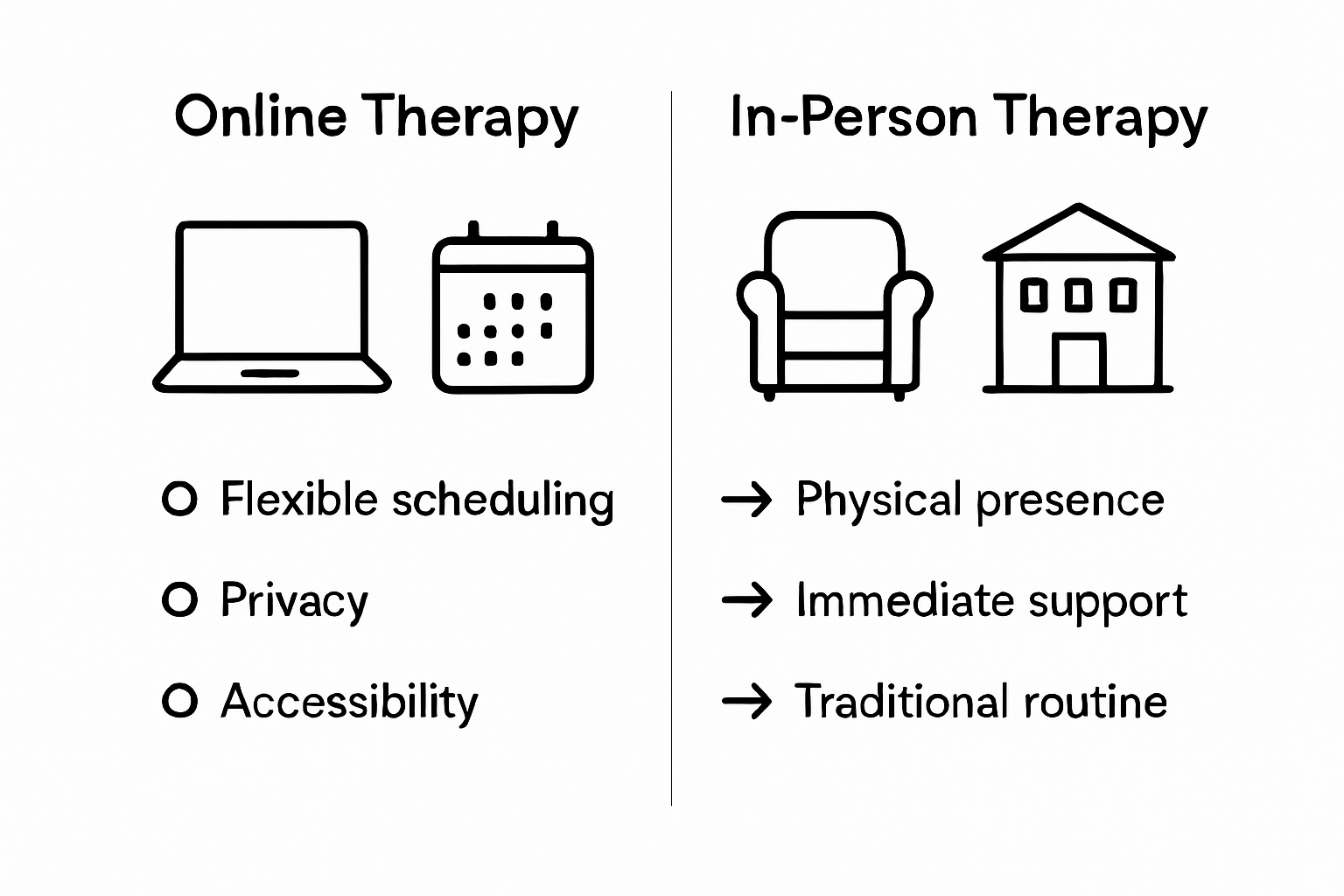
Therapeutic interactions reveal complex differences between online and in-person experiences. Clinical research suggests that online therapy can be remarkably effective, though it may lack some non-verbal communication elements present in face-to-face sessions. Digital platforms compensate for these limitations through enhanced accessibility, allowing clients to engage in therapeutic work from comfortable, familiar environments that can reduce initial anxiety and increase emotional openness.
Each therapeutic approach offers distinct benefits and potential challenges. In-person therapy provides immediate, tactile environmental cues and allows therapists to observe subtle body language signals, while online therapy eliminates geographical barriers, reduces transportation stress, and offers greater scheduling flexibility. The choice between modalities often depends on individual preferences, comfort levels, and specific mental health requirements.
Key comparative aspects include:
Accessibility and geographical reach
Cost-effectiveness
Comfort and privacy
Depth of interpersonal connection
Technological requirements
Scheduling flexibility
Potential for non-verbal communication
Ultimately, the most effective therapy is the one that makes clients feel safe, heard, and supported in their healing journey, regardless of whether that connection occurs through a screen or in a physical office.
Costs, Insurance, and Choosing the Right Therapist
Mental health investment strategies reveal that selecting the right therapist involves careful consideration of financial resources, insurance coverage, and professional qualifications. Understanding the nuanced landscape of therapy costs and insurance reimbursement can help individuals make informed decisions about their mental health care.
Insurance navigation plays a critical role in managing therapy expenses. Online therapy options can provide more affordable mental health support, though insurance coverage varies significantly between providers and policies. Potential clients should proactively contact their insurance providers to understand specific telehealth coverage, verify therapist network participation, and explore potential out-of-pocket expenses.
Choosing the right therapist requires thorough credential verification and alignment with personal therapeutic goals. Potential clients must carefully assess a therapist’s professional licensing, specialization, and experience to ensure comprehensive and effective mental health support. Important considerations include the therapist’s approach to treatment, cultural competency, expertise in specific mental health domains, and comfort with digital therapeutic platforms.
Key factors in selecting a therapist include:
Professional licensing and credentials
Specialization in specific mental health areas
Insurance network participation
Cost per session
Communication style and therapeutic approach
Cultural and linguistic competency
Availability and scheduling flexibility
Ultimately, the most successful therapeutic relationship emerges from a thoughtful balance between financial feasibility, professional expertise, and personal connection.
Discover Flexible Healing with Online Therapy at Alvarado Therapy
If you are seeking trauma-informed, flexible mental health support that fits your busy lifestyle the insights in “Why Choose Online Therapy: Flexibility and Healing Explained” highlight how online therapy can overcome challenges like geographical barriers and scheduling conflicts. At Alvarado Therapy we understand the importance of accessibility and privacy in your healing journey especially when addressing complex trauma, PTSD, anxiety, or relationship struggles. Our licensed therapists serve clients across California offering specialized approaches including EMDR therapy and tailored individual counseling that honor your unique needs.

Take control of your mental health today by connecting with compassionate professionals who provide safe and effective online therapy. Explore our California — Meet Our Team — Alvarado Therapy page to find the right therapist who matches your goals. Visit Alvarado Therapy to learn more about our comprehensive services and schedule your first session. Start your healing with a trusted partner who makes therapy convenient, culturally responsive, and empowering.
Frequently Asked Questions
What is online therapy?
Online therapy is a modern approach to mental health care that connects clients with licensed therapists through digital platforms, allowing for secure communication via video calls, messaging, and phone consultations.
How does online therapy work?
Online therapy works by providing structured sessions through digital communication channels such as video conferencing, messaging, and phone calls, enabling clients to engage with therapists from the comfort of their own homes while receiving evidence-based interventions.
What are the benefits of choosing online therapy?
The benefits of online therapy include increased accessibility, greater scheduling flexibility, enhanced privacy, reduced transportation costs, and the ability to connect with specialized therapists regardless of geographic location.
Is online therapy effective for trauma and mental health issues?
Yes, research shows that online therapy is effective in treating various mental health conditions, including trauma, anxiety, and depression, offering personalized healing approaches tailored to individual needs.
Recommended
Ready to see what’s possible?
It’s your time to heal in a transformative way.
