
Anticipatory Grief: One in Four Caregivers Experience It

Anticipatory grief is the mourning we feel before a death or major loss actually happens, and it shows up most often in caregivers and loved ones watching someone decline. The feelings are real grief, not a rehearsal for it, and they deserve real support. If you are in crisis right now, you can call or text 988 for free, confidential help at any hour.
TL;DR:
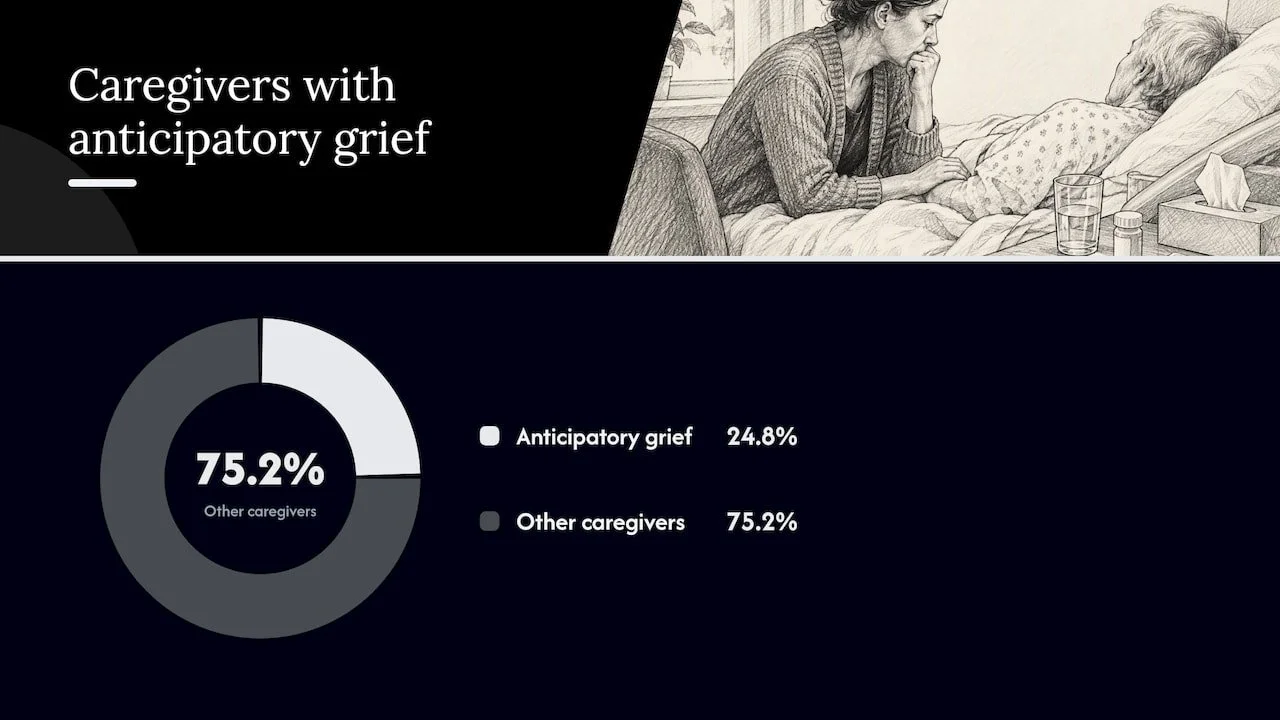
A 2022 meta-analysis of 5,470 caregivers found a pooled prevalence of 24.78%, with higher rates among female than male caregivers.
A 2023 study of 624 cancer caregivers linked heavier caregiving burden to more intense grief, while family functioning and resilience softened the effect.
When low mood, exhaustion, or hopelessness lasts for weeks and disrupts work, sleep, or relationships, seek professional help rather than trying to push through.
Separate urgent safety and care decisions from choices that can wait, and involve a social worker, financial planner, or therapist when fear clouds judgment.
If suicidal thoughts, severe impairment, or escalating substance use emerge, call or text 988; call 911 or visit an emergency room for immediate danger.
Alvaradotherapy
Find Support for Grief and Loss
Alvarado Therapy offers individual counseling for grief and trauma, with licensed therapists serving clients online throughout California.
Table of Contents
What makes anticipatory grief different from grief after death
Recognizing the signs: emotional, physical, and behavioral signals
Why caregiving makes anticipatory grief so much harder to carry
When anticipatory grief needs professional or crisis support
What makes anticipatory grief different from grief after death
Anticipatory grief is mourning that starts before the loss itself, often while someone is still caring for a partner, parent, or child with a terminal or progressive illness. It is not limited to death either: people grieve ahead of a divorce, a dementia diagnosis, or the loss of a job and identity. The core difference from post-loss grief is direction. Post-loss grief reacts to something that already happened. Anticipatory grief reacts to something still unfolding, which means hope, dread, and daily caregiving tasks all compete for the same emotional space.
Clinicians and researchers describe a loose set of phases people move through, though rarely in a straight line:
Acceptance that the loss is likely or certain
Reflection on the relationship and what it has meant
Rehearsal of life without the person, sometimes through small test scenarios
Imagining a future that includes the loss, which can bring both dread and early adjustment
Recognizing the signs: emotional, physical, and behavioral signals
Anticipatory grief rarely looks like one clean emotion. Cleveland Clinic describes it as a mix of cognitive, behavioral, and emotional symptoms that can show up together or in waves. Sadness and guilt are common, but so are anger, numbness, and an uncomfortable sense of relief that the waiting might end, which many caregivers mistake for a personal failing rather than a normal response.
Watch for these patterns:
Emotional: sadness, guilt, irritability, dread, and relief that arrives tangled with shame
Cognitive and behavioral: preoccupation with the illness, rumination about the future, withdrawing from friends, or becoming hypervigilant about symptoms
Physical: disrupted sleep, appetite changes, trouble concentrating, and fatigue that does not lift with rest
A 2022 meta-analysis of 5,470 caregivers found a pooled anticipatory grief prevalence of 24.78%, with notably higher rates among female caregivers than male caregivers, according to research published on PubMed. That means roughly one in four caregivers in the studies reviewed experienced clinically meaningful anticipatory grief, not just situational sadness.
These symptoms can overlap heavily with burnout and depression. When low mood, exhaustion, or hopelessness persist for weeks and start interfering with work, sleep, or relationships, it is worth treating as something that needs professional attention rather than something to push through.
Why caregiving makes anticipatory grief so much harder to carry
Caregiving and grieving pull in opposite directions. One asks you to stay present, organized, and functional; the other asks you to feel the full weight of an ending. Many caregivers suppress emotion just to get through medication schedules, appointments, and physical care, and that suppression tends to resurface later as exhaustion or irritability.
Research backs up what this feels like from the inside. A 2023 study of 624 caregivers of elderly cancer patients found that caregiver burden has a direct, positive effect on anticipatory grief, meaning heavier caregiving loads are tied to more intense grief, according to a study on caregiver burden and family functioning. The same study found that family functioning and resilience act as mediators, softening that effect.
Caregiver burden increases anticipatory grief, but family functioning and resilience reduce its intensity by buffering the relationship between the two.
The practical takeaway is that strengthening family communication and shared coping, rather than carrying the load alone, is one of the few factors shown to actually ease anticipatory grief.
Coping strategies that help right now
You cannot eliminate anticipatory grief, but you can reduce how much it isolates or depletes you. A few areas make the biggest difference.
Start honest conversations early. Talk with your loved one about values, wishes, and end-of-life preferences while they can still participate, using calm, specific questions rather than vague check-ins.
Protect basic self-care. Prioritize sleep, regular meals, and short daily rituals like a walk or five quiet minutes with coffee before the day's demands take over.
Set realistic limits on caregiving tasks. Accept help, delegate what you can, and recognize that doing less of the physical labor does not mean caring less.
Do meaning and legacy work together. Recording stories, making a photo album, or writing letters creates something lasting and gives both of you a shared project instead of only shared dread. Professional counseling guidance consistently points to legacy work as a stabilizing, reparative practice during anticipatory grief.
Find peer support. Caregiver support groups, whether online or in person, and faith or community networks give you language for what you are feeling from people who have lived it.
Consider grief counseling or trauma-informed therapy. If intrusive thoughts, nightmares, or traumatic stress from caregiving show up alongside grief, a therapist trained in modern grief counseling approaches can help you sort through both. When evaluating a therapist, ask about their experience with grief specifically, not just general counseling.
Pro Tip: Pick one small ritual, a phone call, a walk, a cup of tea in silence, and protect that ten minutes daily. It will not fix the grief, but it gives your nervous system a predictable place to land.
When anticipatory grief needs professional or crisis support
Most anticipatory grief does not require emergency care, but some signs mean it is time to reach out immediately:
Thoughts of suicide or self-harm
Severe decline in daily functioning, like being unable to work, eat, or get out of bed
Increased reliance on alcohol or other substances to cope
Persistent severe insomnia or episodes of dissociation
If you or someone you love is in crisis, call or text 988 to reach the Suicide & Crisis Lifeline, free and confidential, 24 hours a day. Call 911 or go to the nearest emergency room if there is immediate danger. For ongoing support, ask your doctor for a referral to a grief counselor, or look into bereavement support resources that can connect you to local and online options. A first grief counseling session usually focuses on your history with the loss, current symptoms, and what kind of support fits your life right now.
How trauma-informed therapy supports anticipatory grief
When anticipatory grief includes traumatic stress, intrusive memories of medical crises, or nightmares about the loss, grief counseling alone sometimes is not enough. Trauma-informed approaches address the nervous system response underneath the grief, not just the emotional content.
Our therapists work from this lens, offering:
Bilingual care in English and Spanish
EMDR intensives for caregivers whose anticipatory grief is tangled with traumatic stress and who want focused, accelerated work
Individual counseling and EMDR therapy for ongoing, weekly support
Online booking that makes starting care simpler during an already demanding time
Family-focused approaches can also strengthen the resilience factors that research ties to lower anticipatory grief, since involving family members in sessions, even briefly, often improves how a household communicates under stress. If you are starting care, ask a prospective therapist how they handle trauma symptoms alongside grief, and what an initial intake session covers, most begin with your history, current stressors, and goals before building a plan together.
How anticipatory grief shapes decisions about the future
Grieving before a loss changes how people plan, sometimes in ways they do not notice until later. Decisions about medical care, finances, or living arrangements get made under emotional weight, not just practical logic, and that can lead to either paralysis or rushed choices made to escape the uncertainty.
Some caregivers delay necessary conversations about advance directives or finances because talking about them feels like giving up hope. Others overcorrect, making major decisions quickly just to regain a sense of control. Neither extreme is a flaw, but both are worth noticing in yourself.
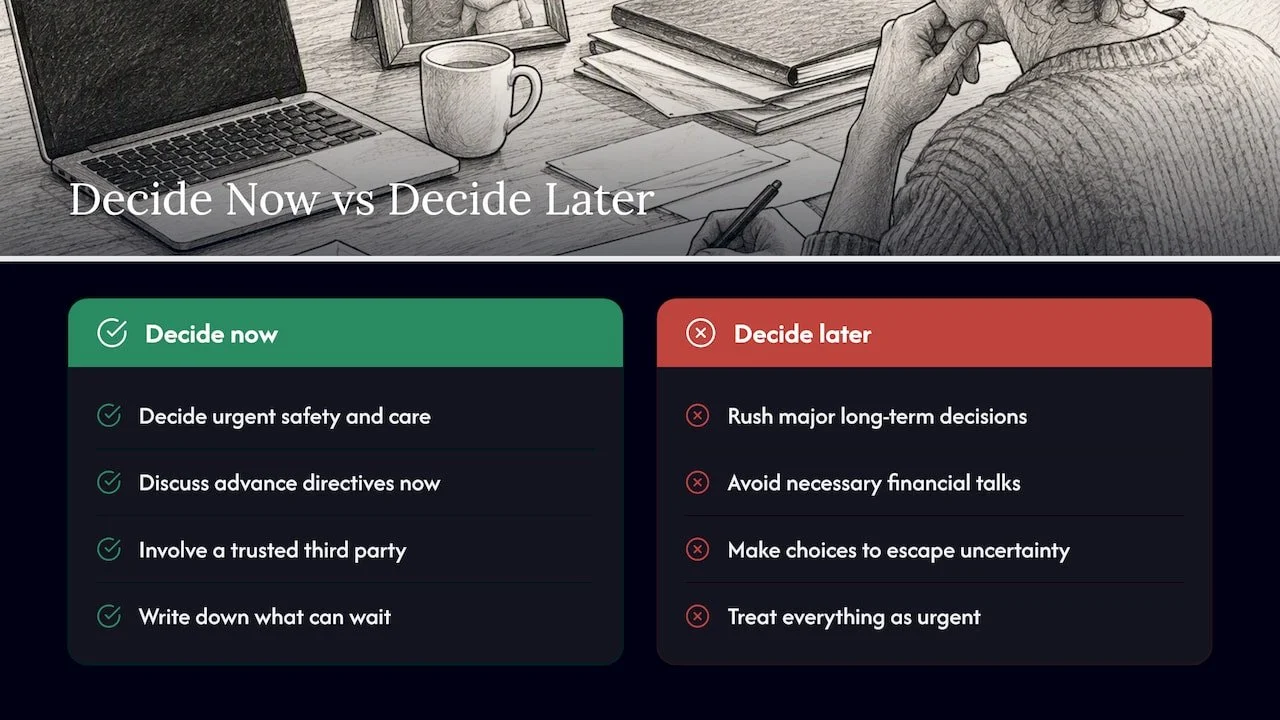
A useful middle path is separating decisions into two categories: what needs to be decided now for safety and care, and what can wait until there is more clarity. Writing this distinction down, even informally, reduces the mental load of feeling like everything is urgent at once. Involving a trusted third party, whether a social worker, financial planner, or therapist, can also help keep decisions grounded in facts rather than fear. Anticipatory grief does not have to mean decisions made in a fog; it means decisions made while holding two realities at once, the present caregiving need and the coming change.
Preparing for loss while creating meaningful moments now
Preparing for a loss does not mean giving up on the time that remains. Many caregivers find that small, intentional moments matter more than grand gestures, a shared meal, an old photo album, a specific song played together.
Consider a few concrete steps:
Ask your loved one what matters most to them in the time they have left, rather than assuming you already know.
Record stories, voices, or videos while you can. These become some of the most valued keepsakes after a loss.
Revisit shared rituals, a favorite recipe, a regular phone call time, a walk you used to take together, even in a modified form.
Plan around good days when possible, rather than only responding to medical schedules.
None of this erases the grief sitting alongside it. But practical coping guidance from Cleveland Clinic notes that anticipatory grief can sometimes serve an adaptive function, giving people a head start on adjustment, as long as it does not tip into avoidance or complicate the grieving that follows. The goal is not to rush toward acceptance, but to let preparation and connection exist in the same space.
How culture and personality shape anticipatory grief
Anticipatory grief does not look the same across families or communities. Cultural norms around expressing emotion, discussing death openly, or involving extended family in caregiving all shape how grief is felt and shown. In some families, open conversation about dying is welcomed; in others, it is considered disrespectful or premature, which changes what support even looks like.
Individual personality and prior experience with loss matter just as much. Someone who has navigated grief before may recognize their own patterns faster, while someone facing it for the first time may not have language for what they are experiencing. Caregivers of people with Alzheimer's disease or mild cognitive impairment often describe grief centered specifically on the loss of identity and connection, sometimes appearing early in the illness, well before physical decline, according to research on caregivers of people with dementia.
There is no single correct way to anticipate a loss. A caregiver from a close-knit, expressive family may process grief through group rituals and shared storytelling, while another may need solitary reflection first. Respecting those differences, rather than measuring anyone against a standard timeline or stage model, makes support more effective for the person actually living through it.
A note on ambivalence and small steps forward
Feeling relief alongside grief does not make you a bad caregiver. It makes you a tired one, holding two true things at once. If this week feels like too much, try one small step: ask your loved one a single question about what matters most to them right now, and protect one daily ritual just for yourself, even five quiet minutes. If the weight feels unmanageable, reaching out for support is a reasonable next move, not a last resort.
— Juiced
Getting support through Alvarado Therapy
If anticipatory grief has started to feel heavier than you can carry alone, working with a therapist who understands both trauma and grief can make a real difference. Therapists offer:
Individual counseling and EMDR therapy for ongoing grief and trauma support
EMDR intensives for caregivers who want focused, accelerated work in a shorter timeframe
Bilingual, culturally responsive care in English and Spanish

Starting care typically begins with a short intake conversation about your current situation, symptoms, and goals, so we can match you with the right level of support. You can book an appointment directly through our site whenever you are ready to take that first step.
This article is general information, not a substitute for advice from a qualified doctor. Consult a qualified healthcare professional about your own circumstances before acting on anything here.
FAQ
Why is anticipatory grief so hard to experience?
Anticipatory grief is hard because it combines ongoing caregiving demands with emotional mourning at the same time, leaving little space to fully process either. Caregiver burden has been shown to directly increase anticipatory grief intensity, while family functioning and resilience help soften that effect, according to a 2023 caregiver study.
What stages do people describe in anticipatory grief?
People commonly describe moving through acceptance of the likely loss, reflection on the relationship, mental rehearsal of life afterward, and imagining a future that includes the change, though these phases rarely happen in a fixed order. Everyone moves through them differently depending on their circumstances and support.
What are the three C's often mentioned in grief support?
Grief support frameworks sometimes reference communication, connection, and coping as core pillars, though definitions vary across sources and no single version is universally standardized. In practice, these translate to talking openly, staying connected to support systems, and using concrete coping strategies like the ones described above.
How long does anticipatory grief typically last?
There is no fixed timeline for anticipatory grief since it depends on the illness course, relationship, and individual circumstances, and it can begin early or intensify close to the end of life. For caregivers of people with dementia, for example, research shows grief tied to identity loss can start well before physical decline.
