
Support Resources for Bereavement: Your 2026 Guide

TL;DR:
Talk therapy is the most effective method for easing grief and depression after loss, according to a 2026 review. Support groups, individual counseling, and community resources complement therapy to meet different needs at various grief stages. Combining these supports enhances healing, while early engagement and small acts of support build resilience over time.
Support resources for bereavement include talk therapy, grief support groups, bereavement counseling services, and community programs that provide emotional, social, and practical help during the grieving process. A 2026 evidence review published in the Annals of Internal Medicine confirms that talk therapy is the most effective method for easing grief and depression after loss. Complementary options, including structured group programs, one-on-one counseling, and informal peer support, each serve distinct needs at different stages of grief. Knowing what is available, and when to use it, makes a real difference in how you heal.
1. What makes talk therapy the best support resource for bereavement?
Talk therapy is the primary evidence-backed method for grief recovery. The 2026 review in the Annals of Internal Medicine found consistent positive effects across multiple studies, placing psychotherapy above other interventions for both grief and depression symptoms. That finding matters because it gives you a clear starting point when deciding where to invest your energy and resources.
Psychotherapy works because it addresses more than sadness. Grief disrupts identity, attachment, and daily functioning. A skilled therapist provides a space to process those disruptions without suppressing emotions like anger, guilt, or relief.
"Therapy gives people permission to feel what they actually feel. Anger, sadness, even moments of relief are all valid parts of grief. Suppressing them delays healing." — Psychologist Cormier, as cited by Powers Health
Key benefits of talk therapy for grief include:
Emotional validation: Your feelings are acknowledged, not minimized.
Attachment processing: Therapy helps you adjust to the changed relationship with the person you lost.
Structured support: Sessions provide consistent, scheduled space for grief work.
Personalized pacing: A therapist adapts to where you are in your grief, not a fixed timeline.
Co-occurring conditions: Therapy addresses anxiety and depression that often accompany loss.
Pro Tip: When choosing a grief therapist, look for someone trained in trauma-informed care or specific grief modalities like EMDR or Complicated Grief Therapy. Ask directly about their experience with bereavement before your first session.
For a deeper look at what works, Alvaradotherapy's guide on evidence-based grief methods covers the clinical approaches therapists use most effectively.

2. How do grief support groups serve bereaved people?
Grief support groups provide structured peer connection for people navigating loss. They are not a replacement for therapy, but they address something therapy alone cannot: the experience of being understood by others who have lived through a similar loss.
Most structured programs run 4 to 8 weeks, meet weekly, and require advance registration. Costs range from free to $40 per session, and groups fill quickly. Signing up early is not optional; it is necessary.
Common group formats include:
Newly bereaved groups: Designed for people in the first weeks or months after a loss.
Ongoing support groups: For those further along who still need regular connection.
Spousal or partner loss groups: Focused on the specific grief of losing a life partner.
Sudden or traumatic loss groups: For those whose loss was unexpected or violent.
Specialized groups: Organized by type of loss, age of the deceased, or cultural background.
Timing your entry into a group matters significantly. Matching group type to grief stage improves outcomes. A newly bereaved person in an ongoing support group may feel out of sync with others, and vice versa.
Groups are available in three formats:
In-person: Offers physical presence and community, often through hospitals, hospices, or faith organizations.
Virtual: Accessible from home, particularly useful for those with mobility or transportation barriers.
Hybrid: Combines both options, giving flexibility without sacrificing connection.
Pro Tip: If you feel hesitant about joining a group, start with a virtual session. Lower stakes entry often makes it easier to show up consistently.
For local and community-based programs in California, Alvaradotherapy's overview of grief support for Californians lists options worth exploring.
3. What individual bereavement counseling services are available?
One-on-one bereavement counseling gives you dedicated, private space to work through loss at your own pace. Unlike group settings, individual counseling adapts entirely to your history, relationship with the deceased, and current emotional state.
Standard grief counseling addresses the emotional and psychological impact of loss. For people experiencing prolonged or complicated grief, specialized approaches like Complicated Grief Therapy (CGT) target the specific patterns that prevent natural adaptation. CGT is a structured, evidence-based protocol developed specifically for what clinicians now call Prolonged Grief Disorder.
Signs that indicate a need for specialized counseling include:
Grief that intensifies rather than eases after several months.
Difficulty accepting the reality of the loss.
Persistent inability to engage in daily activities or relationships.
Thoughts of self-harm or a wish to die to be reunited with the deceased.
Significant anxiety, depression, or PTSD symptoms alongside grief.
Affordability is a real barrier for many people. Options to reduce cost include sliding-scale fees through private practices, community mental health centers, Employee Assistance Programs (EAPs), and insurance-covered sessions. Many nonprofit hospice organizations also offer free short-term grief counseling to families they have served.
Research shows that 35% of bereaved people do not access formal support in the first year after loss. That gap is often driven by the belief that grief is private and should be managed alone. Reaching out is not a sign of weakness. It is the most direct path to healing.
Alvaradotherapy's resource on what actually helps you heal explains how counseling approaches differ and what to expect from the process.
4. What community and informal support resources complement formal grief counseling?
Formal therapy and counseling are the foundation of effective grief support. Informal and community resources fill the gaps between sessions and address needs that professional services do not cover.
Research from Harvard Health confirms that small, practical gestures such as sending cards, dropping off meals, and regular check-ins are more helpful than verbal advice or problem-solving. Presence matters more than words.
"The most meaningful support is often the simplest. Showing up consistently, without an agenda, tells a grieving person they are not alone." — Harvard Health
Community and informal resources include:
24/7 crisis helplines: The 988 Suicide and Crisis Lifeline provides immediate support for those in acute distress.
Online grief forums: Platforms like Reddit's r/grief and dedicated bereavement communities allow people to share experiences at any hour.
Peer support programs: Trained volunteers who have experienced loss themselves offer one-on-one connection.
Spiritual and religious communities: Faith-based grief ministries provide both community and meaning-making frameworks.
Artistic expression: Journaling, art therapy groups, and music programs offer non-verbal processing outlets.
Practical aid networks: Meal delivery, help with administrative tasks like death certificates, and transportation assistance reduce the logistical burden of early grief.
For guidance on supporting someone through loss, Bravo Family Mortuary's grief support articles offer practical, community-focused perspectives from a funeral services context.
5. How to choose the right bereavement support for your needs
The right resource depends on where you are in your grief, the nature of your loss, and what kind of support feels accessible to you. No single option works for everyone, and combining resources produces better outcomes than relying on one alone.
Key factors to consider when choosing support:
Time since loss: Early grief often benefits most from individual counseling or newly bereaved groups. Longer-term grief may call for ongoing groups or specialized therapy.
Type of loss: Sudden, traumatic, or stigmatized losses (such as suicide or overdose) often require specialized support.
Grief complexity: If grief is interfering with daily functioning after several months, specialized counseling is the appropriate step.
Personal comfort: Some people open up more easily in groups; others need the privacy of individual sessions.
| Resource type | Best for | Format | Cost range |
|---|---|---|---|
| Individual therapy | Complex or prolonged grief | One-on-one, in-person or online | Varies; insurance often covers |
| Grief support group | Peer connection, shared experience | Weekly group, 4–8 weeks | Free to $40 per session |
| Bereavement counseling | Early loss, emotional processing | One-on-one, short-term | Sliding scale or free options |
| Community/informal support | Day-to-day connection and practical help | Flexible, ongoing | Free |
| Crisis helplines | Acute distress, immediate need | Phone or text, 24/7 | Free |
Grief does not follow a schedule. Research confirms it oscillates between loss-oriented and restoration-oriented activities, causing unpredictable emotional shifts over time. Adjusting your support as your needs change is not inconsistency. It is good self-care.
Pro Tip: Start with one resource and add others as you stabilize. Trying to engage with therapy, a group, and multiple informal supports simultaneously can feel like too much in early grief.
Alvarado Therapy's grief counseling guide for 2026 walks through timing and resource selection in more detail.
Key Takeaways
Effective support for bereavement combines talk therapy as the primary evidence-backed method with grief support groups, individual counseling, and community resources matched to your grief stage and personal needs.
| Point | Details |
|---|---|
| Talk therapy leads the evidence | A 2026 review confirms psychotherapy as the most effective method for grief and depression after loss. |
| Group timing matters | Matching the group type to your grief stage, newly bereaved vs. ongoing, significantly improves outcomes. |
| Most people delay formal support | 35% of bereaved individuals do not access formal help in the first year, often due to the belief grief is private. |
| Combine resources for best results | Therapy, groups, and informal support each address different needs; using them together produces better outcomes. |
| Practical gestures outperform advice | Small acts like meals, cards, and check-ins are more helpful to grieving people than words or solutions. |
What I've learned about grief support that most articles won't tell you
The most common mistake I see is treating grief support as a linear checklist. People assume they should start with a group, move to therapy, and eventually "complete" the process. Grief does not work that way. The research on the non-linear nature of grief confirms what clinicians observe every day: people move back and forth between acute pain and relative stability, sometimes within the same afternoon.
The second mistake is waiting until grief feels unbearable before reaching out. The bereaved people who benefit most from support are those who engage early, before isolation becomes entrenched. That 35% who avoid formal help in the first year are not doing themselves a favor. They are often making the road longer.
What actually works is simpler than most people expect. Show up to a session even when you do not feel like talking. Stay in a group even when you feel like the odd one out. Accept the meal from a neighbor even when you would rather be alone. The accumulation of small, consistent acts of receiving support is what builds resilience over time.
Grief is not a problem to solve. The clinicians who do this work best are the ones who journey with their clients rather than rushing them toward resolution. If your therapist or counselor makes you feel like you should be "over it" by now, find a different one.
— Juiced
Alvaradotherapy's approach to grief and trauma support
Grief and trauma are deeply connected. Many people who experience significant loss also carry unresolved trauma that shapes how they grieve. Alvaradotherapy, a California-based trauma-informed mental health practice, works with adults navigating exactly this intersection.
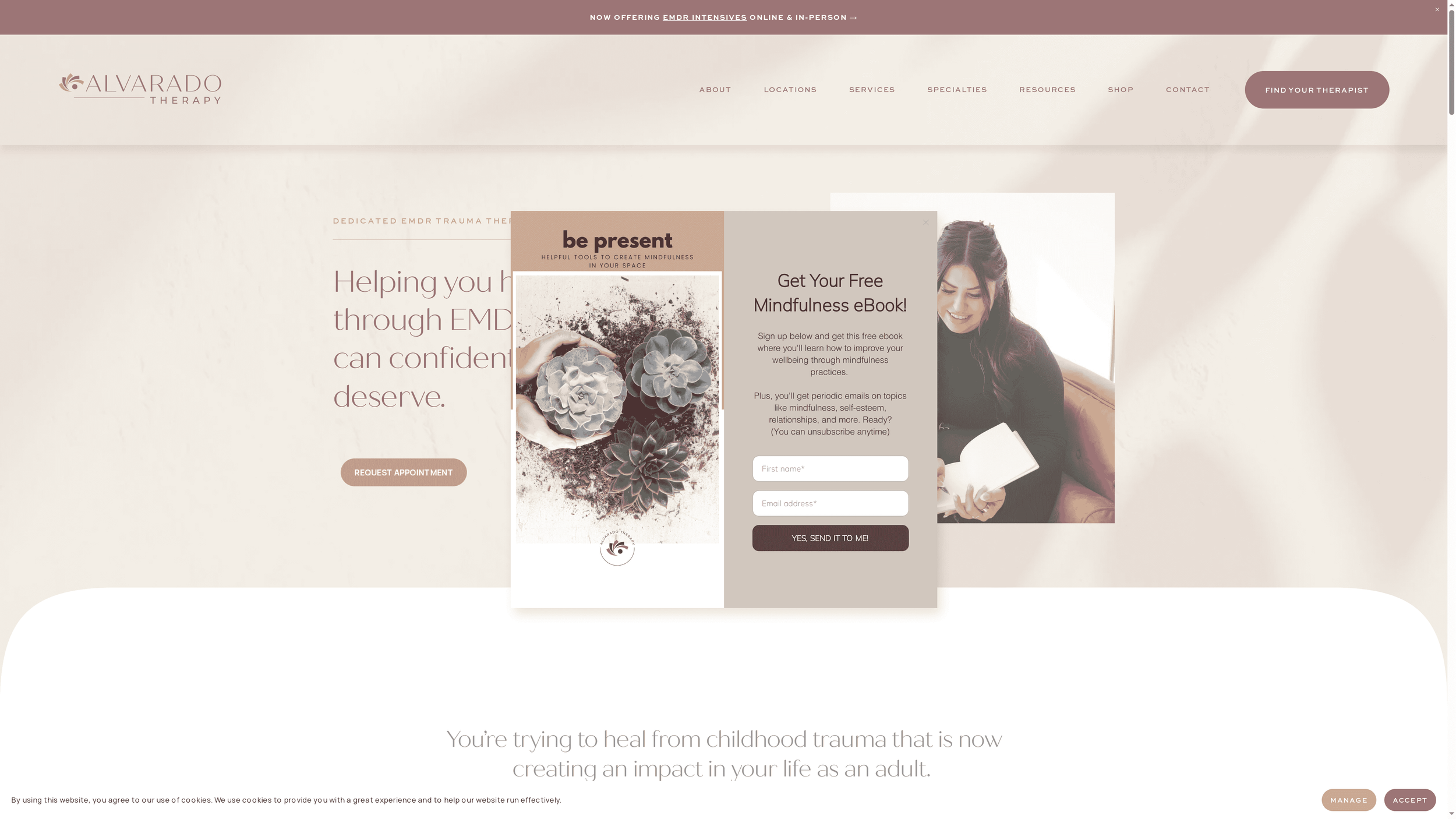
Licensed therapists at Alvaradotherapy offer EMDR therapy, individual counseling, and trauma-informed grief support through online sessions available throughout California. If you are unsure where to start, the what to expect page explains the process clearly, from first contact to ongoing care. For a more personalized conversation about your specific needs, you can also schedule a consultation to find the right fit. Bilingual services in English and Spanish are available.
FAQ
What is the most effective support resource for bereavement?
Talk therapy is the most effective method for managing grief and depression after loss, confirmed by a 2026 evidence review in the Annals of Internal Medicine. Individual psychotherapy provides structured, personalized support that addresses both emotional pain and disrupted identity.
How long do grief support groups typically last?
Most grief support groups run 4 to 8 weeks, meet weekly, and require advance registration. Costs range from free to $40 per session, and groups often fill quickly.
When should I seek specialized bereavement counseling?
Seek specialized counseling when grief intensifies rather than eases after several months, or when it significantly interferes with daily functioning, relationships, or physical health. Prolonged Grief Disorder is a recognized condition with targeted, evidence-based treatments.
What percentage of bereaved people avoid formal support?
Research shows 35% of bereaved individuals do not access formal mental health or bereavement support within the first year after loss. The most common reason is the belief that grief should be managed privately.
Can I use multiple grief support resources at the same time?
Combining resources, such as individual therapy alongside a grief support group and informal community support, produces better outcomes than relying on one alone. Start with one resource and add others as your capacity allows.
