
How Does Therapy Aid Healing: A Recovery Guide

TL;DR:
Therapy produces lasting emotional healing by changing brain function, beliefs, and relational patterns.
The client-therapist relationship significantly influences positive outcomes and insures deep emotional change.
Therapy is a structured, evidence-based intervention that reshapes how you think, feel, and relate to others, producing durable emotional healing from trauma, anxiety, and grief. Understanding how does therapy aid healing means looking beyond talk and symptom relief. The process works through real biological changes in the brain, revision of hidden beliefs, and the development of healthier relational patterns. Methods like Cognitive Behavioral Therapy (CBT), Eye Movement Desensitization and Reprocessing (EMDR), and Polyvagal Theory-informed approaches each target different layers of emotional injury. Together, they create the conditions for recovery that lasts well beyond the final session.
How does therapy aid healing through brain changes?
Therapy changes the brain. Neuroscience confirms that therapy leverages neuroplasticity, the brain's ability to form new neural connections, to shift you out of survival mode and into balanced regulation. This is not a metaphor. Brain imaging studies show measurable changes in structure and function after consistent therapy.
The most significant shift happens between the prefrontal cortex and the amygdala. The amygdala fires the alarm signal during stress or perceived threat. The prefrontal cortex, the rational, decision-making part of the brain, can calm that alarm. Therapy strengthens the prefrontal cortex's ability to regulate the amygdala, reducing emotional reactivity over time. That is why people in therapy often report feeling less triggered by situations that once felt unbearable.
Therapy functions as a biological intervention, not just a psychological one. This places it in the same category as medication for many conditions, but with a key advantage: the gains from therapy tend to outlast the treatment itself. CBT for depression reduces relapse risk by about 50% compared to medication alone over two years. That durability reflects real changes in how the brain processes emotion and stress.
Key brain-level changes therapy produces include:
Reduced amygdala reactivity to perceived threats
Stronger prefrontal cortex regulation of emotional responses
Improved hippocampal function, supporting memory processing and context
Decreased cortisol output during stress events
Greater integration between brain regions that manage emotion and reason
Pro Tip: Early intervention in therapy leads to better outcomes and shorter treatment duration. Engaging therapy before a crisis reaches its peak takes advantage of the brain's natural plasticity, making change faster and more lasting.
How does therapy reshape hidden beliefs and relational patterns?
Every person operates from a set of internal rules about themselves, others, and the world. Therapists call these "private logic." Most people are unaware of them. Making private logic visible and open to examination is one of the core mechanisms of durable emotional change. When you can see the belief driving a behavior, you can choose to revise it.
Common relational patterns therapy targets include:
People-pleasing rooted in fear of rejection or abandonment
Emotional shutdown as a learned response to unsafe environments
Hypervigilance in relationships after repeated betrayal or trauma
Self-sabotage tied to beliefs of unworthiness
Conflict avoidance that prevents genuine connection
The therapeutic relationship itself is the primary vehicle for this work. The client-therapist relationship is one of the strongest predictors of positive therapy outcomes, often surpassing the effects of any specific modality. This is not incidental. The relationship provides a safe context where old patterns can surface, be named, and be worked through in real time.
"Healing happens when unconscious private logic is brought into conscious awareness and restructured through therapeutic relationships." This insight captures why two people can use the same therapy technique and get very different results. The quality of the relationship determines how deeply the work goes.
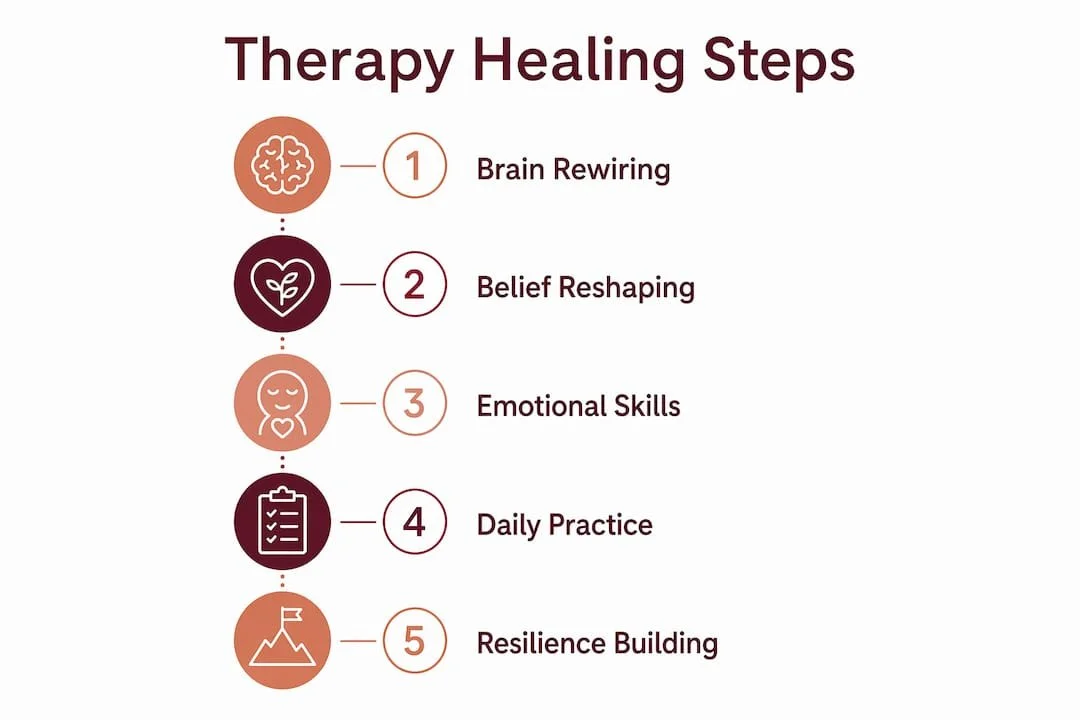
Insight alone does not produce change. Recognizing a pattern is the first step, but therapy also guides you through the harder work of responding differently. That repetition, practiced first in session and then in daily life, is what rewires the brain.
Pro Tip: Prioritize therapist fit above all else when starting therapy. Safety and trust in the relationship are not soft factors. They are the conditions under which real change becomes possible.
Therapy benefits by condition: trauma, anxiety, and grief compared
Therapy does not work the same way for every condition. Its methods and outcomes differ depending on what you are healing from. The table below compares how therapy supports recovery across three of the most common emotional challenges.
| Condition | Most effective approaches | Key benefit | Durability of gains |
|---|---|---|---|
| Trauma and PTSD | EMDR, trauma-focused CBT | Significant PTSD symptom reduction | High; gains persist after treatment ends |
| Anxiety disorders | CBT, exposure therapy | Reduced reactivity, relapse prevention | High; CBT cuts relapse risk by ~50% |
| Grief and loss | Grief-focused therapy, relational therapy | Emotional regulation, meaning-making | Moderate to high; depends on engagement |
EMDR is endorsed as a first-line PTSD treatment by the World Health Organization, with strong evidence for symptom reduction across diverse populations. For people healing from childhood trauma or complex PTSD, EMDR works by processing traumatic memories so they lose their emotional charge. The memory remains, but it no longer hijacks the nervous system. Alvaradotherapy's EMDR therapy approach explains this process in practical terms for people considering it.
For anxiety, CBT is the gold standard. It targets the thought patterns that fuel anxious responses and teaches the brain to evaluate threats more accurately. The result is not just symptom relief during treatment. People who complete CBT for anxiety show lasting reductions in relapse rates, meaning the skills they build continue working after sessions end.
Grief therapy operates differently. Grief is not a disorder to be eliminated. It is a natural response to loss that can become stuck when emotions are suppressed or when the grieving person lacks support. Therapy provides a structured space to process loss, find meaning, and rebuild a sense of self after it. Practical emotional healing strategies can complement this process between sessions.
Practical ways therapy promotes recovery in daily life
Therapy teaches skills that travel with you. The role of therapy in healing extends far beyond the therapy room. Research links therapy to improved emotional regulation, communication skills, resilience, stress management, sleep quality, and even immune health. These are not abstract benefits. They show up in how you handle a difficult conversation, recover from a setback, or respond to your own distress.
The practical skills therapy builds include:
Emotional regulation — Identifying and managing intense feelings before they drive impulsive reactions.
Distress tolerance — Sitting with discomfort without avoiding it or making it worse.
Cognitive restructuring — Catching and revising distorted thought patterns that amplify anxiety or shame.
Communication skills — Expressing needs clearly and setting limits without aggression or collapse.
Behavioral activation — Taking small, consistent actions that build momentum toward recovery even on hard days.
Insight must be applied through concrete actions in daily life to change neural pathways effectively. Practitioners consistently emphasize that practicing coping skills between sessions is what solidifies change. The session is where you learn and process. Daily life is where the rewiring happens.
Therapy also builds resilience as a long-term asset. A proactive approach to therapy builds emotional strength that prevents future crises rather than only responding to them. People who engage therapy before reaching a breaking point tend to develop stronger coping foundations. The PTSD resilience strategies at Alvaradotherapy show what that kind of proactive work looks like in practice.

Pro Tip: Between sessions, keep a brief daily log of moments when you used a skill from therapy. Even two or three sentences is enough. This practice accelerates the transfer of insight into lasting behavior change.
Key Takeaways
Therapy heals by changing brain function, revising hidden beliefs, and building practical emotional skills that persist long after treatment ends.
| Point | Details |
|---|---|
| Therapy changes the brain | Neuroplasticity allows therapy to strengthen prefrontal cortex regulation of the amygdala, reducing emotional reactivity. |
| Hidden beliefs drive behavior | Identifying and revising private logic is a core mechanism of durable emotional change in therapy. |
| The therapeutic relationship matters most | The client-therapist alliance is a stronger predictor of outcomes than any specific therapy technique. |
| Gains outlast treatment | CBT reduces depression relapse risk by about 50% compared to medication alone over two years. |
| Daily practice is required | Applying therapy skills between sessions is what rewires neural pathways and solidifies recovery. |
What I've learned about therapy that most people miss
Most people come to therapy expecting to be fixed. They want the therapist to extract the pain, hand back a calmer version of themselves, and send them on their way. That is not how it works, and understanding the difference changes everything.
The therapeutic relationship is not a delivery mechanism for techniques. It is the healing itself. The experience of being genuinely seen, challenged with care, and supported through discomfort is something many people have never had before. For adults healing from childhood trauma or years of anxiety, that experience alone begins to shift the nervous system.
What I find most underestimated is the work that happens outside the session. People often treat therapy as a weekly appointment and nothing more. The clients who heal fastest are the ones who take what surfaces in session and actively work with it during the week. They journal. They practice the skill. They notice the pattern when it shows up in a real conversation. That consistent application is what makes the brain change stick.
The other misconception worth naming is that therapy is only for crisis. Therapy is most powerful when you engage it before you are completely overwhelmed. The brain is more receptive, the work goes deeper, and the skills you build become part of how you function, not just how you cope.
If you are sitting with grief, anxiety, or the weight of something you have never fully processed, therapy is not a last resort. It is a first-rate tool for building the life you actually want.
— Juiced
Alvaradotherapy's approach to trauma and emotional recovery
Alvaradotherapy is a California-based trauma-informed practice serving adults across Pasadena, Ventura, and online throughout California. The team specializes in online EMDR and trauma therapy, working with people healing from PTSD, complex trauma, grief, and anxiety in both English and Spanish.
For those dealing with PTSD or complex trauma, Alvaradotherapy offers EMDR Intensives and individual counseling designed to address deep emotional wounds with care and clinical precision. The practice also provides couples therapy and initial consultations for those ready to take a first step. Every service is delivered with a commitment to culturally responsive, identity-affirming care.
FAQ
What is the role of therapy in healing from trauma?
Therapy for trauma works by processing traumatic memories so they lose their emotional charge, reducing PTSD symptoms and restoring nervous system regulation. EMDR and trauma-focused CBT are both endorsed as first-line treatments with strong evidence for lasting recovery.
Does therapy help with anxiety long-term?
CBT for anxiety reduces relapse risk by about 50% compared to medication alone over two years. The skills built in therapy, including cognitive restructuring and distress tolerance, continue working after sessions end.
How long does it take for therapy to produce results?
Results vary by condition, severity, and engagement, but early intervention consistently leads to better outcomes and shorter treatment duration. People who apply therapy skills between sessions tend to progress faster.
Can therapy improve well-being beyond mental health symptoms?
Research links therapy to improved sleep, stress management, communication skills, and immune health, all of which extend well beyond symptom relief. These gains reflect real changes in how the brain and body regulate stress.
What makes therapy effective beyond the techniques used?
The therapeutic alliance, the quality of the client-therapist relationship, is a stronger predictor of positive outcomes than any specific modality. Safety, trust, and honest engagement in the relationship are the conditions that make all other techniques work.
