
Trauma Healing Process Workflow for Effective Recovery

Over half of American adults report experiencing at least one traumatic event in their lifetime, making trauma recovery a deeply relevant journey for many. The process of healing can feel daunting without a sense of stability or a reliable support network. Whether you are just starting to address old wounds or looking for effective next steps, this guide walks you through practical, research-backed strategies to help you regain confidence and strengthen your resilience.
Table of Contents
Quick Summary Takeaway
| Key Insight | Detailed Explanation |
|---|---|
| 1. Build a Support Network | Surround yourself with trusted individuals who can provide emotional support during your recovery journey. |
| 2. Acknowledge Traumatic Experiences | Recognize and validate your past traumas to create a strong foundation for healing and understanding. |
| 3. Choose Evidence-Based Therapy | Select therapeutic approaches backed by research and suited to your individual recovery needs. |
| 4. Process and Integrate Trauma | Work through traumatic memories with professional guidance to develop healthier coping mechanisms and perspectives. |
| 5. Review Progress Regularly | Monitor emotional regulation and personal growth over time to refine and strengthen your recovery strategies. |
Step 1: Establish Safety and Support Systems
Recovering from trauma requires building a strong, reliable support network that helps you feel physically and emotionally secure. This step focuses on creating an environment where you can begin healing with confidence and protection.
Start by identifying trusted individuals who can provide consistent emotional support during your recovery journey. SAMHSA recommends creating trauma-informed environments that prioritize safety, trust, and collaboration which means surrounding yourself with people who understand your healing process. Look for friends, family members, or professional counselors who demonstrate empathy, active listening, and non-judgmental attitudes. Consider joining support groups where you can connect with others who have similar experiences, as shared understanding can be incredibly validating.
Building your support system also involves establishing clear personal boundaries and communication strategies. Practice articulating your needs clearly and be willing to communicate when you feel uncomfortable or triggered. The University of Colorado Boulder suggests maintaining consistent follow-up and normalizing your feelings during traumatic recovery, which means creating spaces where you can express yourself without shame or pressure.
Pro tip: Create a written safety plan that includes emergency contact numbers, coping strategies, and trusted support people you can reach out to during challenging moments.
Step 2: Identify and Acknowledge Traumatic Experiences
This step involves recognizing and validating the traumatic experiences that have impacted your life, creating a foundation for healing and understanding. Identifying trauma is a crucial first step in developing a comprehensive approach to personal recovery.
Research from Indiana University reveals that over half of the U.S. population has experienced some form of maltreatment or household dysfunction before age 18, which underscores the importance of understanding and acknowledging your personal experiences. Begin by reflecting on your past with compassion and without judgment. Consider creating a safe, private space where you can explore your memories and emotions. This might involve journaling, speaking with a trusted therapist, or engaging in gentle self reflection. Look for patterns of experiences that have caused significant emotional distress, feelings of helplessness, or ongoing psychological impact.
National University emphasizes the importance of understanding trauma’s profound impact on individuals, which means approaching your experiences with patience and self-compassion. Recognize that acknowledging trauma is not about reliving painful moments, but about understanding how these experiences have shaped your responses and coping mechanisms. This process might involve identifying specific events, emotional triggers, and the ways trauma has influenced your relationships, self perception, and daily functioning.
Pro tip: Create a compassionate self care plan to support yourself during this potentially challenging process of identification and acknowledgment.
Step 3: Select an Evidence-Based Healing Approach
Selecting an appropriate healing approach is a critical step in your trauma recovery journey, requiring careful consideration of therapeutic techniques that have proven effectiveness and align with your unique healing needs. This step involves understanding different evidence-based methods and finding the right fit for your personal recovery path.
Narrative Exposure Therapy offers a structured approach to treating trauma by helping patients create a detailed account of their experiences, which can be particularly helpful for individuals seeking to reclaim their sense of self and narrative. When exploring healing approaches, consider therapies that provide structured frameworks for processing traumatic memories. Look for methods that have scientific research backing, such as Eye Movement Desensitization and Reprocessing (EMDR), Cognitive Behavioral Therapy (CBT), or trauma-focused therapies that emphasize safety and gradual processing of difficult experiences.
Pioneering psychiatrist Judith Lewis Herman has significantly contributed to understanding complex trauma treatment approaches, highlighting the importance of finding a therapeutic method that respects your individual experience. Consult with trauma-informed mental health professionals who can help you assess which evidence-based approach might work best for your specific situation. Consider factors like your personal history, current symptoms, comfort level with different therapeutic techniques, and the potential for long-term healing and growth.
Pro tip: Schedule initial consultations with multiple trauma-informed therapists to find a healing approach and professional who feels genuinely supportive and aligned with your recovery goals.
Here’s a comparison of common evidence-based trauma therapies and their unique focus areas:
Therapy Approaches Overview
| Therapy Type | Main Focus | Ideal For |
|---|---|---|
| Cognitive Behavioral Therapy (CBT) | Restructuring negative thoughts and identifying unhelpful thinking patterns. | Changing unhelpful behaviors and improving emotional regulation. |
| EMDR | Processing traumatic memories through guided bilateral stimulation. | Reducing emotional distress linked to past traumatic experiences. |
| Narrative Exposure Therapy | Reconstructing personal narratives to make sense of trauma over time. | Integrating life experiences and trauma into a coherent story. |
| Somatic Experiencing | Body-based healing focused on physical sensations and nervous system regulation. | Releasing stored bodily stress and trauma responses. |
Step 4: Engage in Trauma Processing and Integration
Trauma processing and integration represent a transformative journey of understanding, healing, and reconstructing your internal narrative after experiencing significant emotional wounds. This critical step involves actively working through traumatic memories while developing new perspectives and coping mechanisms that support your overall healing.

The Shattered Assumptions Theory reveals how traumatic experiences fundamentally alter our core beliefs about the world and ourselves, highlighting the importance of intentionally rebuilding your understanding of safety, trust, and personal resilience. Begin by creating a structured environment with a trauma-informed therapist who can guide you through gentle, controlled exposure to difficult memories. This might involve techniques like narrative therapy, where you reconstruct your story with compassion and understanding, or somatic experiencing, which helps process trauma stored in your body.
Research by Richard F. Mollica from Harvard Medical School emphasizes the profound psychological impact of trauma and the importance of comprehensive healing approaches, suggesting that successful integration involves more than just processing memories. Focus on developing new cognitive frameworks, practicing emotional regulation skills, and gradually rebuilding a sense of personal agency. This means learning to recognize trauma responses, understanding their origins, and developing healthy strategies to manage triggers and emotional reactions.
Pro tip: Keep a recovery journal to track your progress, document insights, and create a tangible record of your healing journey that demonstrates your growing strength and resilience.
Step 5: Review Progress and Reinforce Coping Strategies
Reviewing your trauma recovery progress is a critical phase that allows you to assess your healing journey, celebrate growth, and strategically refine your emotional resilience. This step involves thoughtfully examining your development while reinforcing the coping mechanisms that support your ongoing recovery.
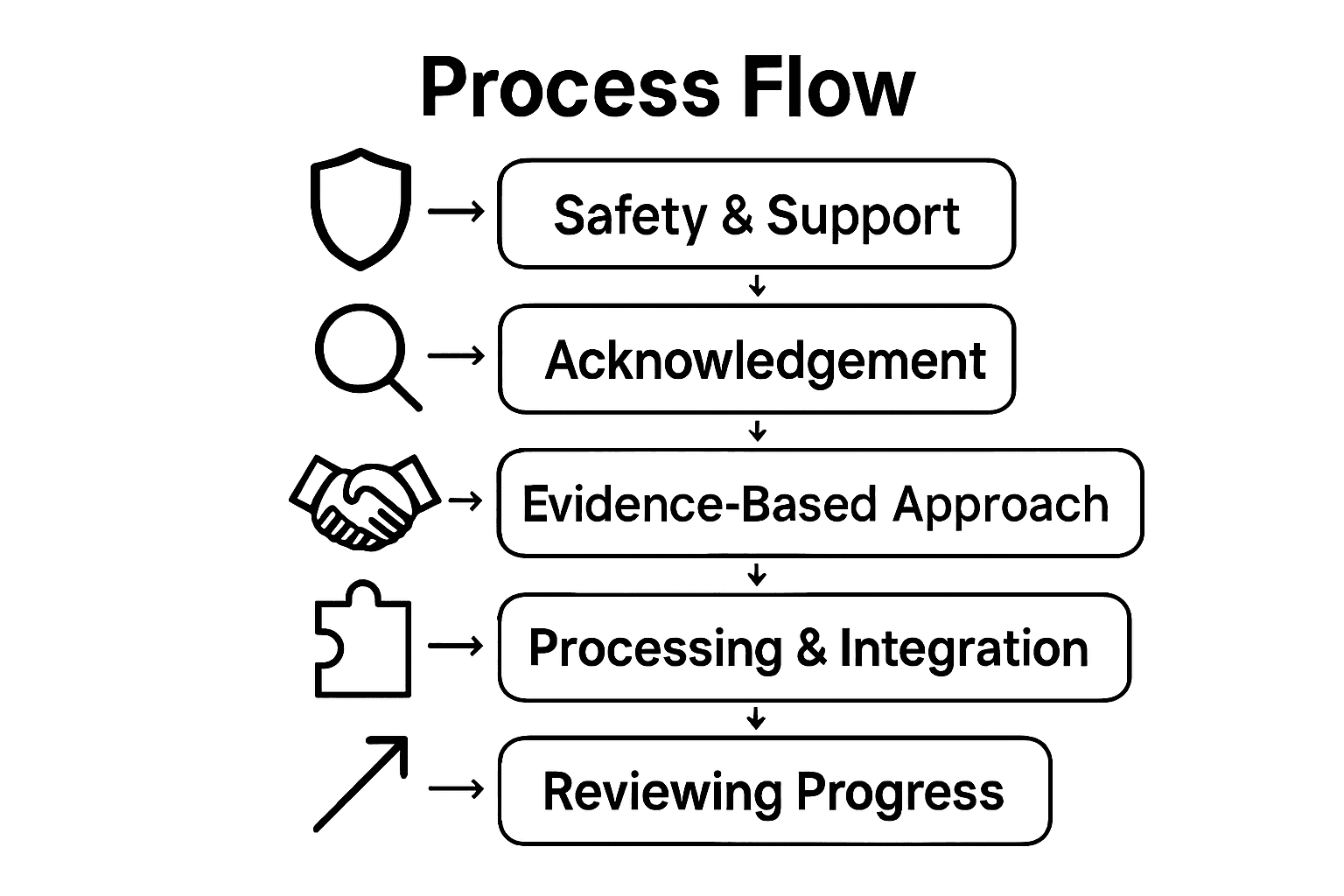
Emerging research on diagnostic frameworks highlights innovative approaches to tracking mental health progression, suggesting that systematic evaluation can provide meaningful insights into your healing process. Work with your therapist to establish clear, measurable markers of progress that go beyond surface level improvements. These might include tracking emotional regulation skills, reducing trauma trigger sensitivity, improving interpersonal relationships, or increasing your overall sense of personal agency and safety.
Advanced research explores potential technological tools for supporting trauma recovery assessment, which underscores the importance of comprehensive and personalized tracking methods. Develop a reflective practice that involves regular self assessment through journaling, therapy sessions, and personal check ins. Pay attention to subtle shifts in your emotional landscape such as improved stress management, increased ability to set boundaries, reduced anxiety responses, and a growing sense of empowerment. Remember that healing is not linear and small consistent improvements are significant indicators of your resilience.
Pro tip: Create a quarterly personal recovery review where you document your growth, identify areas needing additional support, and consciously acknowledge the courage it takes to continue your healing journey.
Below is a summary of progress indicators to monitor during trauma recovery:
Recovery Progress Indicators
| Progress Indicator | What to Look For | Why It Matters |
|---|---|---|
| Emotional Regulation | Greater calm under stress and improved emotional balance. | Signals increased resilience and nervous system stability. |
| Boundary Setting | Clear and confident expression of personal needs. | Builds emotional safety, trust, and self-confidence. |
| Relationship Quality | Stronger, healthier, and more balanced connections. | Reflects healing social skills and improved communication. |
| Agency and Empowerment | Active decision-making and increased self-direction. | Indicates restored self-control and personal autonomy. |
Start Your Trauma Healing Journey with Expert Support
The trauma healing process can feel overwhelming when facing deep emotional wounds and complex recovery stages. If you are seeking to build safety, acknowledge traumatic experiences, and engage in proven healing approaches like EMDR therapy, you are not alone. Alvarado Therapy understands the challenges of navigating trauma and offers compassionate, trauma-informed care designed to empower you during every step of this journey.
Explore how licensed therapists across California and Ventura CA (in person) specialize in evidence-based treatments such as EMDR and individual counseling with culturally responsive, bilingual support. Visit Alvarado Therapy today to find detailed service descriptions, meet our team, and schedule your first appointment. Take control of your healing process now and experience a safe space dedicated to your recovery and growth.
Frequently Asked Questions
What is the first step in the trauma healing process workflow?
The first step is to establish safety and support systems. Identify trusted individuals who can provide consistent emotional support and create a written safety plan with emergency contacts and coping strategies.
How can I acknowledge my traumatic experiences effectively?
You can acknowledge your traumatic experiences by reflecting on your past with compassion and writing in a safe, private space. Consider journaling your feelings and memories to help validate your experiences without judgment.
What evidence-based healing approaches should I consider for trauma recovery?
Consider selecting therapies like Cognitive Behavioral Therapy (CBT), Eye Movement Desensitization and Reprocessing (EMDR), or Narrative Exposure Therapy. Research each method and consult with mental health professionals to find an approach that resonates with your needs.
How do I process and integrate my trauma during recovery?
To process and integrate trauma, work with a trauma-informed therapist who can guide you through structured exposure to memories. Focus on reconstructing your narrative and developing new coping mechanisms to manage emotional responses.
How can I evaluate my progress in the trauma healing process?
You can evaluate your progress by keeping a reflective journal to document changes in emotional regulation, boundary setting, and overall well-being. Aim to review your growth quarterly and recognize both small improvements and challenges in your recovery journey.
What coping strategies should I reinforce during my recovery journey?
Reinforce coping strategies such as practicing emotional regulation, setting clear personal boundaries, and maintaining supportive relationships. Regularly check in on your emotional landscape to gauge areas for growth and celebration.
