
Is Couples Therapy Effective? What Research Shows

TL;DR:
Couples therapy is an evidence-based treatment that significantly improves relationship satisfaction for most couples. Starting therapy early and completing 12 to 15 sessions are critical for lasting success, with models like EFT and the Gottman Method showing high effectiveness. Teletherapy provides a comparable and accessible option, helping couples overcome logistical barriers and achieve emotional growth together.
Couples therapy is defined as a structured, evidence-based treatment designed to help partners improve communication, resolve conflict, and rebuild emotional connection. Research consistently shows that 70–75% of couples who complete evidence-based treatment report significant relationship improvement. Attachment-based approaches like Emotionally Focused Therapy (EFT) push that number even higher, reaching 86% effectiveness in some studies. Most couples see meaningful gains within 12–15 sessions over three to four months. If you are wondering whether couples therapy is effective for your relationship, the short answer is yes. For most couples who commit to the process, it works.
Is couples therapy effective? what the research actually says
The research on couples therapy success rates is more consistent than most people expect. Multiple independent studies place effectiveness between 60% and 80%, with the strongest outcomes tied to evidence-based models and adequate session completion.
Nearly 90% of individuals report improved emotional health after couples therapy. That figure matters because it shows the benefits extend well beyond relationship satisfaction. Partners often leave therapy with reduced anxiety, lower depression scores, and stronger personal coping skills.
"Couples therapy is not just about saving a relationship. It is about helping two people grow individually while learning to function better together." — Alvaradotherapy clinical perspective
The benefits of couples counseling cover a wide range of challenges. Research documents measurable gains for couples dealing with infidelity, parenting stress, financial conflict, and chronic communication breakdowns. Infidelity recovery, one of the hardest cases, shows 60–70% recovery rates when both partners remain engaged and the unfaithful partner takes accountability.
Long-term outcomes are also encouraging. Emotionally Focused Therapy produces clinically significant improvement in approximately 70–75% of couples, with gains maintained up to two years after therapy ends. That durability separates EFT from approaches that produce short-term relief without lasting change.
Key benefits documented in couples therapy effectiveness studies include:
Improved conflict resolution and communication patterns
Reduced emotional reactivity and defensiveness
Stronger sense of emotional safety and trust
Better co-parenting coordination and shared decision-making
Decreased individual symptoms of anxiety and depression
What factors decide whether couples therapy will work?
Effectiveness is not automatic. Several variables consistently separate couples who improve from those who plateau or drop out early.

Timing is the single biggest factor. Couples wait an average of six years before seeking therapy. By that point, resentment is often entrenched, negative communication patterns are deeply habitual, and emotional withdrawal has become the default. Starting earlier, ideally at the first sign of recurring conflict, produces more durable improvements and better outcomes overall.
Therapist expertise matters significantly. Not every therapist is trained in evidence-based couples models. EFT, the Gottman Method, and Cognitive Behavioral Couple Therapy (CBCT) each require specialized training. A general therapist without couples-specific credentials may lack the tools to address attachment injuries or systemic relationship dynamics effectively.
Both partners do not need to be equally motivated at the start. One partner can be less motivated initially and still make progress, provided they remain engaged in the process. Reluctance is manageable. Complete disengagement is not.
Session dose is non-negotiable. An adequate course of therapy requires 12–15 sessions. Dropping out after three or four sessions, which is common among couples seeking quick fixes, undermines the entire process. Real change requires time for de-escalation, skill-building, and emotional repair.
Pro Tip:If your partner is reluctant to start therapy, frame the first session as a consultation rather than a commitment. Most resistant partners become more open once they experience a neutral, non-blaming session environment.
Teletherapy has removed one of the most common logistical barriers. Teletherapy delivers comparable outcomes to in-person sessions, with multiple studies confirming no significant difference in effectiveness. For couples with scheduling conflicts, geographic limitations, or one partner who travels frequently, online therapy is a fully viable option.
How do major couples therapy approaches compare?
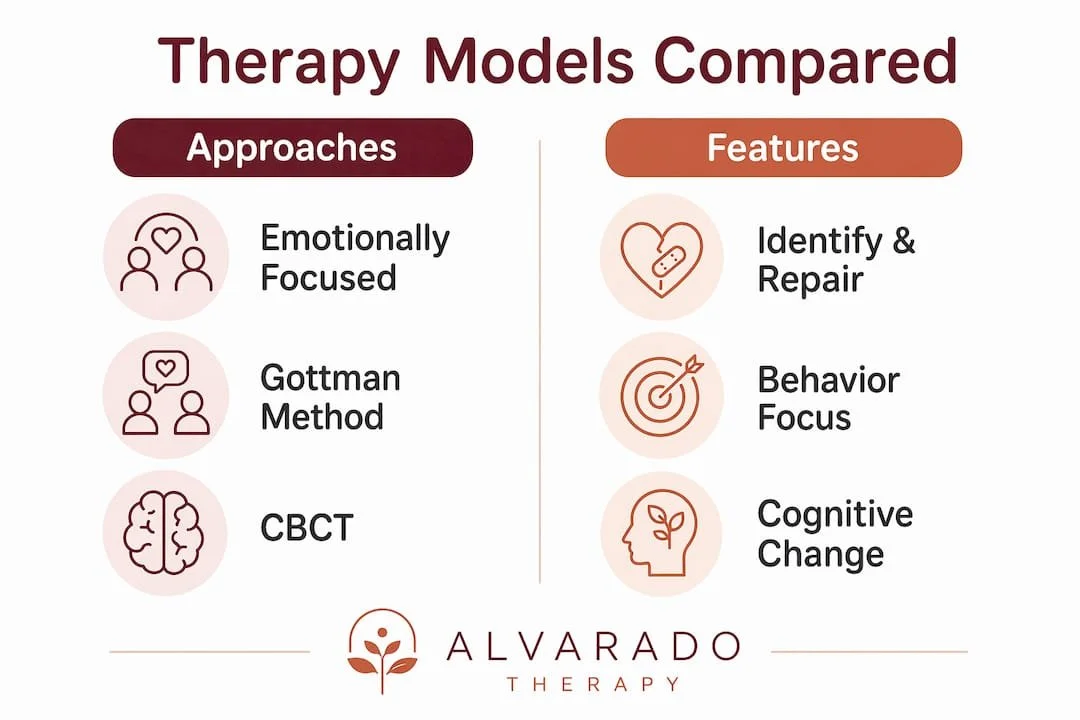
Not all therapy models are built the same. The approach your therapist uses directly shapes the techniques, session structure, and likely outcomes you will experience. Here is how the leading evidence-based models compare:
| Therapy Model | Core Focus | Typical Session Count | Reported Effectiveness |
|---|---|---|---|
| Emotionally Focused Therapy (EFT) | Attachment bonds and emotional safety | 8–20 sessions | 70–75%, gains held 2 years |
| Gottman Method | Communication, trust, and conflict patterns | 12–20 sessions | Strong for high-conflict couples |
| Cognitive Behavioral Couple Therapy (CBCT) | Thought patterns and behavioral change | 12–20 sessions | Effective for anxiety-driven conflict |
| Attachment-Based Therapy | Childhood attachment and relational wounds | 15–25 sessions | Up to 86% effectiveness |
EFT, developed by Dr. Sue Johnson, is the most extensively researched model in the field. Its focus on identifying and reshaping negative emotional cycles makes it particularly effective for couples where emotional disconnection is the core issue.
The Gottman Method, developed by Drs. John and Julie Gottman at the Gottman Institute, targets the specific behaviors that predict relationship breakdown, including contempt, criticism, defensiveness, and stonewalling. It is especially useful for couples with high-conflict communication styles.
CBCT addresses the cognitive distortions and behavioral patterns that fuel recurring arguments. It works well when one or both partners struggle with anxiety, perfectionism, or rigid thinking about what a relationship "should" look like.
For a deeper breakdown of evidence-based counseling methods and their long-term results, Alvaradotherapy's research overview covers each model in detail.
What misconceptions undermine couples therapy effectiveness?
Several persistent myths lead couples to either avoid therapy or abandon it before it works.
Myth 1: Therapy is a quick fix. The most common reason couples drop out early is unmet expectations. They expect resolution within a few sessions and leave when the first sessions focus on de-escalation rather than solutions. Therapists must remain neutral and build emotional safety before tackling core conflicts. That process takes time.
Myth 2: Both partners must be fully on board from day one. Waiting for perfect mutual readiness often means never starting. Research confirms that partial motivation at the outset does not predict failure.
Myth 3: Therapy means rehashing every past grievance. Effective couples therapy is forward-focused. The goal is building new patterns, not relitigating old arguments. A skilled therapist redirects blame-focused conversations toward understanding and repair.
Myth 4: If therapy does not work immediately, it never will. Progress in couples therapy is rarely linear. Many couples experience an initial period of increased tension as they begin addressing avoided topics. That discomfort is part of the process, not a sign of failure.
Pro Tip: Track small wins between sessions. Couples who notice and name moments of connection or successful repair are more likely to stay engaged through the harder phases of therapy.
The skills learned in therapy require consistent practice after sessions end. Couples who apply communication and repair techniques in daily life maintain their gains. Those who treat therapy as a passive experience tend to regress once sessions stop.
How can you maximize the benefits of couples therapy?
Getting the most from therapy requires more than showing up. These steps directly improve outcomes:
Start before the crisis point. Couples therapy is most effective when used proactively during life transitions like new parenthood, career changes, or relocation. Do not wait for the relationship to reach a breaking point.
Choose a therapist with specific couples training. Verify credentials in EFT, the Gottman Method, or CBCT. Ask directly about their training and approach before booking.
Commit to the full course. Plan for 12–15 sessions minimum. Treat the commitment like a medical treatment course, not a trial subscription.
Engage genuinely, not strategically. Therapy fails when one or both partners use sessions to "win" arguments rather than understand each other. Honest engagement produces faster results.
Use teletherapy if logistics are a barrier. Online sessions remove scheduling friction and have equivalent outcomes to in-person therapy.
Practice skills between sessions. Apply the communication and repair tools your therapist introduces. The session is the classroom. Daily life is where the learning sticks.
For couples navigating trust issues or trauma alongside relationship difficulties, understanding how therapy rebuilds trust can help set realistic expectations for the process.
Key takeaways
Couples therapy is effective for the majority of committed couples, with 70–75% reporting significant improvement when they complete an adequate course of evidence-based treatment.
| Point | Details |
|---|---|
| Strong success rates | 70–75% of couples improve with evidence-based therapy; attachment-based models reach 86%. |
| Start early | Couples who wait six or more years face entrenched patterns that are harder to shift. |
| Session dose matters | Completing 12–15 sessions is critical; early dropout significantly reduces lasting benefit. |
| Model choice shapes outcomes | EFT, the Gottman Method, and CBCT each target different relationship dynamics with strong results. |
| Teletherapy is equally effective | Online couples therapy produces outcomes comparable to in-person sessions across multiple studies. |
What i have seen after years of working with couples in therapy
The couples who get the most from therapy share one trait: they come in willing to be changed, not just to change their partner. That sounds simple. In practice, it is rare. Most people arrive with a clear mental list of what the other person needs to fix. The therapist's job, and it is a hard one, is to shift that frame without taking sides.
Therapy is a systemic process focused on emotional safety and attachment, not on assigning blame. That distinction is what separates effective therapy from a moderated argument. When couples understand this early, they move faster.
The reluctant partner dynamic comes up constantly. One person books the appointment. The other shows up skeptical, arms crossed, waiting to be blamed. What I have observed is that these partners often become the most engaged once they realize the therapist is not there to validate their partner's grievances. Neutrality is disarming.
Teletherapy has genuinely changed access. Couples who would never coordinate schedules for an in-person appointment are completing full courses of treatment online. The outcomes hold up. The convenience removes one of the most common excuses for dropping out.
The hardest truth about couples therapy effectiveness is this: the research is solid, the models are proven, and the tools work. What fails is not the therapy. What fails is the decision to stop before the work is done.
— Juiced
Start your couples therapy journey with Alvaradotherapy
If you are ready to move from wondering whether therapy works to actually experiencing it, Alvaradotherapy offers online couples therapy in California and New York with licensed, trauma-informed therapists trained in evidence-based models.
Alvaradotherapy's approach draws on EFT and attachment-focused methods, the same models with the strongest research backing. Sessions are available entirely online, removing the scheduling and geographic barriers that keep many couples from starting. Whether you are navigating communication breakdowns, rebuilding after a breach of trust, or simply want to strengthen your relationship before problems deepen, the team is ready to help. Schedule a consultation to take the first step.
FAQ
How effective is couples therapy on average?
Research places couples therapy success rates at 70–75% for evidence-based approaches, with attachment-focused models reaching up to 86% effectiveness. Most couples complete treatment in 12–15 sessions over three to four months.
Does couples therapy work if only one partner wants to go?
Yes. One partner can be less motivated initially and still make meaningful progress, provided they remain engaged in sessions. Full mutual enthusiasm at the start is not a prerequisite for positive outcomes.
How long does it take to see results from couples therapy?
Most couples notice early shifts in communication and emotional tone within the first four to six sessions. Clinically significant improvement typically requires completing the full 12–15 session course.
Is online couples therapy as effective as in-person therapy?
Multiple studies confirm that teletherapy delivers outcomes and satisfaction comparable to in-person couples therapy. Online sessions also improve access for couples with scheduling conflicts or geographic limitations.
What is the biggest reason couples therapy fails?
Dropping out too early is the leading cause of poor outcomes. Couples who leave after only a few sessions miss the skill-building and emotional repair phases that produce lasting change.
