
Nocturnal Panic Attacks: Rule Out Sleep Apnea and Other Mimics
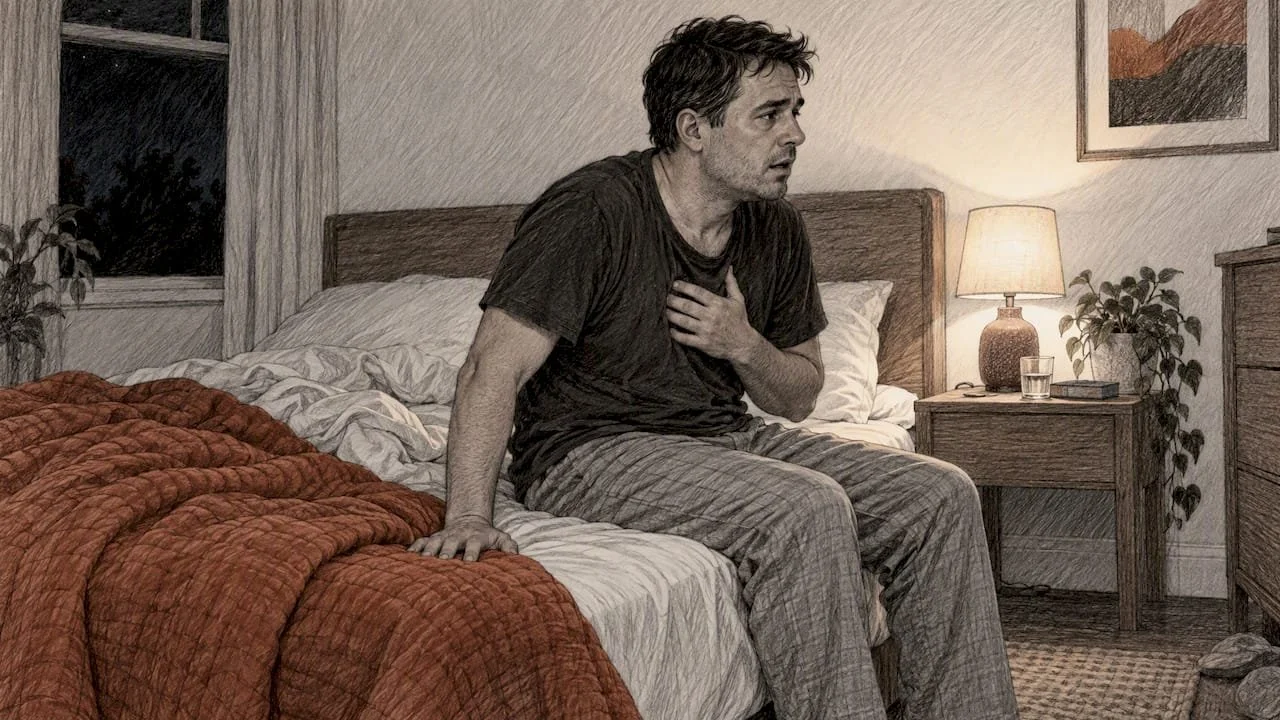
A nocturnal panic attack is a sudden awakening from sleep with intense fear and physical symptoms like a racing heart or shortness of breath. If attacks are recurring or involve breathing trouble or chest pain, seek a medical evaluation soon. These episodes are usually not life-threatening, but they deserve a proper assessment.
TL;DR:
Among people diagnosed with panic disorder, 44% to 71% report at least one nocturnal attack, so recurrence can fit the disorder’s pattern.
Loud snoring, witnessed breathing pauses, or daytime sleepiness can suggest sleep apnea; a clinician may order a sleep study instead of assuming panic.
Record each episode’s timing, duration, symptoms, sleep schedule, and recent caffeine or alcohol, and ask a partner to note breathing sounds or confusion.
CBT has strong evidence for panic disorder, while CBT for insomnia is the recommended first treatment when insomnia complicates symptoms; care addressing trauma may also help.
Prescribers commonly use SSRIs or SNRIs for panic disorder; benzodiazepines may be reserved for acute symptom control after individual risks are reviewed.
Alvaradotherapy
Find Support for Nighttime Panic
Alvarado Therapy offers trauma-informed counseling and EMDR therapy for anxiety and trauma, with online care available throughout California.
Table of Contents
How nocturnal panic attacks differ from nightmares, night terrors, and sleep apnea
What causes nocturnal panic attacks and who's at higher risk
How clinicians assess nocturnal panic attacks and which tests may be ordered
Immediate strategies during an attack and longer-term treatments that work
Practical prevention, sleep strategies, and when to seek help
Impact of nocturnal panic attacks on overall sleep quality and daytime functioning
How nocturnal panic attacks interact with co-occurring depression
What nocturnal panic attacks are and how common they are
A nocturnal panic attack jolts you awake from sleep, often from non-REM stages, with the same flood of fear and physical symptoms you'd feel during a daytime panic attack: pounding heart, sweating, trouble breathing, a sense of dread. The triggers are different since there's no stressful daytime event setting it off, but the experience itself overlaps closely with waking-hours panic.
These episodes are more common than most people realize among those already diagnosed with panic disorder. Between 44% and 71% of people with panic disorder report at least one nocturnal panic attack. That range matters because it means waking up in a full-blown panic is a recognized feature of the disorder, not a separate or rarer condition. If this happens to you occasionally, you're not experiencing something unusual.
How nocturnal panic attacks differ from nightmares, night terrors, and sleep apnea
Several nighttime disruptions can look similar from the outside but have distinct patterns worth learning to recognize.
Nightmares wake you with vivid dream content you can recall; nocturnal panic has no storyline, just abrupt physical and emotional alarm.
Night terrors mostly affect children, involve screaming or thrashing, and leave the person confused or amnesic afterward, unlike the clear, frightened alertness of panic.
Obstructive sleep apnea (OSA) often involves loud snoring, witnessed pauses in breathing, gasping, and excessive daytime sleepiness, and a sleep study can confirm or rule it out.
Sleep paralysis involves brief inability to move while fully aware, often with hallucinations, distinct from the racing heart and breathlessness of panic.
Nocturnal seizures are less common but worth mentioning to a clinician if you notice unusual movements, tongue biting, or confusion afterward.
Ask a partner or housemate what they observed. Their account of breathing sounds, movement, or confusion can help a clinician sort out which pattern fits.
Symptoms and what they feel like during an attack
A nocturnal panic attack typically brings a mix of physical and psychological symptoms that peak quickly and then fade.
Racing or pounding heart, often felt as a slam against the chest.
Sweating, trembling, or chills that arrive without a clear cause.
A choking or gasping sensation, tight chest, or shortness of breath.
Dizziness, nausea, or a wave of lightheadedness.
Derealization or depersonalization, a feeling of being detached from your surroundings or your own body.
Sudden, overwhelming fear, sometimes including a fear of dying.
Most episodes last a few minutes to under an hour, and the typical duration tracks closely with daytime panic attacks. Many people fall back asleep eventually, though the lingering adrenaline can make that difficult.
What causes nocturnal panic attacks and who's at higher risk
Nocturnal panic rarely happens in isolation. It tends to cluster with a few identifiable patterns.
A diagnosis of panic disorder is the strongest known association, often paired with heightened sensitivity to normal bodily sensations like a slightly elevated heart rate.
Trauma and PTSD contribute through hyperarousal, a nervous system stuck in a state of alertness that disrupts deep sleep.
Sleep deprivation and irregular sleep schedules appear to lower the threshold for an attack.
Alcohol, caffeine, and withdrawal from certain substances can act as triggers, along with some medication side effects.
OSA and, less commonly, nocturnal seizures can produce panic-like symptoms and need to be ruled out rather than assumed away.
Pro Tip: Keep a simple log of what you ate or drank in the hours before an attack. Patterns with caffeine or alcohol often show up faster than you'd expect.
How clinicians assess nocturnal panic attacks and which tests may be ordered
A thorough assessment starts with conversation, not equipment. A clinician will typically ask about your sleep history, symptom pattern, and any daytime panic symptoms, and will want to hear from a partner or housemate if possible.
Expect a detailed interview covering when attacks happen, how long they last, and what symptoms show up each time.
If snoring, gasping, or witnessed breathing pauses come up, a sleep study, either in-lab polysomnography or a home sleep apnea test, may be ordered to check for OSA.
If movements, confusion, or tongue biting are part of the picture, a referral to neurology or an EEG may be considered to rule out nocturnal seizures.
Before your visit, track the date and time of each episode, how long it lasted, any breathing noises reported by others, and recent alcohol or caffeine intake.
This stepwise approach matters because treating a misidentified breathing disorder as pure anxiety, or vice versa, delays relief.
Immediate strategies during an attack and longer-term treatments that work
In the moment, a few grounding techniques can shorten the intensity of an attack.
Slow diaphragmatic breathing: inhale through the nose for four counts, hold briefly, exhale for six.
Name five things you can see and three things you can hear to interrupt the panic spiral.
Keep a glass of water, a dim light, and a short calming phrase within reach of the bed.
Longer term, cognitive behavioral therapy (CBT) has strong evidence for panic disorder, and cognitive behavioral therapy for insomnia is the recommended first-line approach when insomnia complicates the picture. When trauma is a driving factor, trauma-informed approaches like EMDR may help by addressing the hyperarousal underneath the sleep disruption, though CBT-I still carries the stronger direct evidence base for insomnia itself. Clinicians often sequence these together rather than picking one exclusively.
Medication, typically SSRIs or SNRIs for panic disorder and occasionally a short-term benzodiazepine for acute symptom control, should be guided by a prescriber familiar with your history.
Pro Tip: If nighttime caffeine, nicotine, or alcohol timing seems tied to your attacks, a closer look at how substances affect sleep can help you spot adjustable habits before assuming the cause is purely psychological.
Practical prevention, sleep strategies, and when to seek help
Small, consistent changes to your evening routine can reduce how often attacks occur.
Limit caffeine and alcohol in the hours before bed, and keep a consistent sleep and wake schedule.
Build a wind-down routine, dim lights, no screens, light stretching, that signals to your body it's safe to rest.
Set up a bedside calm plan: a breathing cue card, a grounding phrase, and an object you can hold to reorient yourself.
Seek urgent care for unrelieved chest pain, severe shortness of breath, fainting, or thoughts of suicide.
Schedule an expedited outpatient evaluation for recurring attacks even without emergency symptoms.
Progress with treatment usually looks like fewer attacks per month and longer stretches of uninterrupted sleep, not an overnight disappearance of symptoms.
Impact of nocturnal panic attacks on overall sleep quality and daytime functioning
Waking up in a state of panic doesn't just cost you those few minutes. It fragments the sleep architecture around it, since the adrenaline surge makes falling back asleep harder and often pushes you into lighter, less restorative stages for the rest of the night. Over weeks, this pattern compounds.
Many people develop anticipatory anxiety about going to sleep at all, worried the attack will repeat. That anxiety itself can delay sleep onset, creating a cycle where fear of the attack becomes almost as disruptive as the attack itself. Clinical guidance notes that this anticipatory distress is a major reason nocturnal panic deserves treatment even though the episodes themselves aren't physically dangerous.
During the day, the downstream effects show up as fatigue, trouble concentrating, irritability, and a shorter fuse for stress. Chronic sleep fragmentation also affects memory consolidation and emotional regulation, which can make daytime panic symptoms or general anxiety harder to manage. The cycle feeds itself: poor sleep increases vulnerability to panic, and panic further damages sleep quality.
Breaking that loop usually requires addressing both sides at once, treating the panic symptoms directly while also rebuilding healthy sleep patterns, rather than hoping one resolves the other on its own.
How nocturnal panic attacks interact with co-occurring depression
Nocturnal panic rarely exists in isolation from other mental health conditions, and depression is one of the more common companions. Chronic sleep disruption is itself a known contributor to depressive symptoms, so someone already managing low mood can find that repeated nighttime awakenings deepen fatigue, hopelessness, and difficulty functioning during the day.
The relationship often runs in both directions. Depression can increase sleep fragility, and fragmented, fear-interrupted sleep can intensify depressive symptoms, creating a feedback loop that's hard to interrupt without addressing both conditions together. Someone dealing with both nocturnal panic and depression may notice that low energy makes it harder to maintain the evening routines that would otherwise help prevent attacks.
This overlap is one of the main reasons a thorough clinical assessment matters rather than treating nocturnal panic as an isolated symptom. A clinician who understands how anxiety and mood disorders interact can build a treatment plan that targets both, rather than one that inadvertently leaves a contributing condition unaddressed. If you notice your mood declining alongside recurring nighttime attacks, mentioning both to whoever is treating you gives them a fuller picture and a better shot at an effective plan.
Cultural and language considerations for bilingual clients
Recognizing a nocturnal panic attack can be harder when the language available to describe it doesn't map neatly onto clinical terms. Bilingual clients sometimes default to the language that feels most natural for emotional topics, which may differ from the language they use in daily life or at work, and a provider who can only work in one language may miss nuance in how symptoms get described.
Cultural context also shapes how panic symptoms get interpreted. In some families and communities, physical symptoms like chest tightness or a racing heart are discussed more openly than fear or emotional distress, while in others the opposite is true. A clinician unfamiliar with these patterns might underestimate the psychological component or misread physical complaints as unrelated to anxiety.
Access to bilingual, culturally responsive care matters here. Being able to describe a frightening nighttime experience in the language you think and feel in, rather than translating on the spot, often leads to a more accurate and complete account for the clinician. It also reduces the extra burden of managing both a panic disorder and a language barrier during an already vulnerable conversation. For bilingual clients, asking directly whether a provider offers sessions in their preferred language is a reasonable and useful first question.
The role of family or partner support in recovery
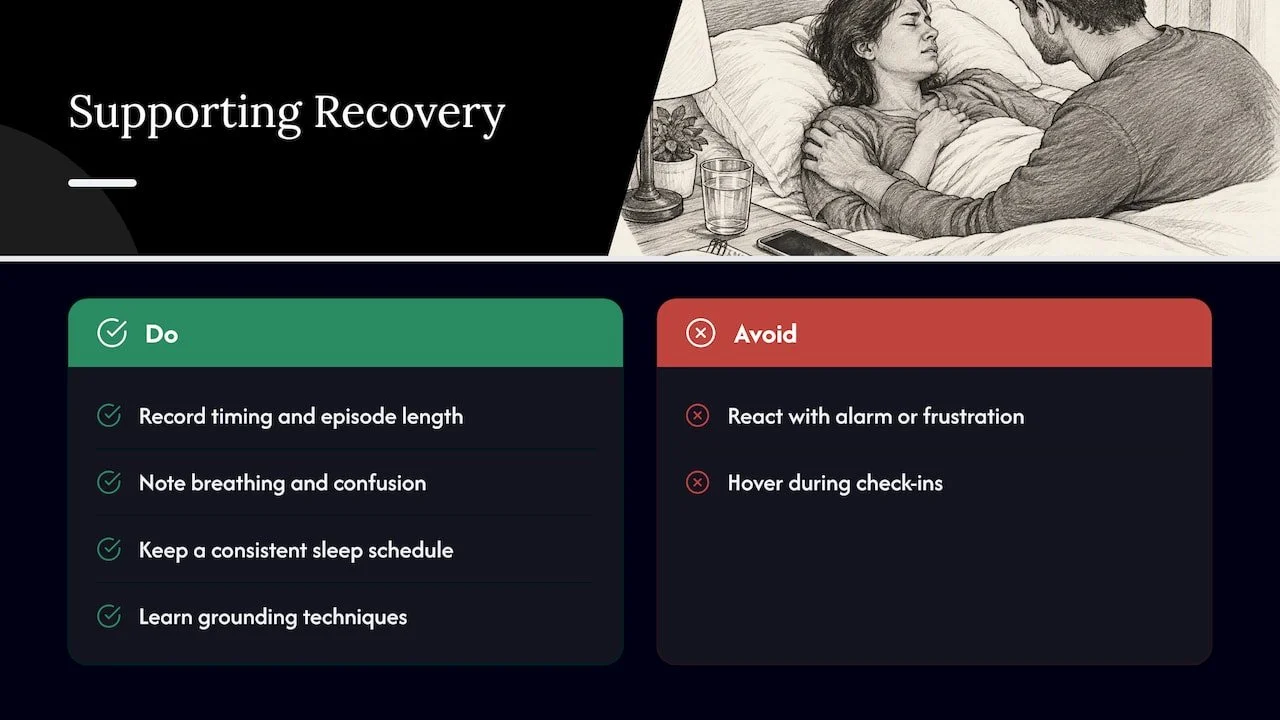
A partner or family member often sees things the person experiencing the attack can't: the exact timing, how long it lasted, whether breathing sounded labored, whether there was confusion afterward. That kind of observation, gathered calmly and without alarm, becomes genuinely useful information for a clinician trying to sort out what's happening.
Beyond the observational role, a supportive household can help reduce anticipatory anxiety about sleep. Knowing someone nearby understands what's happening and won't panic themselves can lower the overall tension around bedtime, which in turn may reduce how often attacks occur. Conversely, a partner who reacts with alarm or frustration during an episode can inadvertently make the anticipatory anxiety worse.
Practical support can include helping maintain a consistent sleep schedule, gently checking in without hovering, and learning the basics of grounding techniques so they can offer a steady voice during an episode rather than adding stress. Family involvement also matters in treatment itself. When trauma or relationship stress is part of the picture, couples or family-inclusive sessions can address dynamics that either support or undermine recovery. Recovery from nocturnal panic rarely happens in isolation, and the people closest to someone experiencing it often play a meaningful role in how quickly symptoms improve.
Journaling and self-monitoring as a treatment adjunct
Keeping a simple record of nocturnal panic episodes gives both you and your clinician something concrete to work with, rather than relying on memory of events that happened while half-asleep and frightened. A useful log includes the date and time of the attack, how long it lasted, which symptoms showed up, what you'd eaten or drunk earlier that day, and your sleep schedule the night before.
Over a few weeks, patterns tend to surface that aren't obvious in the moment: a cluster of attacks after late caffeine, a connection to a particular stressor from the day before, or a tendency for episodes to happen more often during a certain sleep stage or time window. That kind of pattern recognition can sharpen a treatment plan considerably, helping a clinician decide whether to focus more on sleep hygiene, substance timing, or trauma-related hyperarousal.
Journaling also serves a secondary purpose: it gives you something active to do between episodes, which can reduce the sense of helplessness that often builds around unpredictable nighttime symptoms. It's not a replacement for therapy or medical evaluation, but as a companion to treatment, it gives both you and your provider a clearer, more specific record than "it happens sometimes" ever could.
Our perspective on treating nocturnal panic
Treating nocturnal panic well means resisting the urge to label it purely psychological before ruling out what else could be going on. As a trauma-informed practice, our licensed clinicians start with a careful history, and when breathing symptoms or other red flags appear, we collaborate with or refer to sleep medicine rather than assuming anxiety explains everything.
We offer bilingual care, EMDR intensives for concentrated symptom relief, and both in-person and online sessions. Our approach treats trauma-driven hyperarousal and sleep disruption as connected problems that often need attention. If you want a consultation to talk through what you're experiencing, we offer a straightforward way to begin.
— Juiced
Services that can help you sleep through the night again
If nighttime panic keeps interrupting your sleep, we offer a few paths depending on what's driving it. Our individual counseling and EMDR therapy sessions suit ongoing, trauma-informed treatment paced over weeks, while our EMDR intensives are built for people who want concentrated progress in a condensed timeframe, from one day up to a 3-Day EMDR Intensive at $5,750.

Choose individual counseling if you want steady, weekly trauma-informed sessions.
Choose an EMDR intensive if you'd rather work through trauma in one focused block of time.
Choose couples therapy if relationship stress is tangled up with your sleep disruption.
Ready to talk through what's happening at night? Book a consultation and we'll help you figure out the right next step.
This article is general information, not a substitute for advice from a qualified doctor. Consult a qualified healthcare professional about your own circumstances before acting on anything here.
FAQ
How to stop anxiety attacks while sleeping?
Slow diaphragmatic breathing, naming objects around you to ground yourself, and keeping a dim light and water nearby can shorten an episode in the moment. Longer term, cognitive behavioral therapy and treating any underlying sleep disorder are the most reliable ways to reduce how often they happen.
What medications are commonly used to treat nocturnal panic attacks?
SSRIs and SNRIs are the typical first-line medications for panic disorder, including when it shows up at night. Benzodiazepines are sometimes used short-term for acute symptom control, but a prescriber should guide any medication decision given the tradeoffs involved.
Why do I have anxiety in the middle of the night?
Nighttime anxiety often reflects heightened sensitivity to bodily sensations during lighter sleep stages, combined with factors like trauma-related hyperarousal, irregular sleep schedules, or substance use. In some cases, a medical issue like sleep apnea produces similar symptoms, which is why ruling it out matters.
Do nocturnal panic attacks go away?
Many people see real improvement with treatment, including fewer attacks and more continuous sleep, though timelines vary by individual. Panic disorder responds well to evidence-based therapy and, when needed, medication, making significant improvement a realistic outcome for most people.
Sources
Sleep apnea symptoms — National Heart, Lung, and Blood Institute (NHLBI)
Sleep problems in veterans with PTSD — VA National Center for PTSD
