
Pet Loss Grief: Why It Hurts and What Helps
If you are grieving a pet, the pain you feel is real, and it is not an overreaction. Research now shows that losing an animal companion can produce grief as intense as losing a person. There is no set timeline, no correct way to mourn, and no reason to "get over it" on someone else's schedule. What helps is giving the loss room, keeping some routine, finding people who understand, and getting professional support if the grief stops moving or starts to take over your life.
Alvaradotherapy
Support Through Grief and Loss
Alvarado Therapy offers individual counseling for grief, with trauma-informed, culturally responsive care in English and Spanish across California.
TL;DR
Pet loss grief is legitimate. In one survey-based review, 21% of bereaved pet owners called it the most distressing bereavement they had ever experienced.
There is no normal timeline. Grief usually comes in waves, and it can last weeks or years.
Guilt, especially after euthanasia or a sudden death, is common and worth talking about rather than carrying alone.
Rituals, routines and people who take the loss seriously help most.
If grief feels stuck after many months, or you are not functioning, a grief-informed therapist can help. If you are thinking of harming yourself, call or text 988 right away.
Table of Contents
Why losing a pet hurts so much
A pet is part of your daily rhythm. The morning walk, the sound at the door, the weight on the couch: your day was organized around this animal, and now that structure is gone along with the relationship. Pet bereavement specialists describe animals as emotional anchors that offer unconditional love, which is part of why the loss can feel so disorienting.
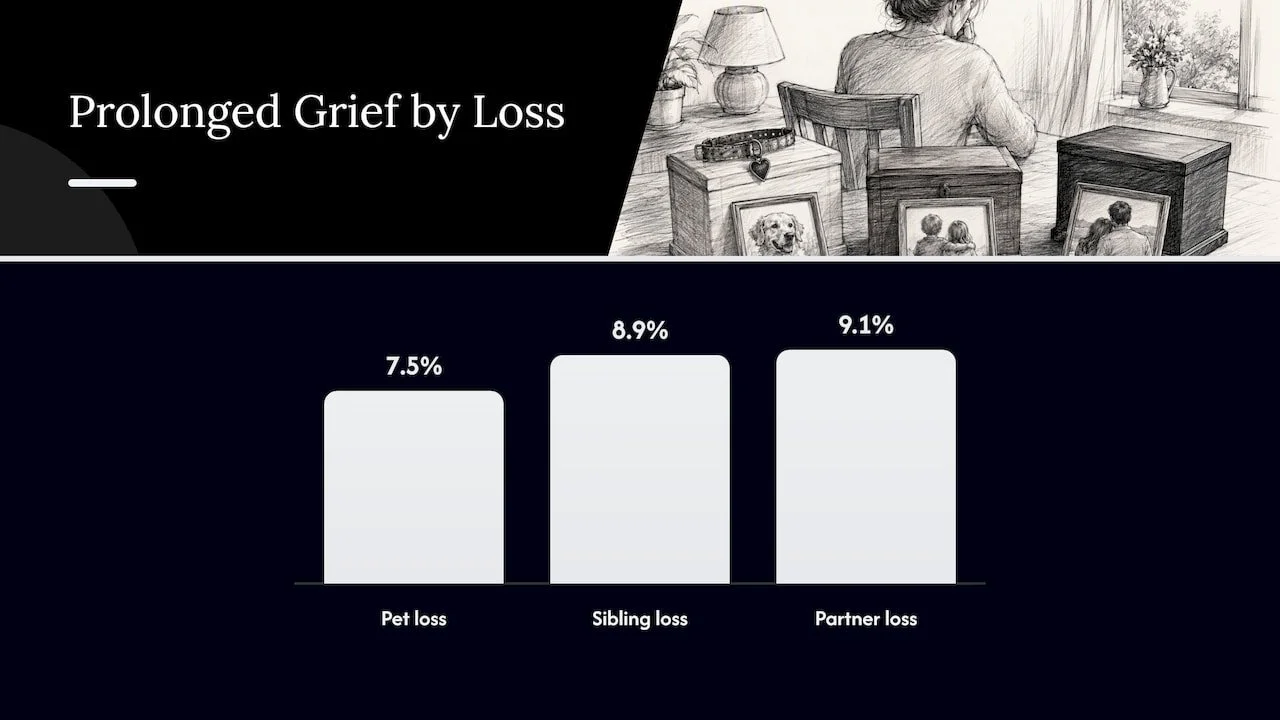
The science backs up what owners already know. A January 2026 PLOS One study surveyed 975 adults in the United Kingdom. Harvard Health's summary of the study reports that grief after losing a pet can be as intense as grief after losing a human loved one. The study found that 7.5% of people who lost a pet met criteria for prolonged grief disorder, a rate close to that for losing a sibling (8.9%) or a partner (9.1%). That is notable because current diagnostic manuals (DSM-5-TR and ICD-11) only allow that diagnosis after the death of a person.
That last point explains a second layer of pain: many people around you may not treat this as a "real" loss.
Disenfranchised grief: when others do not see it
Clinicians call grief that society does not fully acknowledge disenfranchised grief. Pet loss is a textbook case. Research on continuing bonds in recently bereaved pet owners notes that friends, partners or acquaintances may not recognize the loss as a significant bereavement. You may hear "it was just a dog" or be expected back at work the next day.
When your grief is minimized, shame and isolation often follow. You start hiding your tears, skipping the conversation, or apologizing for being sad. That secrecy can make grief heavier. Naming it as disenfranchised grief is often the first relief: nothing is wrong with you, the loss simply is not being witnessed.
If you are on the other side, trying to support a friend, The Conversation advises against platitudes and against underestimating how deep the grief goes. A simple "I'm so sorry, I know how much you loved them" does more than any silver lining.
What pet loss grief can feel like
Grief is not only sadness. The AVMA describes physical, intellectual and emotional responses: nausea and fatigue, denial and preoccupation, anxiety, guilt and hopelessness. Common experiences include:
Listening for your pet's footsteps, or briefly forgetting they are gone
Trouble sleeping, eating or concentrating
Dreading the empty house, or avoiding places tied to your pet
Anger at the vet, at yourself, or at people who do not understand
Waves of relief mixed with guilt, particularly after a long illness
Anxiety about other pets, or about loss in general
None of these means you are grieving incorrectly. Some people move through feelings such as denial, anger, guilt and sadness, as HelpGuide notes, while others never recognize any "stages" at all. Both are normal.
How long does pet loss grief last?
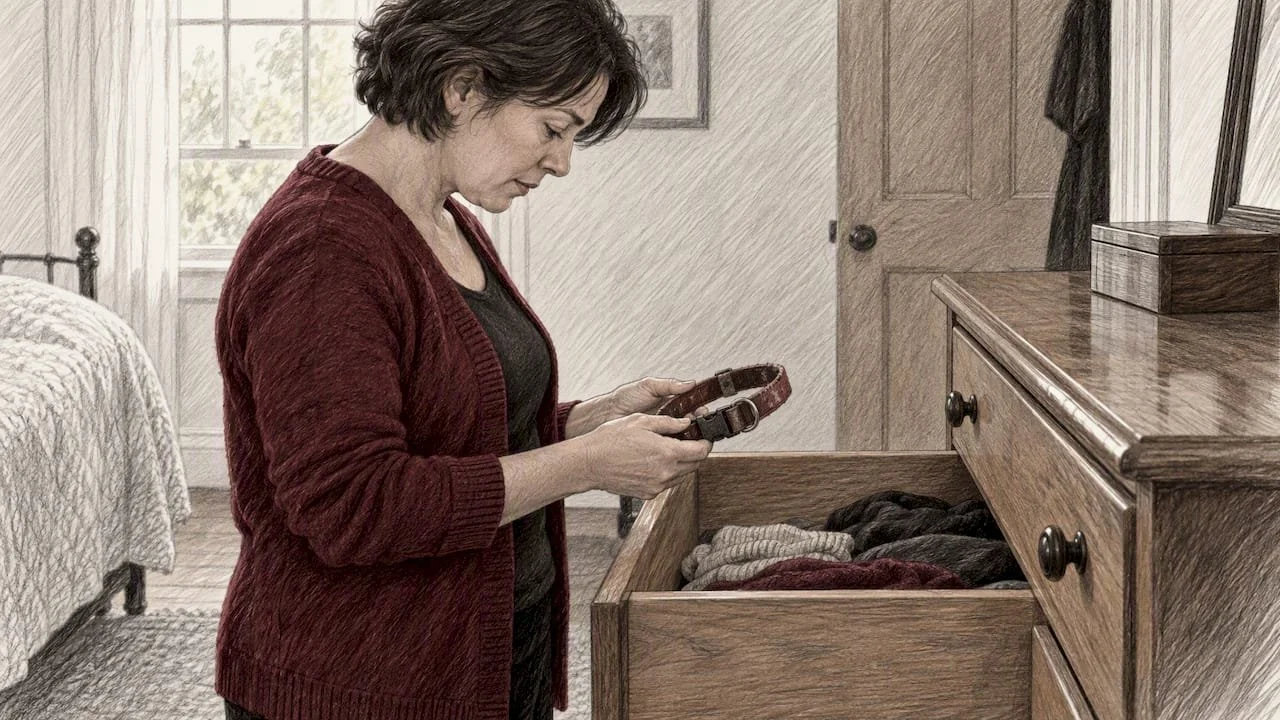
There is no universal answer. According to the AVMA, grief after a pet's death is highly individual and can range from weeks to years, often described as a tide or waves rather than a straight line. A good week can be followed by a terrible Tuesday, triggered by a collar in a drawer or a song in the car.
Many counselors describe this back-and-forth through the dual process model: you move between facing the loss and returning to ordinary life. Grief organizations that teach this model frame the swings as a healthy part of mourning, not a sign you are failing. Laughing at dinner after a day of crying does not mean you loved your pet less.
The goal is not to "get over" the loss. Bereavement guidance often puts it as learning to grow around it, so the grief takes up a smaller share of your life while the love stays.
Sometimes grief also arrives late. If you were busy managing a crisis or caring for family when your pet died, the weight may land months later. Our piece on delayed grief and why loss can hit months or years later explains how that happens.
Guilt, euthanasia and sudden loss
Most pet owners face a decision that human loss rarely demands: whether and when to end an animal's life. Euthanasia is often a compassionate choice, but clinicians note it can add complicated guilt and distress, and many owners keep asking whether they chose the right moment.
The same applies to accidents and sudden deaths, where the "what if" questions never stop. Writing on traumatic pet loss from the Society for Psychotherapy distinguishes traumatic grief from ordinary grief, and the distinction matters. If you replay the death, see the scene when you close your eyes, or feel jumpy and numb, that is more than sadness. It is a trauma response, and it responds to different help than "time and rest".
Some things that can ease guilt:
Judge the decision by what you knew then. You chose with the information, the vet's guidance and the love you had at that moment.
Say the guilt out loud. To a vet, a friend, a support group or a therapist. Guilt shrinks when it is spoken and grows when it is hidden.
Write the letter. Put the "I'm sorry" and the "thank you" on paper to your pet.
Ask what you would say to a friend who had made the same decision.
What actually helps
There is no formula, but a few approaches show up consistently in veterinary and mental health guidance.
Let yourself mourn visibly
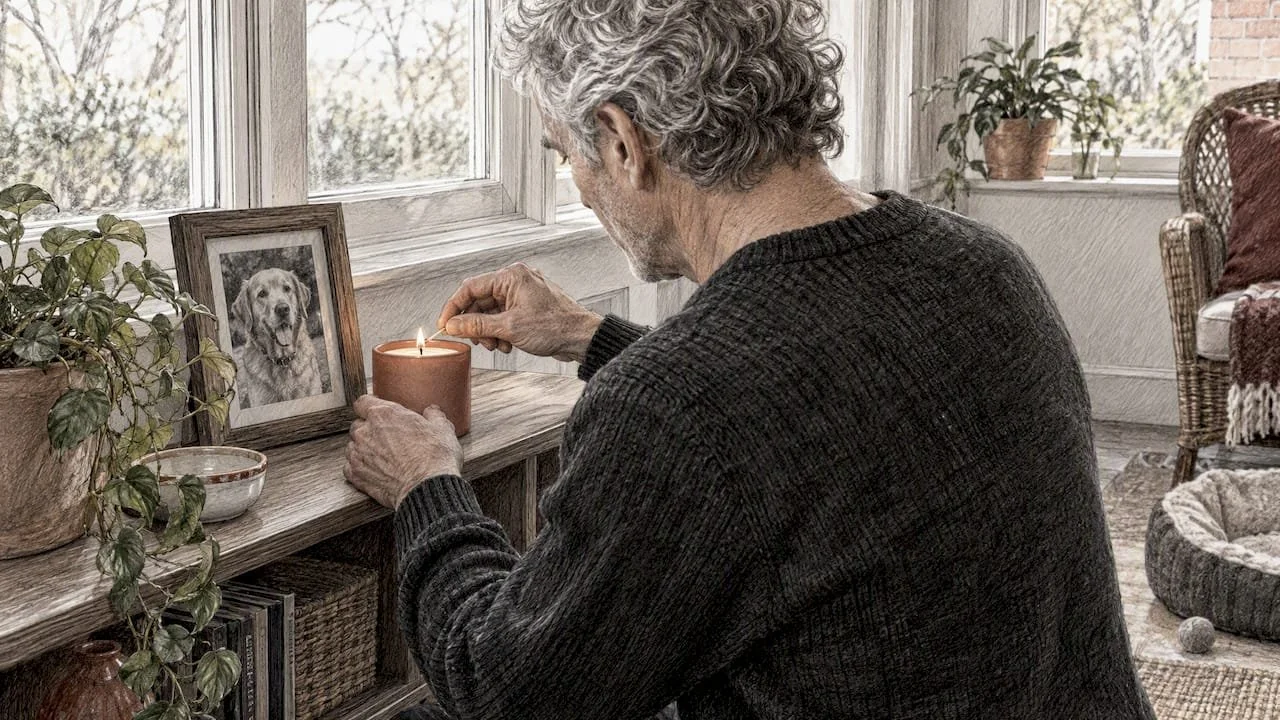
The AVMA says that physically showing your grief is a way of actively mourning. Cry, hold a memorial, bury or scatter ashes, light a candle, share photos. Rituals give the grief a shape.
Keep a bond, on your terms
Maintaining a connection through belongings, rituals or stories can comfort, and it can also hurt. Research on continuing bonds after pet loss suggests there is no correct way to do this. You may take comfort in your pet's blanket one day and need to put it away the next. Both are fine. Follow what your body tells you.
Protect small routines
Keep a regular meal time, a daily walk without the leash if you need it, and basic sleep. These sound small. During grief, they are the scaffolding.
Find people who take it seriously
Support groups, pet loss hotlines run by veterinary schools, and online communities exist because friends and family sometimes fall short. Cornell's College of Veterinary Medicine maintains pet loss resources and support, and many veterinary hospitals can point you to local groups. When it is hard to explain why a pet mattered, it can help to read about the role companion animals play for people living with mental illness. It is a reminder that for many people a pet is a daily source of stability, not a luxury.
Do not rush the "next pet" decision
There is no right waiting period. Some people want another animal quickly, while others need a year. A new pet is not a replacement, and not getting one is not a failure. If you feel pressure either way, put the decision off until the sharpest grief eases.
Notice growth, without forcing it
Many people are surprised that this kind of loss can also change them. Research on post-traumatic growth after pet loss describes some owners reporting more empathy, stronger relationships and clearer priorities, particularly when they had adequate social support. You do not have to look for a lesson. If one arrives, it is allowed.
Our perspective on pet loss grief
At Alvarado Therapy we are a trauma-informed practice, and we see how often a pet's death is the loss that opens older ones. A client comes in for the dog who died, and within a few sessions we are also talking about a parent, a move, a breakup or a childhood where the animal was the one safe presence. That is not unusual, and it is not "making it about something else". It is how grief works: a new loss touches every earlier one.
We also see how much the circumstances matter. Grief after a peaceful death at the end of a long life is different from grief after a sudden accident or a euthanasia decision made in a panic. When the death was frightening, the work is often less about sadness and more about the memory that will not stop replaying. A trauma-informed approach treats those images and that guilt as something the nervous system is holding, not a flaw in character.
We work with clients in English and Spanish, and with people for whom grief carries culture, family and identity. For many of the Latinx, BIPOC and LGBTQ+ clients we serve, a pet may have been family when other family was complicated. We take that seriously. You do not need to justify the size of your loss in our office.
Our view is simple: you do not need a diagnosis to deserve support, and you do not need to wait until you are in crisis. If you want to talk to someone sooner than "someday", that is a good enough reason.
— Juiced
When to consider professional support
Most people do not need therapy to grieve a pet. But a counselor is worth considering if:
Months have passed and the intensity is not easing, or it is getting worse
You cannot work, care for others, eat or sleep reasonably
You are stuck on guilt, or replaying the death in vivid detail
You are pulling away from people, or drinking or using more to cope
The loss is stirring up earlier losses or trauma
Others have dismissed your grief and you have nowhere to take it
A clinician can also help sort grief from depression, which can look similar but is treated differently. We explain how that is done in how clinicians tell grief from depression. For a broader view of what counseling involves, see our complete guide to grief counseling support and what actually helps you heal in grief counseling.
If you are having thoughts of ending your life, do not wait for an appointment. In the United States you can call or text 988 for the Suicide and Crisis Lifeline at any hour.
How we can help
If your pet's death feels traumatic, or your grief has stalled, we offer individual counseling and EMDR therapy with licensed therapists in Pasadena, Ventura and online throughout California, in English or Spanish. EMDR is a therapy we use for trauma, and it can be a good fit when a particular memory, such as the day your pet died, keeps intruding.
If you would rather concentrate the work into fewer, longer sessions, we also offer EMDR intensives: a 4-hour one-day intensive at $1,500, a 6-hour one-day intensive at $2,250, and a 3-day intensive at $5,750. Whether an intensive suits you depends on your history and goals, and we talk that through before you commit. You can start from our home page, where you will also find journals and workbooks.
For more general reading, start with our guides to support resources for bereavement and grief support tips for California adults.
FAQ
How long is it normal to grieve the loss of a pet?
There is no standard length. The AVMA says grief can last from weeks to years and tends to come in waves rather than a straight line. What matters more than the clock is direction: if the intensity slowly softens, even with bad days, you are likely grieving in a healthy way. If it is not easing after many months or is wrecking your daily life, talk to a professional.
Why is losing a pet so painful, sometimes more than losing a person?
Pets are woven into daily routines and offer steady, uncomplicated companionship, so their absence is felt in every part of the day. Society also gives less room to mourn them, which can add isolation. In one survey, 21% of bereaved owners said it was the most distressing bereavement of their lives, so you are far from alone.
Is it normal to feel guilty after euthanasia?
Yes, it is very common. Even when euthanasia is the kindest choice, owners often second-guess the timing or the decision itself. Talking it through with your vet, a support group or a therapist can help, and trauma-focused therapy may be useful if the memory keeps replaying.
What should I say or give to someone whose dog just died?
Acknowledge the loss plainly and avoid phrases like "it was just a pet" or "you can get another one." Something like "I'm so sorry, I know how much you loved them" works. A handwritten note, a photo of the pet, a donation in their name or a meal can mean more than any advice.
Can pet loss lead to a clinical condition?
For some people, yes. The 2026 PLOS One study found 7.5% of bereaved pet owners met the criteria for prolonged grief disorder, though current diagnostic manuals do not formally count pet death for that diagnosis. If your grief feels frozen or disabling, a licensed mental health professional can assess what is going on.
Sources
Losing a pet can trigger grief as intense as human loss, Harvard Health
No pets allowed: Evidence that prolonged grief disorder can occur following the death of a pet, PMC
Coping with the loss of a pet, American Veterinary Medical Association
Continuing Bonds and Psychosocial Functioning in a Recently Bereaved Pet Loss Sample
Predictors of Post-traumatic Growth and Stress Following the Loss of a Pet
Why grieving a pet can be as hard as grieving a person, The Conversation
Pet Loss Resources and Support, Cornell University College of Veterinary Medicine
