
PTSD in Adults: Symptoms, Diagnosis, and Treatment

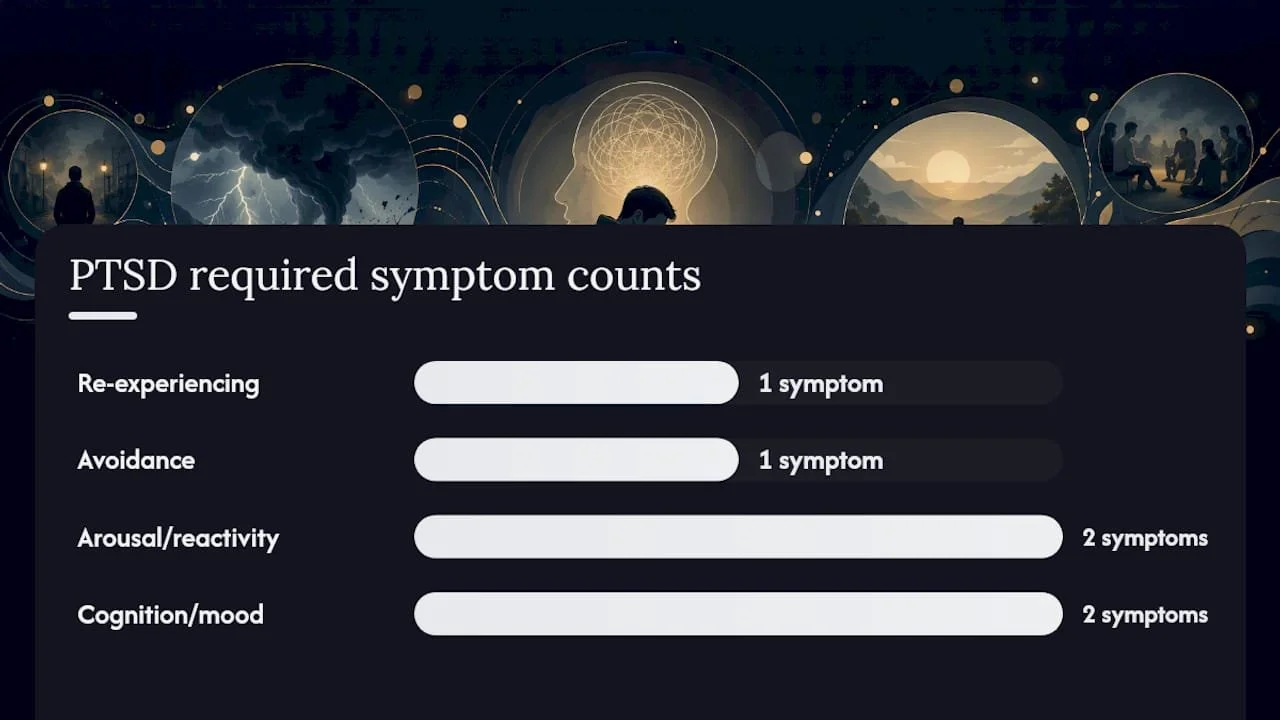
Post-traumatic stress disorder is a treatable mental health condition that develops after exposure to trauma and becomes a clinical diagnosis when symptoms across four specific clusters persist for more than one month and disrupt daily functioning. According to the National Institute of Mental Health, diagnosis requires at least one re-experiencing symptom, one avoidance symptom, two arousal/reactivity symptoms, and two cognition/mood symptoms. If you recognize those patterns in yourself or someone you care about, the most useful next step is a professional PTSD screen, not more waiting.
Understanding PTSD in adults means recognizing that these symptoms are not character flaws or signs of weakness. They are the nervous system's learned response to overwhelming experience, and they respond well to the right care.
Key Takeaways
PTSD is a diagnosable, treatable condition; recognizing the four symptom clusters and seeking a professional screen within the first month of persistent symptoms is the single most effective step toward recovery.
| Point | Details |
|---|---|
| Diagnostic threshold | Symptoms across all four clusters must persist more than one month and impair daily functioning. |
| Four symptom clusters | Re-experiencing, avoidance, negative cognition/mood, and arousal/reactivity must each be present. |
| Evidence-based treatments | PE, CPT, and EMDR are first-line therapies; SSRIs/SNRIs support symptom management alongside therapy. |
| Relationship impact | PTSD and relationship strain are bi-directional; partner involvement in treatment improves outcomes. |
| Crisis resources | Call or text 988 for crisis support; call 911 for immediate danger. |
Table of Contents
What causes PTSD in adults and who is at higher risk?
PTSD (posttraumatic stress disorder) differs from the normal distress that follows a difficult event. Ordinary acute stress tends to ease within days or weeks as the brain processes what happened. PTSD is what occurs when that processing stalls, leaving the threat-response system stuck in high alert long after the danger has passed.
Common causes include:
Combat exposure and military service
Sexual assault or childhood sexual abuse
Serious accidents or medical emergencies
Natural disasters and mass violence
Sudden, unexpected loss of a loved one
Prolonged or repeated interpersonal trauma
MedlinePlus notes that most people exposed to trauma do not develop PTSD. Several factors raise the risk: being female, having a history of childhood trauma, experiencing prolonged or repeated trauma, having limited social support, and carrying a prior mental health or substance use history. Symptoms typically appear within three months of the traumatic event, though delayed onset, months or even years later, is well documented.
What are the four PTSD symptom clusters in adults?
The VA's Understanding PTSD booklet organizes symptoms into four clusters, each of which shows up differently in adult daily life.
Re-experiencing: Intrusive memories, nightmares, or flashbacks that feel as vivid and threatening as the original event. A car backfiring triggers a combat veteran's full-body alarm response. A smell sends a survivor back to the moment of assault.
Avoidance: Steering clear of people, places, thoughts, or feelings connected to the trauma. Someone stops driving after a crash, or refuses to talk about what happened even with a therapist.
Negative changes in cognition and mood: Persistent guilt or self-blame, difficulty remembering key parts of the trauma, loss of interest in activities once enjoyed, emotional numbness, and a pervasive sense that the world is permanently dangerous.
Arousal and reactivity: Hypervigilance, exaggerated startle response, trouble sleeping, irritability, and difficulty concentrating. Many adults in this cluster describe feeling constantly "on edge" without being able to explain why.
A dissociative specifier, involving depersonalization (feeling detached from your own body) or derealization (the world feeling unreal), is possible but not required for a PTSD diagnosis.
Symptom check: If you recognize symptoms across these four clusters that have lasted longer than one month and are interfering with work, relationships, or daily routines, consider scheduling a professional PTSD screening.
The American Psychiatric Association estimates that roughly 4% of U.S. adults live with PTSD at any given time, many of them without a formal diagnosis.
How is PTSD diagnosed, and can you screen yourself?
Diagnosis is made by a licensed clinician, typically a psychiatrist, psychologist, licensed clinical social worker, or licensed professional counselor, through a structured clinical interview. The clinician rules out medical causes, reviews symptom history, and may use validated screening tools such as the PCL-5 (PTSD Checklist for DSM-5).
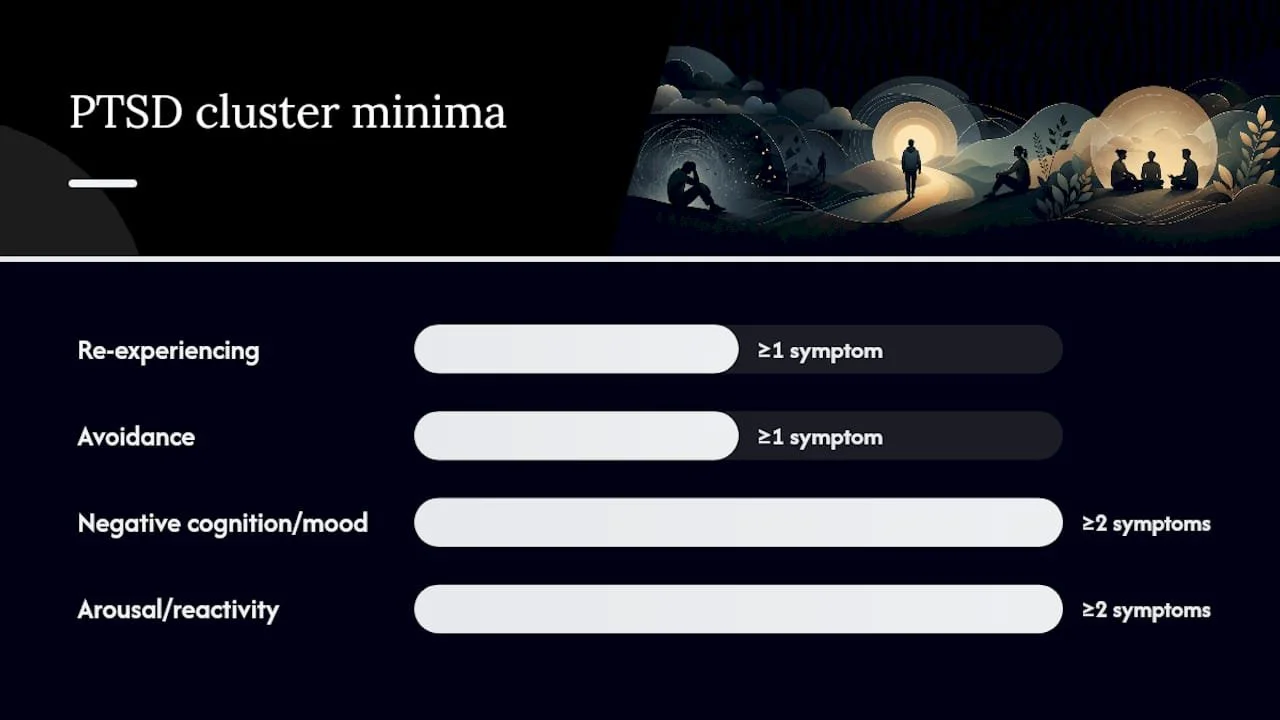
The NIMH diagnostic criteria require all of the following:
| Cluster | Minimum required |
|---|---|
| Re-experiencing (intrusions) | At least 1 symptom |
| Avoidance | At least 1 symptom |
| Negative cognition/mood | At least 2 symptoms |
| Arousal/reactivity | At least 2 symptoms |
| Duration | More than 1 month |
| Functional impairment | Present |
A simple self-screen asks five questions. Answer yes or no:
Do you have repeated, upsetting memories, dreams, or flashbacks of a traumatic event?
Do you avoid reminders of the trauma (places, people, thoughts, or feelings)?
Do you feel emotionally numb, detached, or unable to experience positive emotions?
Do you feel constantly on guard, jumpy, or easily startled?
Do you feel guilty or blame yourself for what happened?
Two or more "yes" answers lasting more than a month warrants a conversation with a clinician. Acute stress disorder shares many of these features but resolves within one month. When symptoms persist past that threshold, PTSD becomes the working diagnosis.
What are the evidence-based treatment options for adult PTSD?
Three trauma-focused psychotherapies have the strongest evidence base, and all three are available across the U.S.:
Prolonged Exposure (PE): Gradually confronts trauma memories and avoided situations to reduce fear responses. Typically 8–15 weekly sessions.
Cognitive Processing Therapy (CPT): Targets unhelpful beliefs formed around the trauma, such as self-blame or the belief that the world is entirely unsafe. Usually 12 weekly sessions.
EMDR (Eye Movement Desensitization and Reprocessing): Uses bilateral stimulation while the person holds a trauma memory, helping the brain reprocess it so it loses its charge. Learn more about EMDR in PTSD recovery and what the research shows about its outcomes.
The U.S. Department of Veterans Affairs identifies these three therapies as first-line treatments. Medications, primarily SSRIs (sertraline, paroxetine) and SNRIs, are used alongside therapy to reduce symptom severity and make it easier to engage in the therapeutic work. They are not a standalone solution for most people.
Treatment is individualized. A clinician assesses symptom severity, trauma history, co-occurring conditions, and personal goals before recommending a path. Some people need stabilization work before trauma processing begins. Intensive formats, such as EMDR Intensives, compress treatment into fewer, longer sessions and can accelerate progress for those who cannot commit to weekly appointments over months. Read about the advantages of EMDR intensives for a closer look at that format.
Pro Tip: During exposure-based therapies like PE, symptoms often temporarily increase before they improve. This is expected, not a sign that treatment is failing. Telling your therapist about any spike in distress helps them calibrate the pace.
How does PTSD affect relationships and intimacy?
PTSD rarely stays contained to the person who experienced the trauma. Research published in a VA meta-analysis found consistent, moderate associations between PTSD symptomatology is consistently associated with moderate levels of intimate relationship discord, physical aggression, and psychological aggression.
Common relationship effects include:
Emotional withdrawal that partners experience as rejection
Irritability and anger outbursts that feel unprovoked
Avoidance of physical or emotional intimacy
Difficulty trusting, even people who have earned it
Hypervigilance that reads as controlling behavior
The National Center for PTSD confirms the relationship is bi-directional: PTSD strains relationships, and relationship strain worsens PTSD. Survivors often distance loved ones as a protective mechanism, not indifference. Understanding that distinction changes how partners respond.
Research on partners of PTSD survivors shows that caregiver distress is common and that involving partners in treatment, through psychoeducation or couples therapy, produces gains beyond what individual therapy achieves alone.
Complex PTSD (CPTSD), recognized in the ICD-11, adds disturbances in self-organization (DSO) including affect dysregulation, a damaged self-concept, and relational disturbances. DSO symptoms often drive more partner distress than core PTSD symptoms, making couple-inclusive care especially relevant for those with complex trauma histories. Alvaradotherapy's PTSD and relationships guide covers these dynamics in depth.
Practical coping strategies you can use right now
These steps are safe to start before your first clinical appointment:
Grounding exercises: The 5-4-3-2-1 technique (name five things you see, four you can touch, three you hear, two you smell, one you taste) interrupts a flashback or panic spiral quickly.
Paced breathing: Slow exhales activate the parasympathetic nervous system. Breathe in for four counts, hold for four, out for six.
Structured sleep routines: Consistent wake times, limiting screens before bed, and keeping the bedroom cool and dark reduce the hyperarousal that disrupts sleep in PTSD.
Behavioral activation: Depression and PTSD together create a withdrawal loop. Scheduling one small, manageable activity daily, even a ten-minute walk, breaks the cycle.
Limit alcohol and cannabis: Both provide short-term relief and worsen long-term symptom control. If substance use feels necessary to function, mention it to your clinician.
Peer support: Connecting with others who have lived experience, through VA peer support programs or community groups, reduces isolation without requiring disclosure of trauma details.
Do not attempt self-guided exposure work, deliberately revisiting trauma memories without clinical support. Stabilization comes first, especially when symptoms are intense. The VA's treatment resources and NIMH both offer vetted self-help worksheets you can use between sessions.
Pro Tip: Before your first trauma-focused session, write down two or three specific goals you want therapy to help with. Clinicians use that information to tailor the approach from session one, which shortens the assessment phase and gets you to active treatment faster.
When PTSD becomes an emergency
Seek immediate help if you are experiencing suicidal thoughts, a plan to harm yourself or others, or severe self-harm urges.
Call or text 988 (Suicide and Crisis Lifeline) for immediate, confidential support.
Call 911 or go to the nearest emergency room if there is immediate danger.
A basic safety plan:
Remove or secure access to means (firearms, medications)
Identify two or three people you can call when distress spikes
Write down 988 and your therapist's after-hours number
Name one safe physical location you can go to
Know your nearest ER address
Do not wait to see if the thoughts pass on their own.
How to find a PTSD-trained clinician in the U.S.
VA resources: Veterans can access PTSD specialty care through VA Mental Health Services; the VA's PTSD Program Locator lists specialized programs by state.
Psychology and psychiatry directories: The American Psychological Association's Psychologist Locator and Psychology Today's therapist finder both allow filtering by trauma specialty and insurance.
Insurance provider listings: Your insurer's online directory lets you filter by specialty and confirm in-network status before calling.
Community mental health centers: Federally Qualified Health Centers (FQHCs) offer sliding-scale fees and often have bilingual staff.
Telehealth: Dramatically expands access, particularly for those in rural areas or with mobility limitations.
Before booking, ask the clinician:
Do you use PE, CPT, or EMDR for PTSD?
Are you licensed in my state?
Do you offer telehealth sessions?
Do you provide services in Spanish or another language?
What is your session frequency, and how long does a typical course of treatment run?
Do you accept my insurance, and what is the out-of-pocket cost per session?
Insurance coverage for PTSD therapy varies significantly. Many practices offer sliding-scale fees, and telehealth often reduces cost and wait time compared to in-person care.
A clinician's perspective on personalizing PTSD care
Adults presenting for PTSD treatment rarely arrive with a clean, single-trauma history. More commonly, clinicians see delayed onset, where symptoms surface months or years after the event, alongside co-occurring depression, anxiety disorders, or substance use that complicates both diagnosis and treatment sequencing.
Effective PTSD care starts with an honest assessment of where someone is right now, not just what happened to them. Stabilization, building distress tolerance and safety, often needs to come before trauma processing. Rushing into exposure work with someone who lacks those skills can increase dropout and distress. The goal is a paced, collaborative process where the client always has a say in the direction.
Alvaradotherapy offers EMDR therapy (including intensives), individual and couples counseling, and bilingual English-Spanish telehealth for clients in California and New York. For those whose PTSD is entangled with relationship strain, couples therapy can run alongside individual trauma work to address both dimensions simultaneously.
What working with Alvarado Therapy actually looks like
PTSD does get better. That is not reassurance for its own sake; it is what the evidence from the VA, NIMH, and decades of clinical trials consistently shows. The hardest part for most people is making the first call.
Alvaradotherapy provides trauma-informed care in English and Spanish, with telehealth available across California and New York so geography is not a barrier. Sessions are non-judgmental, paced to your readiness, and grounded in approaches that have a real evidence base. If you are ready to take that first step, you can learn what to expect from EMDR and online therapy, or book a consultation to talk through where you are and what might help.
For those dealing with complex trauma or CPTSD, the PTSD and complex trauma service page describes the specialized care available.
Sources
These resources are worth bookmarking before your first clinician conversation:
This article provides general educational information about PTSD and is not a substitute for professional mental health advice, diagnosis, or treatment. Please consult a licensed clinician for guidance specific to your situation, and contact 988 or 911 if you are in crisis.
