
Understanding PTSD Assessment: What Patients Need to Know

TL;DR:
A PTSD assessment involves a clinician-led evaluation to determine if trauma symptoms meet diagnostic criteria.
Screening tools like the PC-PTSD-5 identify potential cases, but only structured interviews like the CAPS-5 establish a formal diagnosis.
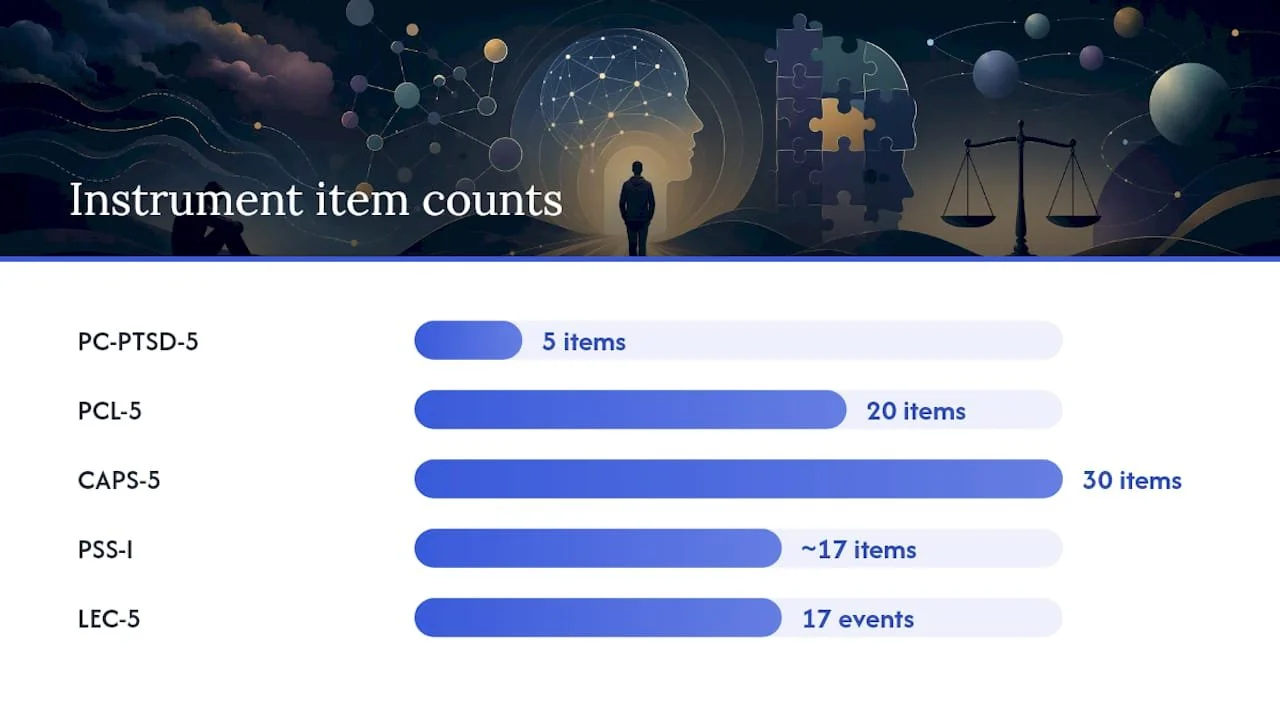
A PTSD assessment is a clinician-led evaluation that determines whether trauma-related symptoms meet DSM-5 diagnostic criteria. The most commonly used tools in the U.S. are the PC-PTSD-5 (a five-item primary care screen), the PCL-5 (a 20-item self-report measure), and the CAPS-5, a 30-item structured clinician interview that the VA National Center for PTSD recognizes as the gold standard for diagnosis. The LEC-5 documents trauma exposure history, and the PSS-I is a structured interview alternative used in specialty settings.
The single most important distinction to understand upfront: a screen is a red flag, not a diagnosis. A positive result on the PC-PTSD-5 means you may have PTSD and should be evaluated further. Only a licensed mental health clinician, using a structured diagnostic interview like the CAPS-5, can establish a formal diagnosis.
Quick reference:
Who gets screened: Adults in primary care, VA settings, or anyone reporting trauma symptoms
Who diagnoses PTSD: A licensed mental health professional (psychologist, psychiatrist, licensed clinical social worker, or licensed professional counselor)
Typical next steps: Positive screen → referral to mental health → structured diagnostic interview → treatment planning or therapy
Alvaradotherapy's trauma-informed clinicians in California and New York use these same evidence-based instruments as part of a collaborative, safety-first evaluation process.
Table of Contents
What's the difference between a PTSD screen and a full diagnostic assessment?
What trauma-informed assessment actually looks like in practice
Alvaradotherapy offers trauma-informed PTSD assessment and care in CA and NY
What's the difference between a PTSD screen and a full diagnostic assessment?
These two things serve different purposes, and confusing them is one of the most common sources of anxiety before an appointment.
A screen is short by design. The PC-PTSD-5, for example, takes about two minutes. It asks five yes/no questions about symptoms in the past month, preceded by a single question about lifetime trauma exposure. A score of 4 out of 5 is the recommended cut-point in VA primary care samples, though clinicians may adjust that threshold depending on the population. One documented concern: that same cut-point of 4 under-identified women in at least one VA sample, which is why thresholds are not one-size-fits-all. Screens are used in primary care offices, emergency departments, and community health settings where time is limited and the goal is triage, not diagnosis.
A diagnostic assessment is a different animal. The CAPS-5 takes 45–60 minutes and covers symptom frequency, severity, onset, duration, distress, and functional impact across all 20 DSM-5 PTSD symptoms. It requires a trained clinician to administer. The VA/HealthQuality clinical guideline recommends using a validated clinician-administered interview like the CAPS-5 to confirm any PTSD diagnosis, with the PC-PTSD-5 reserved for initial screening. Legal, disability, and immigration evaluations almost always require this level of rigor.
When does a provider move from screen to full assessment? The clearest triggers:
A positive screen result (PC-PTSD-5 score of 4 or higher)
Clinical concern even with a negative screen (e.g., significant functional impairment, recent trauma)
Disability, compensation, or immigration evaluation requirements
Treatment planning that requires a severity baseline
Pro Tip: Ask your provider directly: "Is this a screening tool or a diagnostic instrument?" and "How will these results be used?" Those two questions tell you exactly where you are in the process.
Which tools do clinicians use to assess PTSD?
No single PTSD instrument fits every situation. Tool choice depends on whether the goal is rapid triage, diagnostic confirmation, or tracking symptom change over time. Here is how the main measures compare:
| Instrument | Purpose | Length | Who Administers | Diagnostic? | Typical Setting |
|---|---|---|---|---|---|
| PC-PTSD-5 | Initial screen | 5 items | Self-report or clinician | No | Primary care, VA |
| PCL-5 | Self-report assessment & monitoring | 20 items, 5–10 min | Self-report | Aids diagnosis | Specialty mental health, research |
| CAPS-5 | Gold-standard diagnostic interview | 30 items, 45–60 min | Trained clinician | Yes | Specialty mental health, legal/disability |
| PSS-I | Structured diagnostic interview | ~17 items | Trained clinician | Yes | Specialty mental health, research |
| LEC-5 | Trauma exposure history | 17 event types | Self-report or clinician | No (exposure only) | All settings |
A few practical notes on each:
PC-PTSD-5: Fast and widely deployed. Its brevity is a feature in busy primary care settings, but a positive result requires follow-up. The National Center for PTSD provides the measure as a free download.
PCL-5: The PCL-5 is a 20-item self-report measure that takes 5–10 minutes and maps directly to DSM-5 symptom clusters. It is widely used both to support diagnosis and to track whether symptoms are improving during treatment. Clinicians often administer it at every session for that reason.
CAPS-5: The diagnostic standard. A 30-item structured interview that assesses all 20 DSM-5 PTSD symptoms plus onset, duration, distress, and functional impact. Requires a trained clinician and typically runs 45–60 minutes. For legal or compensation evaluations, this is usually required.
PSS-I: A shorter structured interview option used in specialty mental health and research settings. Less common in primary care but useful when a full CAPS-5 is not feasible.
LEC-5: Not a symptom measure. It documents which types of traumatic events a person has experienced across 17 categories (combat, sexual assault, accidents, natural disasters, etc.). Clinicians use it to establish Criterion A exposure before moving into symptom assessment.
What actually happens during a PTSD assessment appointment?
Knowing the sequence reduces the anxiety of not knowing what's coming. Here is the typical flow, from a brief primary care screen to a full diagnostic interview:
Intake and informed consent: The clinician explains the purpose of the assessment, how results will be used, who will see them, and your right to pause or stop. You sign consent forms before anything else.
Trauma history: Using the LEC-5 or structured interview prompts, the clinician documents which traumatic events you have experienced, witnessed, or learned about. This establishes DSM-5 Criterion A exposure.
Symptom review: You work through the four DSM-5 symptom clusters: intrusion (flashbacks, nightmares), avoidance (avoiding reminders), negative changes in thinking and mood, and changes in arousal and reactivity (hypervigilance, sleep problems). The clinician may use the CAPS-5 or PCL-5 here.

Functioning and impairment: Questions about how symptoms affect work, relationships, daily activities, and overall quality of life. Functional impairment is a required element of a DSM-5 diagnosis.
Safety screening: PTSD is strongly associated with suicidal ideation, and clinical best practice requires suicide-risk screening at initial and ongoing evaluations. This is not optional, and disclosing suicidal thoughts is the right call.
Medical review: A clinician may review your medical history or refer you for a physical exam to rule out medical causes of similar symptoms, such as thyroid disorders or traumatic brain injury.
Approximate time ranges:
| Assessment Type | Typical Duration |
|---|---|
| Primary care screen (PC-PTSD-5) | 2–5 minutes |
| Self-report questionnaire (PCL-5) | 5–10 minutes |
| Full diagnostic interview (CAPS-5) | 45–60 minutes |
| Legal/disability/immigration evaluation | 45–60 minutes |
Pro Tip: Bring a written timeline of key traumatic events, your current medication list, any prior mental health diagnoses or treatment records, and emergency contact information. If you are doing a telehealth assessment, use headphones, find a private room, and close other browser tabs. You can ask for a break at any point.
For more on preparing for a counseling session as a trauma survivor, Alvaradotherapy has a practical guide worth reading before your appointment.
How does DSM-5 define a PTSD diagnosis?
A diagnosis requires more than a high score on a questionnaire. The DSM-5 sets out specific criteria that all must be met:
Criterion A (Trauma exposure): Direct experience, witnessing, or learning about actual or threatened death, serious injury, or sexual violence. Repeated exposure to traumatic details (e.g., first responders) also qualifies.
Criterion B (Intrusion symptoms): At least one of: intrusive memories, nightmares, flashbacks, psychological distress at trauma cues, or physiological reactions to cues.
Criterion C (Avoidance): At least one of: avoiding distressing memories/thoughts, or avoiding external reminders (people, places, situations).
Criterion D (Negative alterations in cognition and mood): At least two of: memory gaps, persistent negative beliefs, distorted blame, persistent negative emotions, diminished interest, feeling detached, or inability to experience positive emotions.
Criterion E (Alterations in arousal and reactivity): At least two of: irritability/aggression, reckless behavior, hypervigilance, exaggerated startle, concentration problems, or sleep disturbance.
Duration: Symptoms must persist for at least one month.
Functional impairment: Symptoms must cause clinically significant distress or impairment in social, occupational, or other areas.
Clinicians use the CAPS-5 to map reported symptoms to these criteria systematically. Two specifiers matter: the dissociative subtype (depersonalization or derealization) and the delayed expression specifier (when full criteria are not met until six months or more after the event). Acute Stress Disorder (ASD) covers the first 30 days after trauma; PTSD applies after that window.
Co-occurring conditions, particularly depression, substance use disorders, and anxiety, are common and do not disqualify a PTSD diagnosis. They do complicate it. A clinician's judgment integrates all of this; a checklist score alone never makes a diagnosis.
How are assessment results used after the appointment?
Results serve different purposes depending on the context, and understanding that helps you know what to expect from your report.
A negative screen with clinical concern does not close the case. If your PC-PTSD-5 score is below the cut-point but your clinician observes significant impairment or hears a compelling trauma history, further assessment is still warranted. Cut-points are guides, not gates.
A positive screen triggers a referral for a structured diagnostic interview. That interview, typically the CAPS-5, is what produces a formal diagnosis. The PCL-5 and CAPS-5 are then used to track symptom severity during treatment, giving both you and your clinician a concrete measure of whether the intervention is working.
A formal diagnosis opens the door to treatment planning: evidence-based therapies like EMDR or Prolonged Exposure, medication options, safety planning, and referrals to specialty services. For trauma healing and treatment progression, a clear assessment baseline makes a real difference in how care is structured.
Assessment reports also serve documentation purposes beyond clinical care: disability and compensation claims, immigration psychological evaluations, and forensic contexts all require detailed written reports with standardized scoring. The documentation requirements for those settings are considerably more extensive than a standard clinical note.
On confidentiality: Assessment results are protected health information under HIPAA. Your clinician will explain who has access, typically only treating providers unless you sign a release. The main exceptions are safety concerns (imminent risk of harm to self or others) and legally mandated reporting. Ask your clinician to walk through these limits at the start of the appointment.
How to prepare and what to ask your assessor
Preparation makes the assessment more accurate and less stressful. Gather these before your appointment:
A written timeline of traumatic events (approximate dates, locations, what happened)
Current medication list, including dosages
Prior mental health diagnoses, treatment history, and any previous assessment reports
Names and contact information for your emergency contacts
Notes on how symptoms affect your daily life (work, sleep, relationships)
Questions worth asking your assessor:
What measures will you use, and are they screening tools or diagnostic instruments?
How long will the assessment take?
Who will see the results, and how will they be documented?
What treatment options will you recommend based on the findings?
How is suicide risk handled during and after the assessment?
Do you offer trauma-informed and culturally responsive care?
Can I bring a support person, and if so, what role will they play?
Providers may also request permission to speak with a family member or partner to get a fuller picture of your functioning and observed symptoms. You can decline, but it is worth knowing that option exists.
Pro Tip: For telehealth assessments, test your audio and video connection beforehand, use headphones for privacy, and let household members know you need uninterrupted time. A quiet, private space matters more than you might expect when discussing trauma.
For readers exploring what different trauma therapy approaches look like after assessment, this overview of CBT vs. RTT therapy for trauma offers useful context on treatment options.
Key Takeaways
A PTSD assessment requires both a validated screening tool and a clinician-administered diagnostic interview to produce a reliable diagnosis and treatment plan.
| Point | Details |
|---|---|
| Screen vs. diagnosis | A positive PC-PTSD-5 screen is a red flag, not a diagnosis; it should prompt a full CAPS-5 interview. |
| Gold-standard instrument | The CAPS-5 is the 30-item structured interview recognized as the diagnostic standard; it takes 45–60 minutes. |
| Self-report monitoring | The PCL-5 (20 items, 5–10 minutes) aids diagnosis and tracks symptom change throughout treatment. |
| DSM-5 requirements | Diagnosis requires trauma exposure plus symptoms across four clusters, lasting at least one month, with functional impairment. |
| Alvarado therapy | Alvarado Therapy offers trauma-informed PTSD assessments and EMDR therapy in California and New York, in English and Spanish. |
What trauma-informed assessment actually looks like in practice
Most articles about PTSD assessment describe the instruments accurately but skip the part that matters most to the person sitting in the room: how the clinician shows up.
A score on the PCL-5 tells you where someone lands on a symptom severity scale. It does not tell you whether they felt safe enough to answer honestly. That gap is where clinical skill and trauma-informed training make the real difference. A clinician who moves through a structured interview at a clinical pace, without pausing to check in or normalize the difficulty of the questions, will get less accurate data than one who creates genuine psychological safety first.
Cultural and identity factors compound this. Research on cut-point performance already shows that thresholds validated in one population can under-identify symptoms in another. The same dynamic plays out in the room: a person whose trauma occurred within a cultural context the clinician does not understand may describe symptoms in ways that do not map cleanly to DSM-5 language. Bilingual assessment, conducted in the patient's primary language, is not a courtesy. It is a clinical accuracy issue.
The other thing worth saying plainly: a positive screen or a formal PTSD diagnosis is not a verdict. It is a starting point. The assessment exists to open a conversation about care, not to close one about identity or capability.
Alvaradotherapy offers trauma-informed PTSD assessment and care in CA and NY
If you are ready to move from questions to answers, Alvaradotherapy provides specialized PTSD and complex trauma services with licensed, trauma-trained clinicians in California and New York. The practice uses evidence-based assessment instruments, including the CAPS-5 and PCL-5, as part of a collaborative intake process designed to feel safe rather than clinical.
Services include individual EMDR therapy, EMDR Intensives, and immigration psychological evaluations, all available online. Care is offered in both English and Spanish, with a strong commitment to culturally responsive, identity-affirming practice. Whether you are coming in after a positive screen, seeking a formal evaluation for a disability or immigration claim, or simply trying to understand what you have been experiencing, the first step is a consultation.
See what to expect from an assessment and book a consultation with Alvaradotherapy's trauma-informed team. For more on specialized PTSD and complex trauma services, visit the PTSD and Complex Trauma service page.
Useful sources and further reading
The following authoritative sources provide downloadable measures, clinical guidance, and evidence-based protocols for PTSD assessment in the U.S.:
Clinician-Administered PTSD Scale for DSM-5 (CAPS-5) — National Center for PTSD: Full instrument description, scoring guidance, and clinician training information.
PTSD Checklist for DSM-5 (PCL-5) — National Center for PTSD: Free downloadable self-report measure with scoring instructions and research references.
Primary Care PTSD Screen for DSM-5 (PC-PTSD-5) — National Center for PTSD: Five-item screen with cut-point guidance and population-specific cautions.
Assessment Overview — National Center for PTSD: Index of all validated trauma and PTSD measures organized by type and population.
Assessment for Posttraumatic Stress Disorder — VA/HealthQuality guideline: Clinical workflow guidance for screening, confirmatory interviews, and treatment monitoring.
Posttraumatic Stress Disorder: Evaluation and Treatment — AAFP: Peer-reviewed clinical review covering DSM-5 criteria, comorbidities, and treatment recommendations for primary care providers.
