
Therapy Intake Process Workflow: A Step-by-Step Guide

TL;DR:
A structured therapy intake workflow ensures safe, efficient, and effective treatment initiation through distinct stages. Digital tools improve efficiency only when fully integrated with practice management systems, reducing manual errors and time. Risk assessment during intake is critical, requiring immediate clinical action for safety concerns like suicidal ideation and self-harm.
The therapy intake process workflow is the structured sequence that moves a new client from first contact to active treatment, covering initial screening, paperwork, clinical assessment, and early treatment planning. Every mental health practice runs some version of this process, but the quality of that structure determines how safe, efficient, and therapeutically effective the experience feels for both client and clinician. A well-designed workflow does more than collect information. It builds the foundation for the entire therapeutic relationship. Whether you are preparing for your first therapy appointment or refining your practice's client intake procedure, understanding each stage gives you a clear advantage.
What are the essential steps in the therapy intake process workflow?
The therapy intake workflow covers four core stages: initial contact, intake paperwork, the initial assessment session, and early treatment planning within the first one to three sessions. Each stage has a distinct clinical purpose, and skipping or compressing any one of them creates gaps that show up later as poor documentation, missed risk factors, or weak therapeutic alliance.
Step 1: Initial contact and screening
The first contact establishes whether the practice is a clinical fit for the client. This typically includes a brief phone or online screening that covers the presenting concern, availability, payment method, and insurance information. Many practices use a standardized intake coordinator script at this stage to keep the conversation consistent and legally compliant. The goal is not a full assessment. It is a mutual fit check that sets expectations on both sides.
Step 2: Intake paperwork
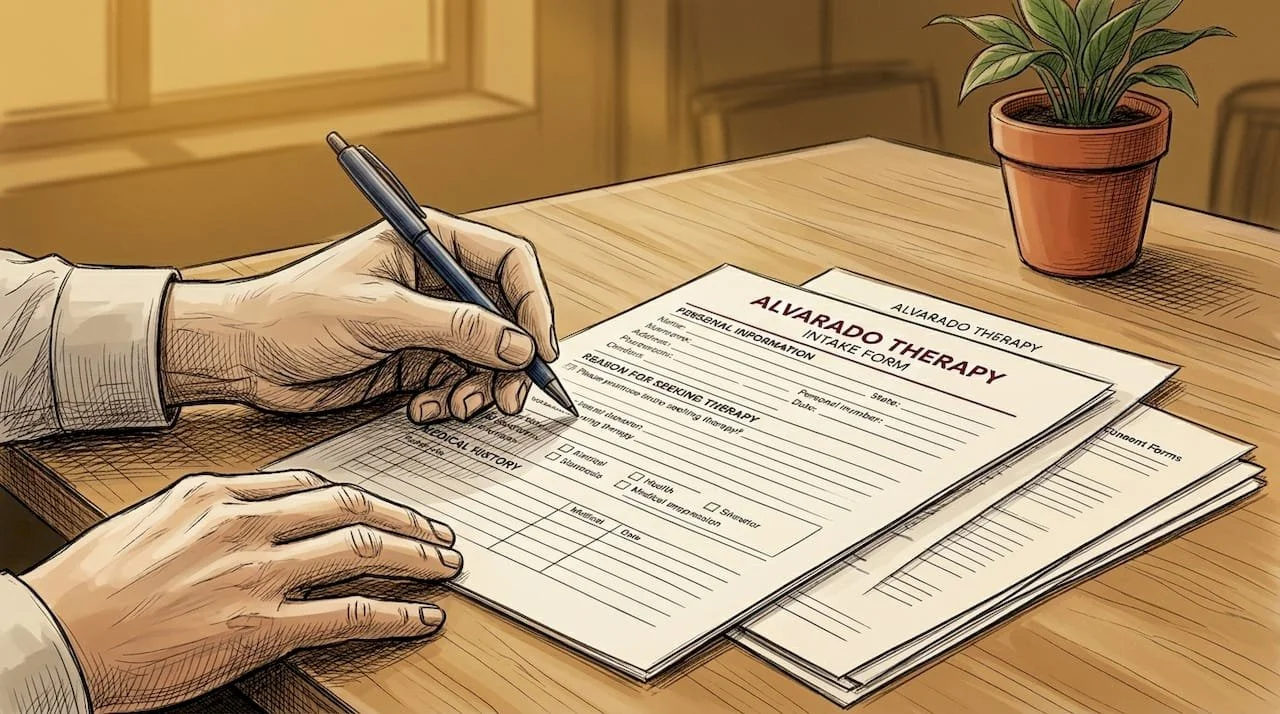
Before the first session, clients complete a therapy intake form that covers demographics, medical and psychiatric history, current medications, emergency contacts, and insurance details. Informed consent during this stage must address the nature of therapy, confidentiality limits, risks, alternative treatments, fees, and cancellation policies, per APA and ACA guidelines. Completing this paperwork in advance protects session time for clinical work rather than administrative tasks. Practices using electronic health record systems like SimplePractice or TherapyNotes can automate delivery and collection of these forms.
Step 3: The initial assessment session
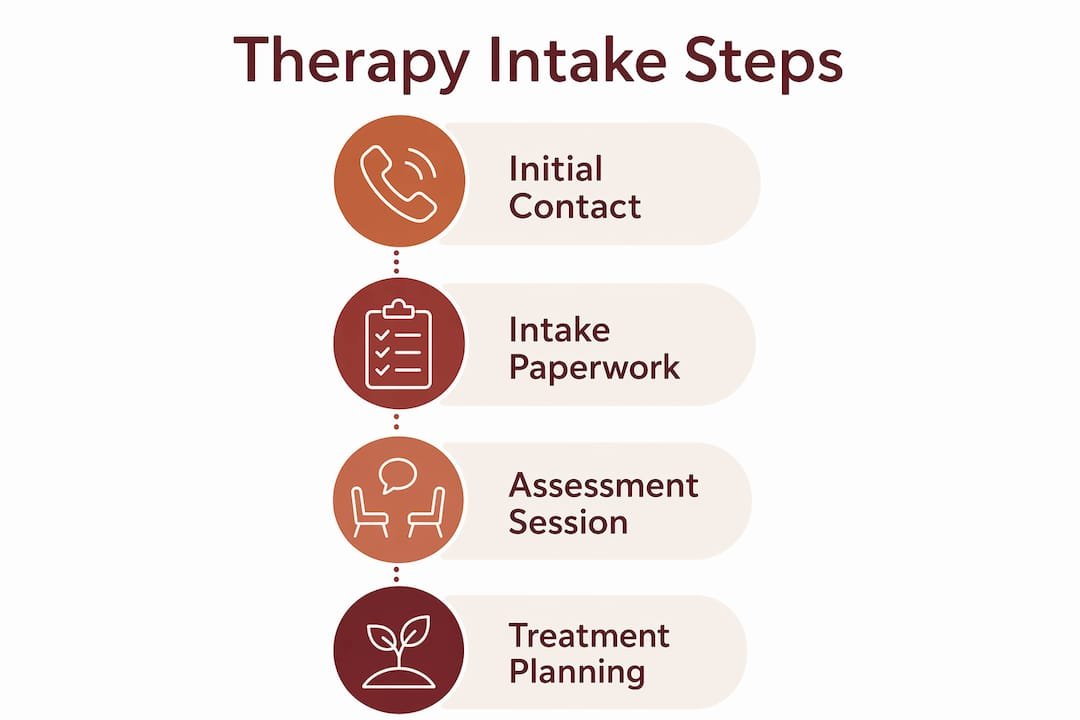
A 45-minute intake session can effectively cover rapport building, presenting issues, symptom history, risk assessment, and initial goal-setting when structured into three phases: an opening that establishes safety and purpose, a core assessment block, and a closing that summarizes findings and next steps. The biopsychosocial framework organizes this assessment by examining biological factors such as sleep, medication, and physical health; psychological factors such as mood, cognition, and trauma history; and social factors such as relationships, housing, and cultural context. Validated screeners like the PHQ-9 for depression, the GAD-7 for anxiety, and the PCL-5 for PTSD belong in this block because they produce scored, documentable data rather than subjective impressions.
Step 4: Early treatment planning
Treatment planning begins in the first session and solidifies over sessions two and three. The clinician uses intake data to identify primary diagnoses, prioritize presenting concerns, and set measurable goals. For trauma-focused practices, this stage also determines whether a modality like EMDR, CPT, or somatic therapy is the appropriate fit. A structured treatment plan grounded in intake findings reduces clinical drift and gives clients a clear sense of direction from the start.
How can digital tools improve the therapy intake workflow?
Digital intake only improves workflow efficiency when the collected data integrates directly with the practice management system. That single condition eliminates most of the value from digitizing intake forms if it is ignored. Practices that switch to online forms but still manually re-enter data into their EHR have added a step, not removed one.
Here is what a well-integrated digital intake workflow actually delivers:
Automated form delivery: Clients receive intake forms via secure link before the first appointment, reducing session time spent on paperwork.
Screener auto-scoring: Validated tools like the PHQ-9 and GAD-7 score automatically, so clinicians see flagged results before the session begins rather than calculating scores by hand.
Reduced transcription errors: Direct EHR integration eliminates the manual re-entry that introduces errors into clinical records.
Faster clinical charting: Pre-populated intake data scaffolds session notes, cutting documentation time after appointments.
Appointment reminders: Integrated scheduling tools like Calendly or the scheduling modules inside SimplePractice send automated reminders that improve form completion rates before the session.
The most common failure mode is treating digitization as a technology project rather than a workflow redesign. Watching the handoff from intake data entry to clinical notes reveals where integration gaps exist. If a staff member is copying information from one system to another at any point, the workflow has not been redesigned. It has been duplicated.
Pro Tip: Before purchasing any intake software, map your current workflow on paper first. Identify every handoff point where data moves between people or systems. Then evaluate whether the software eliminates those handoffs or just digitizes them.
What are the critical risk assessment components in intake workflows?
Risk assessment is the highest-stakes element of any intake workflow, and it must be designed so that a positive response triggers an immediate clinical action, not passive data collection. A checklist that flags suicidal ideation but routes to no one is not a safety system. It is documentation of a missed intervention.
Every mental health intake process must screen explicitly for the following:
Suicidal ideation: Current thoughts of suicide, frequency, and intensity
Plan and intent: Whether the client has a specific plan and intends to act on it
Access to means: Presence of firearms, medications, or other lethal means in the home
Past attempts: History of prior suicide attempts, which is the strongest single predictor of future risk
Self-harm behaviors: Non-suicidal self-injury, which requires its own clinical response separate from suicidality
Homicidal ideation: Thoughts of harming others, which triggers Tarasoff duty-to-warn obligations in California
"Risk screening must trigger immediate clinician action and safety planning instead of passive data collection to be effective." — Formfy, 2026
When a client endorses active suicidal ideation with plan and intent, the clinician moves immediately to safety planning, not the next intake question. Safety planning includes identifying warning signs, coping strategies, social supports, and crisis resources. The 988 Suicide and Crisis Lifeline, established by SAMHSA, is the primary crisis resource to provide in writing during every intake. Practices serving clients with substance use disorders also need to understand 42 CFR Part 2 protections, which restrict disclosure of SUD treatment records beyond standard HIPAA rules.
For trauma-focused practices, a trauma assessment within the intake session identifies trauma history, trauma type, and current symptom severity, which directly informs whether stabilization work precedes trauma processing.
What are best practices for a smooth therapy intake workflow?
The difference between a functional intake workflow and an excellent one comes down to a few structural decisions that most practices either overlook or implement inconsistently.
| Practice | Ad hoc approach | Structured approach |
|---|---|---|
| Paperwork timing | Completed in session | Sent and completed before first appointment |
| Entry point | Multiple intake paths with no coordination | Single referral queue, “no wrong door” policy |
| Risk screening | Verbal, undocumented | Standardized screener with documented action routing |
| Wait time management | Reactive scheduling | Dedicated intake navigator role |
| Technology use | Digital forms, manual re-entry | Fully integrated EHR with auto-scoring |
One of the most operationally significant findings in behavioral health comes from a case study published by Becker's Behavioral Health: standardizing intake entry as a "no wrong door" system with a single referral queue reduced wait times from 50 days to 7. That is not a marginal improvement. It reflects what happens when intake is treated as a clinical system rather than an administrative task.
Dedicated intake navigators or intake specialists reduce the burden on treating clinicians and keep the assessment workflow moving without sacrificing clinical quality. These roles handle scheduling, form follow-up, insurance verification, and initial screening calls, so the licensed clinician enters the first session with complete paperwork and pre-scored screeners already in hand.
Pro Tip: Send intake forms with a personalized message explaining why each section matters. Clients who understand the purpose of therapy intake questions complete forms more thoroughly and arrive at the first session with less anxiety about what to expect.
A well-designed intake workflow improves clinical documentation quality, strengthens the therapeutic alliance, and accelerates treatment planning. These outcomes are not incidental. They are the direct result of structural decisions made before the client walks through the door.
Key takeaways
A structured therapy intake process workflow is the single most reliable predictor of clinical documentation quality, client safety, and early therapeutic alliance.
| Point | Details |
|---|---|
| Four-stage workflow | Every intake moves through initial contact, paperwork, assessment, and treatment planning in sequence. |
| Risk assessment is non-negotiable | Suicidal ideation, plan, intent, means, and past attempts must be screened and trigger immediate clinical action. |
| Digital tools require integration | Online intake forms only reduce workload when data flows directly into the EHR without manual re-entry. |
| Structural design cuts wait times | A “no wrong door” referral system with intake navigators can reduce wait times from 50 days to 7. |
| Advance paperwork protects session time | Forms completed before the first appointment preserve clinical time for assessment and rapport building. |
Why the intake process deserves more clinical attention than it gets
Most of the conversation in mental health practice development focuses on treatment modalities: EMDR versus CBT, somatic work versus talk therapy, individual versus group formats. The intake process gets treated as the administrative prelude to the real work. That framing is wrong, and it costs practices and clients more than they realize.
The intake session is where the therapeutic alliance begins. A client who feels rushed through paperwork, asked clinical questions without context, or left uncertain about what happens next does not arrive at session two with full trust. They arrive guarded. The intake workflow is not separate from therapy. It is the first clinical intervention.
What I have observed working with trauma-informed practices is that clients who come in with trauma histories are especially sensitive to how intake is conducted. A form that asks about abuse history without any relational framing can retraumatize before treatment has even started. The sequence matters. The tone of the questions matters. Whether the clinician pauses to acknowledge a difficult disclosure before moving to the next screener item matters enormously.
Technology is genuinely useful here, but only when it reduces administrative friction without replacing human contact. Auto-scored screeners that arrive in the clinician's hands before the session are a clinical asset. A fully automated intake chatbot that handles the first contact for a trauma survivor is not. The distinction is not about digital versus analog. It is about where human judgment is irreplaceable and where it is being wasted on data entry.
Practitioners refining their intake procedures should audit the process from the client's perspective at least once a year. Complete your own intake forms. Time how long they take. Read the questions as a first-time client would. The gaps become obvious quickly.
— Juiced
Start your therapy journey with a practice that gets intake right
At Alvaradotherapy, the intake process is designed to feel safe, clear, and clinically thorough from the very first contact. Whether you are seeking support for PTSD, complex trauma, anxiety, or grief, the team of licensed therapists in Pasadena, Ventura, and across California online builds your treatment plan from a structured, trauma-informed assessment. You can learn exactly what to expect before your first session, including how EMDR and trauma-focused therapy are introduced during the intake process. For clients navigating PTSD or complex trauma, the trauma therapy services page outlines how the clinical intake shapes every stage of treatment. Booking a free consultation is the first step.
FAQ
What does a therapy intake process workflow include?
The therapy intake workflow includes initial contact and screening, intake paperwork such as consent forms and medical history, an initial assessment session, and early treatment planning within the first one to three sessions.
How long does a therapy intake session typically take?
A structured intake session runs approximately 45 minutes and covers rapport building, presenting issues, risk assessment, and initial goal-setting when organized into opening, core assessment, and closing phases.
What questions are asked during a mental health intake?
Therapy intake questions cover presenting concerns, psychiatric and medical history, current medications, trauma history, substance use, and risk factors including suicidal ideation, past attempts, and access to means.
Why is risk assessment so critical in the intake workflow?
Risk screening is the highest-stakes intake block because a positive response to suicidal ideation or self-harm must trigger immediate safety planning and crisis resource provision, not passive documentation.
Do digital intake forms actually save time?
Digital intake forms save time only when they integrate directly with the practice management system. Manual re-entry of digital form data adds workload and introduces transcription errors rather than reducing them.
