
What Is Couple Therapy and How Does It Work
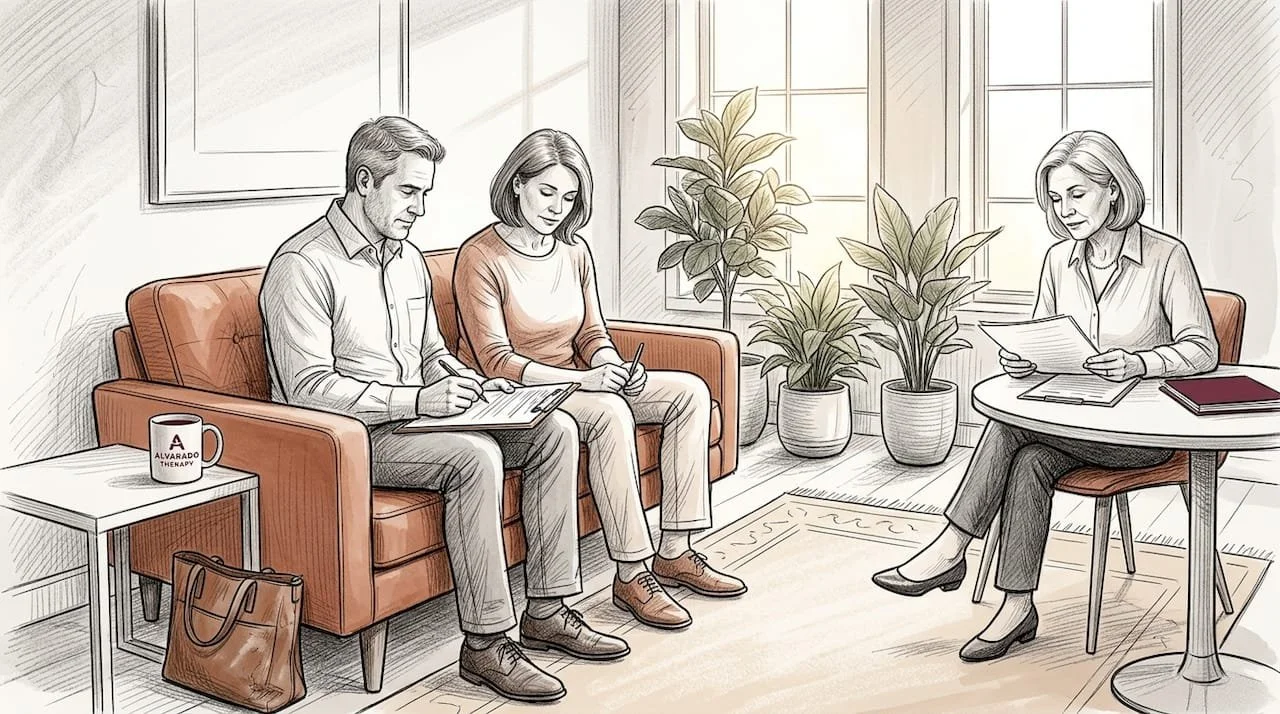
TL;DR:
Couple therapy is an evidence-based process that helps partners communicate better and resolve conflict, regardless of relationship stage. It involves structured sessions over several months, focusing on patterns and behavioral change outside of therapy. Most couples experience improved intimacy, communication, and resilience, with success rates around 70-80 percent.
Most people assume couple therapy is a last resort, something you do when the relationship is already falling apart. That assumption keeps a lot of good couples from getting real help. What is couple therapy, really? It's a structured, evidence-based form of psychotherapy designed to help two people communicate better, understand each other more deeply, and work through conflict without tearing each other apart. It's not a sign of failure. For many couples, it's the smartest relationship investment they ever make.
Table of Contents
Key takeaways
| Point | Details |
|---|---|
| Not just for crisis | Couple therapy benefits relationships at any stage, not only those in serious trouble. |
| Structured process | Sessions are typically 60 minutes weekly and last 3 to 12 months with clear goals. |
| High success rates | 70% to 80% of couples in therapy show better outcomes than those who don't participate. |
| Multiple approaches exist | Methods like EFT, CBT, and the Gottman Method target different relationship challenges. |
| Effort outside sessions matters | Real change happens through daily practice, not just what occurs in the therapy room. |
What is couple therapy, defined
Couple therapy, sometimes called couples counseling, is a form of psychotherapy where both partners work with a licensed therapist to address problems within the relationship. The therapist isn't there to take sides. The focus is on the relationship itself as the client, not one person or the other.
The goals vary by couple, but common themes include:
Improving how partners communicate, especially during conflict
Rebuilding trust after a betrayal or rupture
Deepening emotional intimacy and understanding
Processing major life transitions like parenthood, career change, or loss
Learning how to fight without doing lasting damage
One thing that separates couple therapy from individual therapy is scope. Individual therapy focuses on one person's internal world. Couple therapy examines the dynamic between two people. A licensed marriage and family therapist (LMFT), licensed clinical social worker (LCSW), or licensed psychologist typically provides this care. Credentials matter here because the skills required to hold two people's realities simultaneously are genuinely specialized.
How couple therapy actually works
Understanding how does couple therapy work starts with knowing what a typical course of treatment looks like. Standard couples therapy involves weekly 60-minute sessions over 3 to 12 months, with some individual sessions included along the way. That timeline surprises people. They expect a few sessions to fix everything. Real change takes longer because it requires rewiring how two people interact with each other.
Here's what the process generally looks like from start to finish:
Initial assessment. The first one or two sessions focus on understanding the relationship history, current concerns, and each partner's goals. The therapist may also meet with each person individually to get a clearer picture.
Goal setting. Therapist and couple agree on specific, workable goals. This keeps sessions focused instead of becoming a free-for-all venting session.
Active treatment. The bulk of therapy involves structured conversations, role-play exercises, and guided reflection. The therapist identifies patterns in real time and helps partners respond differently.
Between-session practice. Homework and practice outside sessions are critical for actual behavioral change. This might include journaling, practicing a specific listening technique, or completing an exercise together.
Review and adjustment. Progress is checked regularly. If something isn't working, the approach shifts.
The therapist's role throughout is that of a neutral guide, not a judge. They track patterns in the room and help both partners slow down enough to actually hear each other. Think of it less like a referee and more like a skilled translator who helps two people finally understand what the other has been trying to say for years.
Pro Tip: If you feel like your first therapist isn't a good fit after two or three sessions, it's completely reasonable to try someone else. The therapeutic relationship is part of what makes this work.
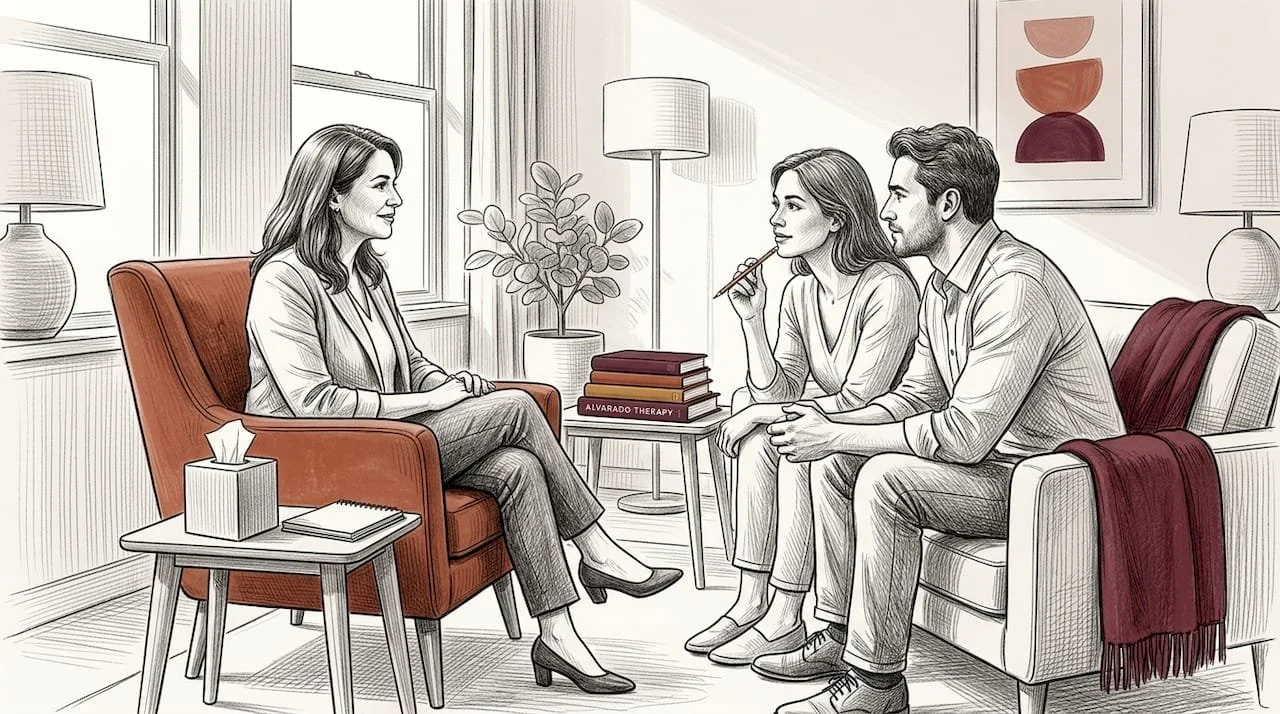
The real benefits of couple therapy
The benefits of couple therapy go well beyond stopping arguments. Research consistently shows that 70% to 80% of couples who participate in therapy report better outcomes than those who don't. That's a meaningful number.
Here's what couples actually walk away with:
Conflict resolution skills. Therapy teaches partners how to recognize triggers and avoid escalation before a disagreement becomes a blowup. These are learnable skills, not personality traits you either have or don't.
Stronger emotional intimacy. Therapy strengthens emotional intimacy by helping partners understand the underlying emotions driving their reactions, not just the surface-level behavior.
Better communication. Many couples realize they've been having the same argument for years because neither person felt truly heard. Therapy breaks that cycle by changing how partners listen, not just how they talk.
Resilience through transitions. Therapy is effective for managing life transitions together, whether that's a new baby, job loss, illness, or grief. Having shared tools makes hard seasons survivable.
Preventive care. Couples don't have to be in crisis to benefit. Younger adults are increasingly recognizing this. Clients aged 20 to 30 seeking couples therapy increased by 30% over five years, reflecting a cultural shift toward proactive relationship care rather than reactive damage control.
The preventive angle is underrated. Waiting until a relationship is in serious distress means you're trying to rebuild something that's already been significantly damaged. Getting in earlier, when the communication is strained but the goodwill is still there, produces faster and more durable results.
Common misconceptions that keep couples from going
Fear is the biggest barrier to starting therapy. Most couples cite two main concerns: they worry about being blamed, or they worry the therapist will recommend they break up. Neither reflects how therapy actually works.
Therapists act as neutral, system-focused mediators rather than assigning blame to one partner. A skilled therapist isn't interested in who started the argument. They're looking at the pattern, the cycle both people participate in, often without realizing it.
"The goal of couples therapy isn't to prove one partner right. It's to help both partners understand the dynamic they've both created and both have the power to change."
Another common fear is that therapy means admitting the relationship is broken. Plenty of couples enter therapy not because something is broken, but because they want to be proactive. Therapy creates a neutral environment where honest communication can happen without the conversation spiraling into defensiveness.
The challenge of unlearning dysfunctional communication patterns is real. These patterns are often unconscious and deeply ingrained. A person who grew up in a home where conflict meant screaming will default to that behavior under stress, even if they genuinely don't want to. Therapy surfaces these patterns so both partners can work on them together.
Pro Tip: If one partner is reluctant to try therapy, start by framing it as skill-building rather than crisis management. Most people are more open to learning than to admitting something is wrong.
Types of couple therapy and when to use them
Different problems call for different approaches. Here's a practical look at the main types of couple therapy and what each one targets:
| Approach | Primary Focus | Best For |
|---|---|---|
| Emotion-Focused Therapy (EFT) | Attachment patterns and emotional bonds | Couples with emotional disconnection or repeated cycles of conflict |
| Cognitive-Behavioral Therapy (CBT) | Thought patterns and behavioral responses | Partners dealing with negative thinking cycles or reactive behavior |
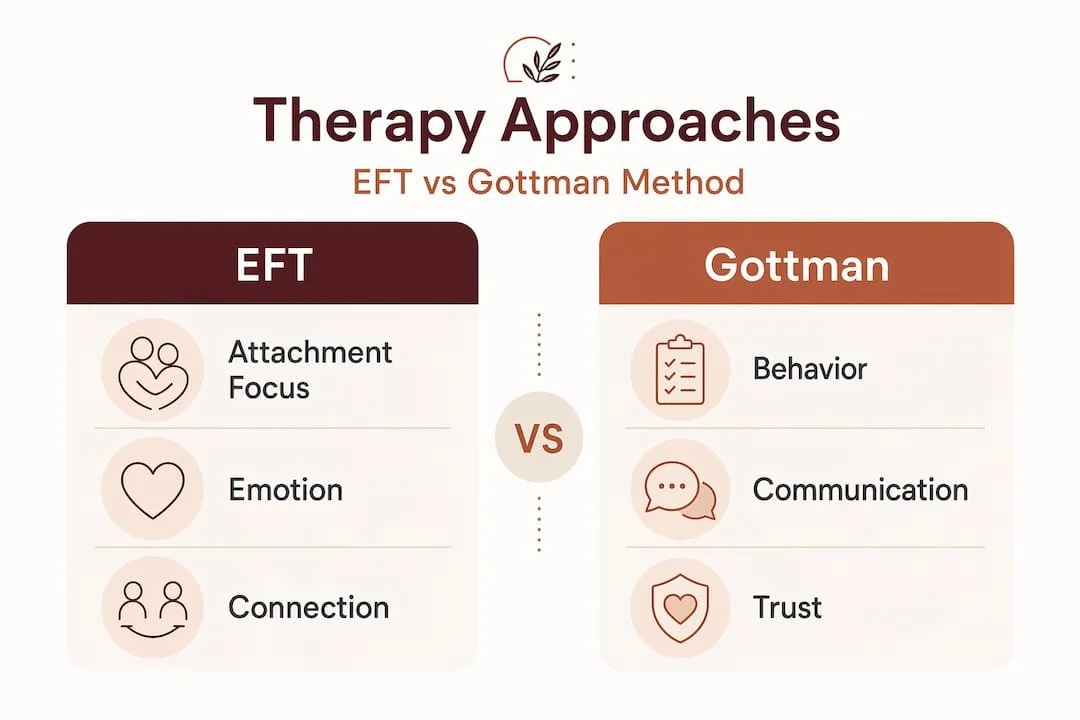
| Gottman Method | Communication, friendship, and conflict skills | Couples wanting structured, research-backed tools for day-to-day interaction |
| Imago Relationship Therapy | Childhood wounds and how they affect adult relationships | Couples whose conflicts feel disproportionately intense or deeply personal |
| Trauma-informed couples therapy | Healing trauma's impact on intimacy and trust | Couples where one or both partners carry unresolved trauma affecting the relationship |
Commonly used therapeutic approaches like EFT and the Gottman Method have the most research support, but the right fit depends on what's actually happening in your relationship. A good therapist will often blend techniques rather than rigidly following one model.
Trauma-informed couples therapy deserves particular attention. When one or both partners have a history of trauma, standard communication exercises can actually backfire. A trauma-informed approach accounts for how the nervous system responds under stress and adjusts the pacing and techniques accordingly.
My honest take on what makes therapy work
I've seen couples enter therapy expecting the therapist to diagnose who's wrong and hand them a solution. That expectation almost guarantees disappointment. In my experience, the couples who get the most out of therapy are the ones who come in curious, not just combative.
Real change doesn't happen in the therapy room. It happens on a Tuesday night when one partner chooses to pause instead of escalate, because they practiced that skill and it's starting to feel possible. The sessions give you the framework. The daily life gives you the practice reps.
One thing I'd push back on strongly is the idea that therapy is for the "really bad" relationships. Early intervention consistently leads to better outcomes. Couples who get help when the frustration is manageable have more emotional bandwidth to actually use the tools they're learning. Waiting until resentment has calcified makes the work significantly harder.
The other thing worth saying plainly: therapy won't save a relationship where one person has already decided to leave. What it can do is give both people clarity, whether that means reconnecting or separating with less damage and more understanding.
— Alvaradotherapy
Take the next step with couples therapy
If any of this resonates with where you and your partner are right now, you don't have to figure out the next step alone.
Alvarado Therapy offers online couples therapy in California and New York, led by licensed, trauma-informed therapists who specialize in communication, emotional connection, and conflict resolution. Whether you're in an active crisis or simply want to invest in your relationship before small issues grow, the team at Alvarado Therapy meets you where you are. Sessions are available in English and Spanish, and the intake process is straightforward. You can schedule a consultation to find out whether couples therapy is the right fit for your situation, with no pressure and no commitment required.
FAQ
What is couple therapy used for?
Couple therapy is used to improve communication, resolve ongoing conflicts, rebuild trust, and strengthen emotional intimacy. It's appropriate for relationships at any stage, not just those in serious distress.
How long does couple therapy take?
Most couples attend weekly sessions over 3 to 12 months, depending on the complexity of their concerns and the progress they make. Some couples reach their goals sooner with shorter-term focused work.
Does couple therapy actually work?
Research shows that 70 to 80 percent of couples in therapy report better relationship outcomes than those who don't participate. Success depends on both partners' engagement and willingness to practice new behaviors.
What if only one partner wants to go?
A reluctant partner is common. Starting with one willing partner in individual therapy can sometimes open the door. Many therapists will work with couples even when one person is hesitant, as long as both attend.
What's the difference between EFT and the Gottman Method?
Emotion-Focused Therapy targets the emotional attachment patterns driving conflict, while the Gottman Method focuses on building communication skills and friendship. Both are research-supported, and many therapists draw from both depending on the couple's needs.
Recommended
Couples Therapy Success: What Actually Works — Alvarado Therapy
Couples Therapy Process Workflow: Step-by-Step Guide — Alvarado Therapy
Effective Couples Counseling: Methods, Results, and What Works — Alvarado Therapy
The Couples Counseling Process: What to Expect — Alvarado Therapy
Are you happy with the article?
You'll earn a backlink credit for your feedback!
