
EMDR Therapy for Grief: Heal Traumatic Loss Effectively

TL;DR:
EMDR therapy helps process traumatic grief by targeting stuck memories with bilateral stimulation, promoting natural mourning. It is especially effective for traumatic or complicated loss, with treatment typically lasting 6 to 12 sessions, and does not require verbal narration for healing. Preparing emotional regulation skills is essential, and EMDR can be combined with traditional counseling for comprehensive grief support.
EMDR therapy for grief is a structured, evidence-based psychotherapy that helps people process traumatic loss by targeting the specific memories that block natural mourning. Recognized by the World Health Organization and the American Psychological Association, Eye Movement Desensitization and Reprocessing (EMDR) works differently from traditional talk therapy. Rather than requiring you to verbally retell painful events, it uses bilateral stimulation to activate your brain's own processing system. For adults stuck in grief that feels frozen, intrusive, or impossible to move through, EMDR offers a clinically validated path forward.
How does EMDR therapy work to help with grief?
EMDR follows an 8-phase protocol built on the Adaptive Information Processing (AIP) model. The AIP model holds that the brain naturally processes most experiences, but traumatic or overwhelming events can become "stuck," stored in a fragmented, emotionally raw state. Grief, especially when tied to sudden or violent loss, often creates exactly this kind of stuck memory. EMDR targets those specific moments, such as hearing the news of a death, to reduce their emotional charge while preserving access to positive memories of the person you lost.
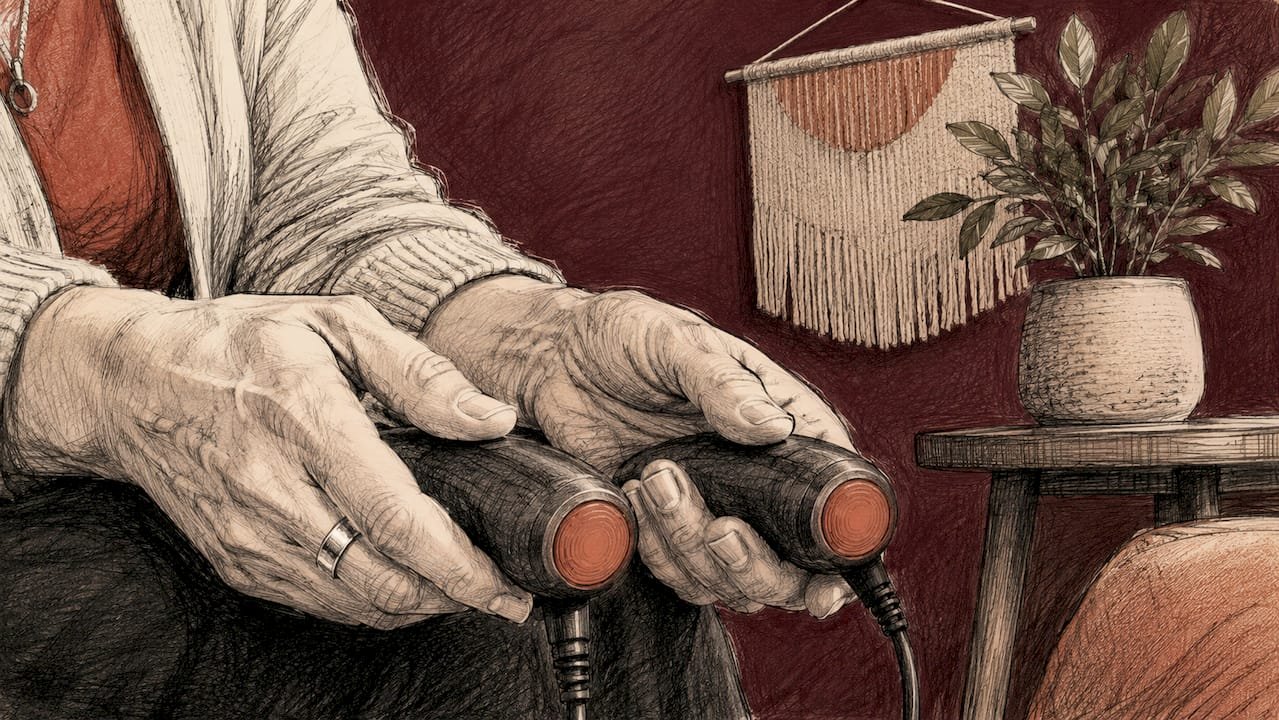
The mechanism centers on bilateral stimulation, which means alternating sensory input across both sides of the body. This is most commonly delivered through guided eye movements, but tapping or auditory tones are equally valid alternatives that therapists adapt based on your comfort. The bilateral stimulation appears to activate the same neural processing that occurs during REM sleep, allowing the brain to metabolize distressing material it previously could not.
One of the most clinically significant features of EMDR is that healing does not require verbal narration. You do not need to describe your loss in detail to benefit. This makes EMDR particularly useful for people whose grief is so raw or traumatic that talking about it directly feels impossible or retraumatizing.
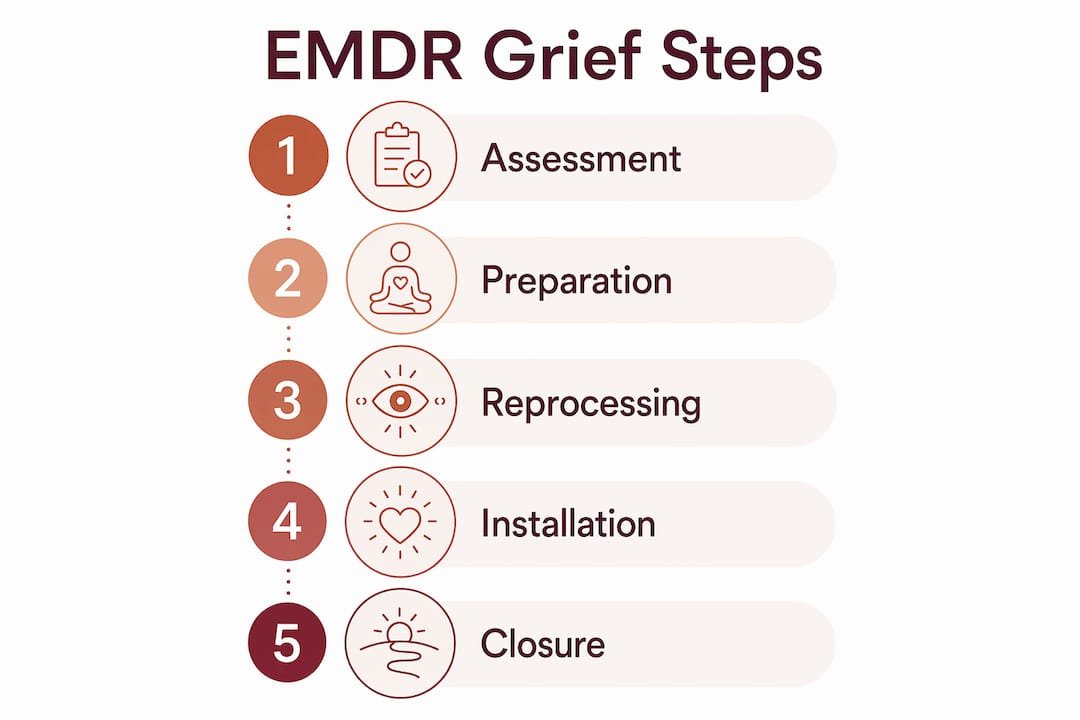
Key phases of the EMDR protocol as applied to grief include:
History-taking and treatment planning: Your therapist identifies the specific grief memories and triggers to target.
Preparation: You build emotional safety and self-regulation skills before any reprocessing begins.
Assessment and desensitization: The therapist guides you through bilateral stimulation while you hold the distressing memory in mind.
Installation: Positive beliefs and feelings are strengthened to replace the distress.
Body scan and closure: Any residual physical tension is addressed, and each session ends with stabilization.
Pro Tip: Ask your therapist to explain which bilateral stimulation method they plan to use before your first reprocessing session. Knowing what to expect reduces anticipatory anxiety and helps you engage more fully with the process.
What types of grief and loss benefit most from EMDR?
Not all grief looks the same, and EMDR is not the right fit for every experience of loss. The therapy is specifically indicated for complicated grief related to traumatic deaths, including sudden accidents, suicide, homicide, or any death witnessed directly. These circumstances create what clinicians call a "frozen" nervous system state, where the grief becomes entangled with trauma symptoms like intrusive images, hypervigilance, or emotional numbness.
Complicated grief, sometimes called prolonged grief disorder, is distinct from the natural sadness of bereavement. It involves persistent separation distress, difficulty accepting the loss, and an inability to re-engage with life that extends well beyond typical mourning timelines. EMDR addresses the traumatic layer underneath the grief, which is what allows the natural mourning process to resume. As research confirms, the goal is moving with grief rather than moving on from it. That distinction matters enormously for people who fear that therapy means forgetting or minimizing their loss.
You may also benefit from EMDR if your current grief has activated unresolved trauma from earlier in your life. A new loss can reopen old wounds, and EMDR's structured approach can address both layers simultaneously.
The following table compares grief types and their recommended therapeutic approaches:
| Grief type | Characteristics | Best therapeutic approach |
|---|---|---|
| Uncomplicated grief | Sadness, longing, gradual adjustment | Supportive counseling, grief groups |
| Complicated grief | Prolonged distress, separation anxiety, life disruption | EMDR, trauma-focused CBT |
| Traumatic grief | Sudden loss, violent death, witnessed trauma | EMDR, trauma-informed therapy |
| Grief with prior trauma | New loss triggers unresolved past trauma | EMDR targeting multiple memory networks |
For a deeper look at signs of complicated grief and how trauma-informed healing works, Alvaradotherapy has published a detailed resource that can help you identify where you are in the process.
How does EMDR compare with traditional grief counseling?
Traditional grief counseling, including approaches like narrative therapy, meaning-making models, and Worden's Tasks of Mourning, focuses on helping you understand and integrate your loss through conversation. These methods are genuinely effective for uncomplicated grief. EMDR operates on a different level. It targets the neurological storage of traumatic memory rather than the cognitive or narrative meaning of loss. That is not a hierarchy; it is a difference in mechanism that makes each approach better suited to specific presentations.
The most clinically relevant difference is speed of symptom relief. Significant symptom reduction can occur in as few as 3 to 6 sessions for single-incident trauma. Complex or prolonged grief typically requires more sessions, but EMDR still tends to produce measurable relief faster than open-ended talk therapy for trauma-related presentations. That speed matters when grief is actively disrupting your ability to work, parent, or function.
| Factor | EMDR | Traditional grief counseling |
|---|---|---|
| Primary mechanism | Bilateral stimulation, memory reprocessing | Verbal processing, meaning-making |
| Verbal narration required | No | Yes, central to the process |
| Speed of symptom relief | Faster for trauma-related grief | Gradual, relationship-dependent |
| Best suited for | Complicated, traumatic, frozen grief | Uncomplicated grief, life adjustment |
| Can be combined | Yes, complements talk therapy well | Yes, can include EMDR referral |
Cost is a practical consideration. EMDR sessions are typically priced in line with standard licensed psychotherapy rates, and many insurance plans that cover mental health treatment will cover EMDR with a qualifying diagnosis. The 8-phase protocol also means treatment has a defined structure, which can make the financial commitment feel more predictable than open-ended therapy.
EMDR and traditional grief counseling are not competitors. Many clients benefit from both, using EMDR to process traumatic memory and talk therapy to build meaning and community around their loss.
What to expect when preparing for EMDR therapy for grief
Starting EMDR for grief is not the same as starting standard talk therapy. The preparation phase is non-negotiable. Licensed therapists trained in trauma-informed EMDR will spend the early sessions building your capacity for emotional regulation before any reprocessing begins. This is not a delay. It is the foundation that makes reprocessing safe and effective.
Here is what a typical EMDR therapy course for grief looks like:
Initial assessment (sessions 1 to 2): Your therapist gathers your history, identifies target memories, and assesses your current emotional stability and support system.
Preparation (sessions 2 to 3): You learn grounding techniques, safe-place visualization, and other self-regulation tools. This phase is especially important for grief clients who may be emotionally dysregulated.
Reprocessing (sessions 4 onward): Bilateral stimulation begins. You hold the target memory in mind while the therapist guides the process. Sessions typically run 60 to 90 minutes.
Integration and closure: After each reprocessing session, the therapist helps you return to a stable baseline. You should never leave a session feeling raw or ungrounded.
Re-evaluation: Progress is reviewed regularly. New targets may be identified as earlier ones resolve.
Standard EMDR treatment runs 6 to 12 sessions for trauma, with complex grief requiring additional sessions. That range is a realistic expectation, not a guarantee. Your pace is individual.
Bilateral stimulation preferences vary widely. Therapists adapt the technique based on what feels most comfortable for you. Some clients find eye movements activating in an uncomfortable way and do better with hand tapping or auditory tones delivered through headphones. Communicating your preference is not a disruption to the process. It improves outcomes.
Pro Tip: Before your first reprocessing session, read Alvaradotherapy's step-by-step preparation guide so you arrive knowing exactly what to expect and how to communicate your needs to your therapist.
Emotionally, reprocessing sessions can bring up unexpected material. You might feel sadness, anger, or physical sensations during the session. Between sessions, some clients notice vivid dreams or a temporary increase in emotional sensitivity. These responses are signs that processing is occurring, not signs that something is wrong.
Who should consider EMDR for grief, and what are its limits?
EMDR is the right fit for a specific profile of grief experience. You are likely a strong candidate if any of the following apply:
Your loss was sudden, violent, or traumatic in nature.
You experience intrusive images, nightmares, or flashbacks related to the death.
Traditional talk therapy has not produced meaningful relief after a sustained effort.
You find it too painful or impossible to verbally describe your grief in detail.
Your current grief has reactivated unresolved trauma from earlier in your life.
You are experiencing complicated grief symptoms such as persistent separation distress or inability to accept the loss.
EMDR is not a fit for everyone, and setting realistic expectations matters. The therapy does not erase grief or remove memories of the person you lost. The goal is reducing the traumatic sticking points so that grief can move naturally rather than remaining frozen. You will still feel the loss. What changes is that the memory loses its power to destabilize you.
EMDR also requires a degree of emotional stability to begin reprocessing. If you are in acute crisis, experiencing active suicidal ideation, or have untreated dissociative symptoms, your therapist will prioritize stabilization first. This is not a barrier to EMDR. It is responsible clinical practice. For those who find verbal processing too painful, EMDR reaches emotional relief through a different route, making it accessible when other approaches have failed.
Key takeaways
EMDR therapy for grief works by targeting the traumatic memories that freeze the mourning process, allowing natural healing to resume without requiring extensive verbal narration.
| Point | Details |
|---|---|
| Core mechanism | EMDR uses bilateral stimulation and the AIP model to reprocess stuck grief memories. |
| Best candidates | Those with traumatic, complicated, or talk-therapy-resistant grief benefit most from EMDR. |
| Treatment timeline | Standard courses run 6 to 12 sessions; complex grief requires more, with preparation phases first. |
| Goal of therapy | EMDR reduces traumatic triggers, not memories. The aim is moving with grief, not past it. |
| Preparation matters | Emotional regulation skills must be established before reprocessing begins for safe outcomes. |
What I've learned from watching EMDR work with grief
The most persistent misconception I encounter is that EMDR is a shortcut, a way to bypass grief rather than go through it. That misreads what the therapy actually does. EMDR does not fast-forward mourning. It removes the neurological roadblock that prevents mourning from happening at all. There is a meaningful difference between someone who cannot think about their loved one without dissociating and someone who can hold that memory with sadness and love. EMDR moves people from the first state to the second.
What surprises people most is how physical the process feels. Grief lives in the body, not just the mind, and bilateral stimulation often surfaces sensations that pure talk therapy never reaches. Clients describe a loosening, a shift in how a memory sits in their chest or throat. That is not metaphor. It reflects genuine neurological change.
The therapist-client relationship is the container that makes all of this possible. Pacing should always be collaborative. If you feel pushed too fast, say so. A skilled EMDR therapist will adjust without hesitation. The EMDR therapy guide for grief published by Alvaradotherapy captures this well: the work is done at the speed of trust, not the speed of a protocol.
— Juiced
Start EMDR therapy for grief with Alvaradotherapy
If you recognize yourself in this article, the next step is a conversation with a therapist who specializes in exactly this work.

Alvaradotherapy offers online EMDR trauma therapy for grief and traumatic loss across California and New York, with licensed therapists trained in grief-focused and trauma-informed EMDR protocols. Sessions are available in English and Spanish, and the practice serves clients in Pasadena, Ventura, and statewide via telehealth. You can schedule a consultation to discuss your specific situation, ask questions about the process, and find a therapist whose approach fits your needs. Healing from grief is not about moving on. It is about being able to carry your loss without being crushed by it. Alvaradotherapy is here to help you get there.
FAQ
What is EMDR therapy for grief?
EMDR therapy for grief is an evidence-based treatment that uses bilateral stimulation to reprocess traumatic memories tied to loss, reducing their emotional intensity so natural mourning can proceed. It is recognized by the WHO and APA as an effective trauma intervention.
How many EMDR sessions does grief treatment typically require?
Standard EMDR treatment runs 6 to 12 sessions for trauma-related presentations, with complicated or prolonged grief often requiring additional sessions. Your therapist will assess your needs and adjust the timeline accordingly.
Does EMDR work if I can't talk about my loss?
Yes. One of EMDR's core advantages is that healing does not require verbal narration. Bilateral stimulation activates the brain's internal processing system, allowing emotional relief even when direct verbal recounting feels too painful.
Is EMDR different from regular grief counseling?
EMDR targets the neurological storage of traumatic memory using bilateral stimulation, while traditional grief counseling focuses on verbal processing and meaning-making. The two approaches address different aspects of loss and can be used together for more complete care.
Who is not a good candidate for EMDR grief therapy?
People in acute crisis, with active suicidal ideation, or with untreated dissociative symptoms should complete stabilization work before beginning EMDR reprocessing. A qualified therapist will assess readiness and prioritize safety before any reprocessing sessions begin.
Recommended
EMDR Therapy in PTSD Recovery: Lasting Change and Hope — Alvarado Therapy
EMDR vs Talk Therapy: What Works for Trauma Healing — Alvarado Therapy
EMDR Therapy for Trauma: Steps, Effectiveness & Help in California — Alvarado Therapy
EMDR and Relationships: Healing Trauma for Deeper Connection — Alvarado Therapy
