
EMDR vs Talk Therapy: What Works for Trauma Healing

Choosing a path to healing after childhood trauma or PTSD can feel daunting, especially when exploring both EMDR and talk therapy. For many adults in California, finding a therapist who understands cultural identity and speaks your language matters as much as the therapy method itself. This guide compares the core differences between EMDR and talk therapy so you can make an informed decision about which approach may fit your unique background, emotional needs, and recovery goals.
Table of Contents
Key Takeaways
| Point | Details |
|---|---|
| Core Differences | EMDR focuses on neurological processing of trauma, while talk therapy emphasizes verbal communication and emotional exploration. |
| Therapy Suitability | EMDR is ideal for single-incident traumas and PTSD, whereas talk therapy is better for complex emotional processing and deeper issues. |
| Session Structure | EMDR sessions are typically shorter and more focused, while talk therapy features longer sessions with conversational approaches. |
| Cultural & Personal Factors | Selecting the right therapy involves considering personal comfort with processing styles and cultural background influences. |
Core Differences Between EMDR and Talk Therapy
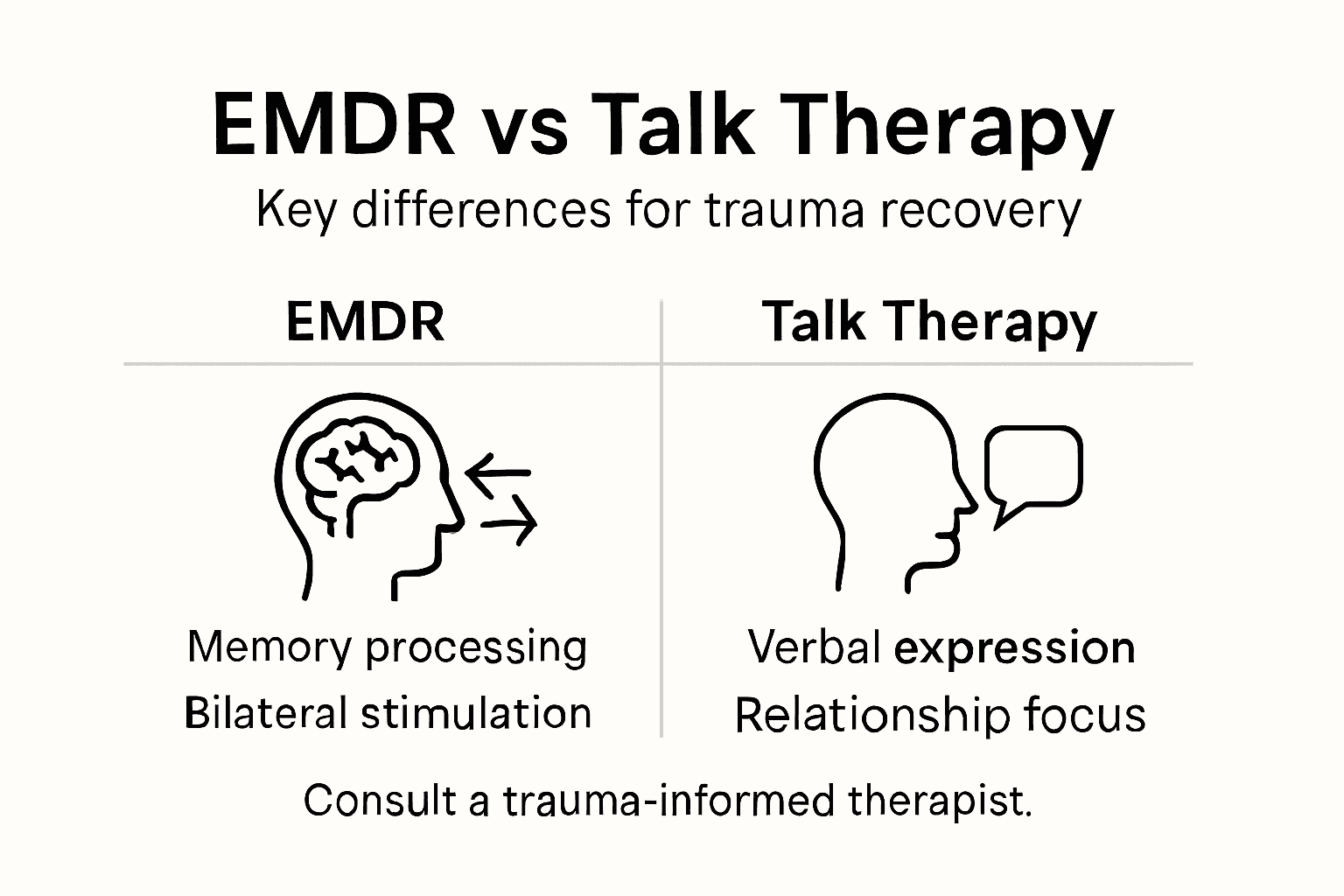
Trauma healing involves complex psychological approaches, with Eye Movement Desensitization and Reprocessing (EMDR) and traditional talk therapy representing two distinct methodological strategies for emotional recovery. While both modalities aim to support individuals processing traumatic experiences, their underlying mechanisms and treatment approaches differ significantly.
Traditional talk therapy, also known as psychotherapy, relies primarily on verbal communication where clients discuss their experiences, emotions, and challenges with a trained therapist. Trauma therapy techniques typically involve:
Exploring past experiences and emotional patterns
Developing cognitive insights about traumatic events
Building verbal narratives to understand psychological impacts
Processing emotions through direct conversation
Creating new meaning from traumatic memories
In contrast, EMDR therapy takes a more neurologically focused approach. EMDR therapy uses bilateral stimulation techniques to help the brain reprocess traumatic memories, focusing on:
Targeting specific traumatic memories through eye movements
Reducing emotional charge associated with memories
Facilitating rapid neural processing of unresolved trauma
Helping the brain naturally integrate difficult experiences
Minimizing verbal processing requirements
The fundamental difference lies in their therapeutic mechanisms: talk therapy works through conscious verbal exploration, while EMDR targets subconscious neural pathways directly. Talk therapy requires extensive verbal processing and insight development, whereas EMDR can often achieve similar healing outcomes with less extended dialogue.
Pro tip: Consider consulting a trauma-informed therapist who can assess which approach might work best for your specific healing journey and individual psychological needs.
How EMDR Therapy Processes Trauma Memories
EMDR therapy offers a unique neurobiological approach to processing traumatic memories, focusing on how the brain stores and integrates difficult experiences. Unlike traditional talk therapy, EMDR directly targets the way traumatic memories are encoded and stored in the neural network, creating opportunities for profound psychological healing.
EMDR therapy techniquesinvolve a sophisticated eight-phase protocol designed to help the brain reprocess and desensitize traumatic memories. The key stages of memory processing include:
Identifying specific traumatic memories
Developing emotional stabilization techniques
Targeting precise memory networks
Reducing emotional reactivity
Integrating new, adaptive emotional responses
The neurological mechanism of EMDR relies on bilateral stimulation, typically through guided eye movements that mimic rapid eye movement (REM) sleep patterns. This stimulation helps the brain:
Activate both brain hemispheres simultaneously
Interrupt habitual trauma response patterns
Create new neural connections
Reduce the emotional intensity of traumatic memories
Support natural psychological healing processes
Traumatic memories are often stored in a fragmented, unprocessed state, maintaining their original emotional charge. EMDR in PTSD recovery helps reorganize these memories, transforming them from overwhelming emotional experiences into integrated, manageable narratives that no longer trigger intense psychological distress.
Pro tip: Work with a certified EMDR therapist who can customize the treatment approach to your specific trauma history and individual healing needs.
Approaches in Talk Therapy for Trauma Recovery
Talk therapy represents a foundational approach to trauma healing, offering clients a supportive environment to explore and process deeply painful experiences. Unlike EMDR's neurobiological techniques, traditional psychotherapy focuses on verbal exploration, emotional understanding, and cognitive restructuring of traumatic memories.
Trauma therapy approachestypically involve several interconnected therapeutic strategies designed to support psychological recovery. The primary methods include:
Cognitive Behavioral Therapy (CBT)
Psychodynamic therapy
Narrative therapy
Supportive counseling
Exposure therapy
Cognitive Behavioral Therapy (CBT) stands out as a particularly effective trauma treatment methodology. This approach helps clients:
Identify negative thought patterns
Challenge distorted beliefs about trauma
Develop healthy coping mechanisms
Reduce emotional reactivity
Reconstruct personal narratives
Narrative therapy offers another powerful approach, allowing individuals to reframe traumatic experiences by constructing more empowering personal stories. Counseling in PTSD recovery demonstrates how verbalizing experiences can transform psychological wound into resilience, helping clients reclaim agency and meaning.

Pro tip: Choose a trauma therapist who specializes in multiple therapeutic approaches and can customize treatment to your unique emotional landscape.
Who Each Therapy Works Best For
Trauma therapy is not a one-size-fits-all approach, with EMDR and traditional talk therapy offering unique benefits for different psychological profiles and trauma experiences. Individual therapy's essential role highlights the importance of personalized treatment strategies.
EMDR therapy works particularly well for individuals experiencing:
Single-incident traumas
Post-Traumatic Stress Disorder (PTSD)
Acute stress reactions
Unresolved childhood memories
Performance anxiety
Phobias with clear traumatic origins
Traditional talk therapy tends to be most effective for clients needing:
Complex emotional processing
Long-term psychological insight
Relationship pattern understanding
Ongoing support for chronic psychological challenges
Deeper exploration of family dynamics
Gradual emotional regulation
People with more complex trauma histories might benefit most from a combined approach, integrating both EMDR's neurological processing and talk therapy's emotional exploration. The key is finding a therapist who can assess and recommend the most appropriate intervention strategy.
Here's a clear comparison of EMDR and traditional talk therapy benefits and ideal use cases:
| Therapy Type | Unique Benefits | Best for Psychological Needs |
|---|---|---|
| EMDR | Rapid trauma memory processing | Single-incident trauma, PTSD |
| Talk Therapy | Deep emotional exploration | Complex trauma, relationship issues |
| Combined Approach | Integrated healing techniques | Complex histories, varied trauma types |
Pro tip: Schedule initial consultations with therapists experienced in both EMDR and talk therapy to determine the most suitable approach for your unique healing journey.
Session Experience, Time, and Cost Compared
Therapy approaches differ significantly in their session structures, duration, and financial investments. Role of therapy in healing underscores the importance of understanding these critical differences before beginning treatment.
EMDR therapy sessions typically involve:
Shorter overall treatment duration
Focused, structured 60-90 minute sessions
Potentially fewer total sessions required
More direct memory processing approach
Less verbally intensive experience
Goal-oriented treatment framework
Traditional talk therapy sessions generally feature:
Longer treatment timelines
Weekly 45-50 minute standard sessions
More open-ended conversational format
Deeper psychological exploration
Ongoing emotional processing
Gradual insights and behavioral changes
Cost considerations reveal nuanced differences between these therapeutic approaches. EMDR often requires fewer sessions, potentially making it more cost-effective, while talk therapy might involve extended treatment periods with corresponding financial investments. Insurance coverage and individual therapist rates will significantly impact overall expenses.
Consider these session differences when choosing the right therapy for you:
| Factor | EMDR Therapy | Talk Therapy |
|---|---|---|
| Session Length | 60–90 minutes, structured focus | 45–50 minutes, conversational |
| Treatment Time | Fewer total sessions, quicker | Extended timeline, gradual change |
| Cost Efficiency | Often more cost-effective | Higher long-term investment |
Pro tip: Request detailed treatment plans and insurance coverage information from potential therapists to understand the complete financial commitment before starting your healing journey.
Choosing the Right Path: Cultural and Personal Factors
Trauma healing is fundamentally a personal journey that requires careful consideration of individual backgrounds, cultural contexts, and psychological needs. The essential guide to individual therapy emphasizes the importance of finding a therapeutic approach that resonates with one's unique experiences.
Cultural considerations play a significant role in therapy selection, including:
Language preferences
Cultural understanding of trauma
Family dynamics and generational experiences
Religious or spiritual beliefs
Communication style comfort
Historical trauma experiences
Personal psychological factors that influence therapy choice include:
Comfort with verbal processing
Tolerance for emotional intensity
Previous therapy experiences
Cognitive processing style
Desire for structured vs. exploratory approaches
Specific trauma history
Some individuals might find EMDR more comfortable if they struggle with extensive verbal processing, while others might prefer talk therapy's conversational approach. The key is finding a therapeutic method that feels safe, respectful, and aligned with personal healing preferences.
Pro tip: Consult with therapists who offer culturally sensitive, bilingual approaches and are willing to discuss how their methods can be tailored to your specific background and needs.
Find the Best Therapy for Your Trauma Healing Journey
Choosing between EMDR and talk therapy can feel overwhelming when healing from trauma. Whether you are struggling with PTSD, complex emotions, or seeking rapid trauma memory processing, understanding your unique needs is essential. Alvarado Therapy specializes in trauma-informed care that respects your individual healing style. Our licensed therapists offer personalized treatment using both EMDR and talk therapy techniques to help you feel safe and supported throughout your recovery.

Explore our team of experts in California who are ready to guide you with culturally sensitive, bilingual therapy. Visit Alvarado Therapy to learn more about our trauma-focused services and take the first step toward lasting healing today. Don’t wait to reclaim your peace and resilience with a therapy plan tailored just for you.
Frequently Asked Questions
What is the primary difference between EMDR and talk therapy?
EMDR focuses on the neurological processing of traumatic memories using bilateral stimulation techniques, while talk therapy primarily relies on verbal communication and emotional exploration to work through traumas.
Who can benefit more from EMDR therapy?
EMDR therapy is particularly beneficial for individuals dealing with single-incident traumas, PTSD, unresolved childhood memories, and specific phobias with clear traumatic origins.
How do session lengths differ between EMDR and talk therapy?
EMDR therapy sessions typically last 60-90 minutes and may require fewer total sessions, while traditional talk therapy usually consists of 45-50 minute sessions that may continue over a longer period.
What should I consider when choosing between EMDR and talk therapy?
Consider your comfort with verbal processing, the complexity of your trauma history, and your personal healing preferences. Consulting with a trauma-informed therapist can help identify which approach aligns best with your needs.
