
Healing Through Conversation: Your 2026 Guide

TL;DR:
Healing through conversation uses empathetic dialogue to support trauma, grief, and anxiety recovery. Attuned, safe communication triggers biological calming processes that facilitate emotional processing.
Healing through conversation is the practice of using emotionally attuned dialogue to facilitate recovery from trauma, anxiety, grief, and relationship difficulties. Clinicians call this approach psychotherapeutic dialogue, and it sits at the core of most evidence-based talk therapy models. When words are offered with empathy and received without judgment, the brain's threat response quiets, and genuine emotional processing becomes possible. NHS talking therapies confirm that people can self-refer for these services without a GP referral, in individual, couples, or family formats. The science behind why dialogue heals is clearer than most people realize.
How does conversation facilitate healing from trauma, anxiety, and grief?
Healing conversations work because they trigger co-regulation, a biological process in which one person's calm nervous system helps stabilize another's. Co-regulation is not a metaphor. It is a measurable shift in heart rate, cortisol levels, and breath rhythm that occurs when someone feels genuinely heard. This is why sitting with a skilled therapist or a deeply present friend can physically calm a panic response that logic alone cannot touch.
The mechanism works through several layers of communication at once. Tone of voice signals safety before any words are processed. Pacing, the speed at which someone speaks and pauses, tells the nervous system whether to stay alert or relax. Validating language acts as a direct safety signal for the brain, turning down the fight-or-flight response in ways that corrective or advice-giving language cannot.
Emotional attunement deepens this effect. When a listener mirrors your emotional state accurately, not by mimicking you but by genuinely tracking your experience, your brain registers that you are not alone with the pain. That recognition is the beginning of integration for trauma survivors. People healing from grief, in particular, need this kind of emotional presence before they can begin to make meaning of their loss.
Several specific conversational elements support this healing process:
Active listening without interruption signals that your experience matters.
Naming emotions out loud reduces their intensity by engaging the prefrontal cortex.
Silence and pauses give the nervous system time to process rather than react.
Tone matching creates a felt sense of being accompanied rather than evaluated.
Validation statements confirm that a person's feelings make sense given their experience.
Each of these elements contributes to psychological safety. Without that safety, no amount of insight or advice produces lasting change.
What are the key therapeutic conversational models used for healing?
Several structured frameworks give therapists and clients a shared language for healing dialogue. Each model approaches emotional healing through dialogue differently, and understanding the distinctions helps you choose the right fit.

Dialogic therapy creates a collaborative space where meaning emerges through shared conversation rather than therapist-directed interpretation. Clients report feeling more heard and emotionally accompanied in this model, which treats the therapeutic relationship itself as the primary agent of change. The therapist does not hold the answers. Both people discover them together.
The Conversational Model, developed by Robert Hobson and later refined by Russell Meares, focuses on emotional presence, feeling language, and the moment-to-moment texture of the session. Tone shifts, pauses, and silences are treated as therapeutic data, not gaps to fill. This model is especially effective for trauma work and complex emotional presentations because it meets clients where their nervous system actually is, not where their words say they are.
Imago Dialogue, used primarily in couples therapy, structures communication through mirroring, validation, and empathy. Imago Dialogue shifts nervous system defenses in both partners simultaneously, creating a space where each person feels deeply heard before either person tries to solve anything. The result is reduced conflict and increased emotional safety.
CLEAR communication, developed for healthcare settings by the American Medical Association, trains practitioners in active listening, empathy, and collaborative decision making. CLEAR reduces miscommunication and improves patient self-efficacy, which means people leave conversations feeling capable rather than confused.
| Model | Primary focus | Best used for |
|---|---|---|
| Dialogic therapy | Collaborative meaning-making | Individual therapy, complex trauma |
| Conversational Model | Emotional presence and feeling language | Trauma, dissociation, complex presentations |
| Imago Dialogue | Mirroring and validation | Couples therapy, relationship conflict |
| CLEAR communication | Active listening and shared decisions | Medical and clinical settings |
Pro Tip: If you are unsure which model fits your situation, ask a prospective therapist how they structure their sessions. A therapist who can explain their approach clearly is already demonstrating the transparency that good healing dialogue requires.
How to engage in healing conversations in everyday life and therapy
Therapeutic conversations are not reserved for a therapist's office. The same principles that make clinical dialogue effective apply to conversations with a trusted friend, a partner, or even yourself in a journal. The key is intentional practice.
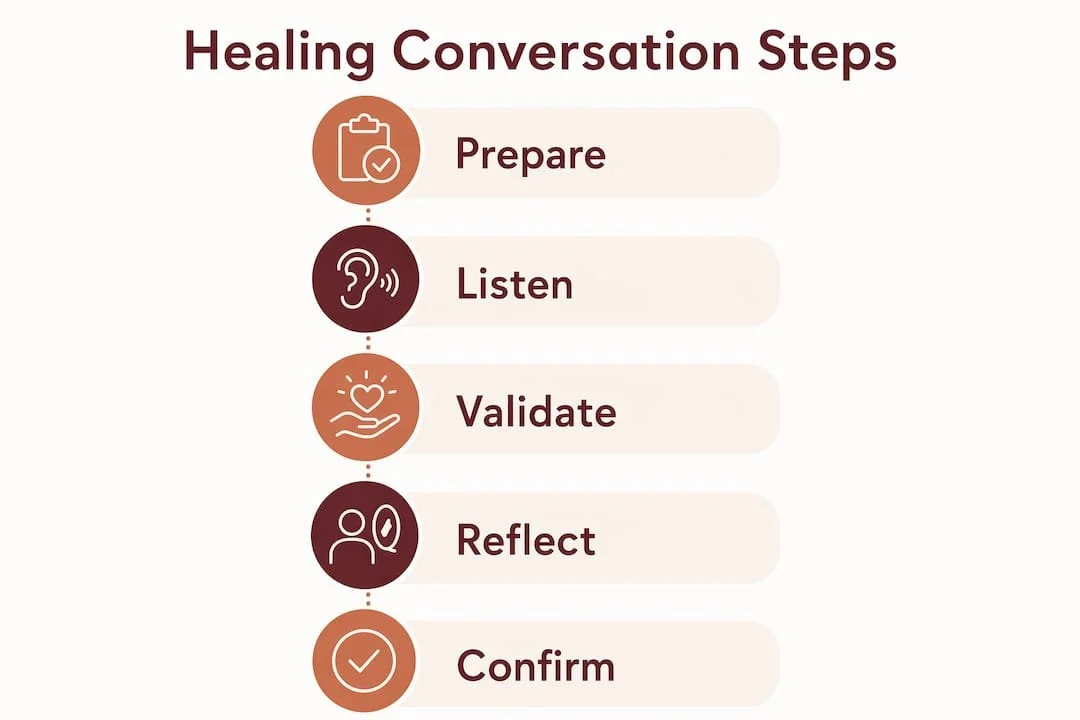
Prepare your intention before speaking. Ask yourself what you need from this conversation: to be heard, to understand, or to solve something. Clarity about your goal prevents the conversation from drifting into debate.
Listen with curiosity, not conclusions. Resist the urge to predict what the other person will say or to prepare your response while they are still talking. Listening with curiosity transforms relationships and creates the emotional safety that healing requires.
Name what you feel before explaining what happened. Saying "I feel scared" before launching into the story of what scared you keeps the conversation emotionally grounded rather than purely narrative.
Allow silence. A pause is not a failure. Silence gives both people time to feel what is present rather than rushing to fill the space with words that may not be accurate.
Avoid advice unless it is asked for. Offering solutions before someone feels fully heard communicates that their feelings are a problem to be fixed. This shuts down the emotional openness that healing depends on.
These steps apply directly to anxiety triggers as well. Many anxiety responses are rooted in feeling unseen or misunderstood. A conversation that reverses that experience can interrupt the anxiety cycle at its source.
Pro Tip: Before a difficult conversation, take three slow breaths and set a simple intention: "I am here to understand, not to win." That single shift changes the entire relational dynamic.
Healing conversations also benefit from physical context. A quiet space, face-to-face positioning, and minimal distractions all signal to the nervous system that this is a safe moment. These are not small details. They are part of the emotional regulation process that makes dialogue therapeutic rather than just transactional.
What are common misconceptions about healing through conversation?
The biggest misconception is that a healing conversation is one where someone gives you the right advice. It is not. The therapeutic value of dialogue comes from being deeply heard, not from receiving solutions. People are often surprised to discover that therapy focuses on naming emotions and feeling understood rather than on advice-giving.
Several other misunderstandings get in the way of genuine healing dialogue:
Venting is not the same as healing conversation. Venting releases pressure temporarily but does not create the co-regulation or integration that produces lasting change. Healing dialogue requires a present, attuned listener, not just an audience.
Healing takes time. A single conversation rarely resolves deep trauma or grief. The process is cumulative. Each attuned exchange builds on the last, gradually rewiring the nervous system's threat responses.
Defensiveness is normal, not a sign of failure. When someone feels misunderstood or criticized, defensiveness is a protective response. Mirroring and validation are the tools that prevent defensiveness from shutting down the conversation entirely.
Silence feels uncomfortable but is productive. Most people rush to fill silence because it feels like disconnection. In healing dialogue, silence is often the moment when the deepest processing occurs.
You do not need to have the perfect words. Presence matters more than precision. A person who stays engaged and curious without judgment does more healing work than one who searches for the perfectly crafted response.
Understanding these realities sets realistic expectations. It also helps you recognize when a conversation is genuinely therapeutic versus when it is simply familiar. Art-based approaches, for example, offer a complementary path for people who find verbal expression difficult, pairing creative expression with the same principles of emotional presence and safety.
Key Takeaways
Healing through conversation works because emotionally attuned dialogue directly calms the nervous system, creating the safety required for trauma, grief, and anxiety recovery.
| Point | Details |
|---|---|
| Co-regulation is biological | Being heard by an attuned listener physically stabilizes the nervous system, not just emotionally. |
| Model choice matters | Dialogic therapy, Imago Dialogue, and the Conversational Model each serve different healing needs. |
| Listening beats advice | Healing dialogue prioritizes emotional presence and validation over solutions or problem-solving. |
| Everyday practice counts | Intentional conversations outside therapy reinforce the nervous system changes begun in sessions. |
| Misconceptions slow progress | Expecting quick fixes or confusing venting with healing dialogue delays genuine emotional recovery. |
Why presence is the most underrated healing tool
Working alongside people navigating trauma and grief, I have noticed one pattern more than any other: the conversations that produce the deepest shifts are almost never the ones where someone said the right thing. They are the ones where someone stayed. Stayed present, stayed curious, stayed quiet long enough for the other person to catch up with their own experience.
The neuroscience supports this completely. The Conversational Model's emphasis on tone, pauses, and non-verbal attunement is not a soft add-on to "real" therapy. It is the mechanism. The words are almost secondary to the felt sense of being accompanied.
What I recommend to anyone entering a healing conversation, whether with a therapist or a trusted person in their life, is to drop the goal of resolution. Replace it with the goal of contact. Real contact with another person's experience, without rushing to change it, is where healing actually begins. The role of communication in trauma recovery is not about saying the right words. It is about creating the conditions where the nervous system finally feels safe enough to let go.
— Juiced
Alvaradotherapy: where healing conversations become structured care
Knowing the principles of healing dialogue is one thing. Having a trained therapist guide you through them is another. Alvaradotherapy works with adults across California who are processing trauma, grief, anxiety, and relationship difficulties through evidence-based therapeutic conversations.
The practice offers online EMDR trauma therapy, couples therapy using structured dialogue methods, and individual counseling in both English and Spanish. Whether you are working through childhood trauma, PTSD, or the weight of a difficult relationship, Alvaradotherapy's licensed therapists bring the emotional presence and clinical structure that make conversations genuinely therapeutic. A free consultation is the first step toward finding out what that kind of support feels like in practice.
FAQ
What is healing through conversation?
Healing through conversation is the use of emotionally attuned, empathetic dialogue to support recovery from trauma, anxiety, grief, and relationship difficulties. Clinicians refer to this as psychotherapeutic dialogue, and it forms the basis of most evidence-based talk therapy approaches.
How does talking to a therapist help heal trauma?
A therapist's attuned presence triggers co-regulation, a biological process that calms the nervous system and creates the safety needed for trauma processing. Techniques like mirroring, validation, and feeling language help clients integrate painful experiences rather than remain stuck in them.
What is the difference between venting and a healing conversation?
Venting releases emotional pressure temporarily but does not produce the co-regulation or nervous system integration that healing requires. A healing conversation involves an attuned listener who reflects, validates, and stays present, which creates lasting emotional change rather than temporary relief.
Can healing conversations happen outside of therapy?
Yes. The same principles that make clinical dialogue effective, including active listening, naming emotions, allowing silence, and avoiding premature advice, apply to conversations with trusted friends or partners. Therapy accelerates the process because therapists are trained to maintain attunement consistently.
How long does it take for conversation to produce healing?
Healing through dialogue is cumulative rather than immediate. Each attuned conversation builds on the last, gradually reshaping the nervous system's responses to stress and relational cues. The timeline varies depending on the nature of the trauma, the frequency of sessions, and the quality of the therapeutic relationship.
