
Immigration Evaluation Process Guide for Legal Residency

TL;DR:
An immigration evaluation is a psychological assessment that provides documented evidence for legal immigration decisions. It bridges mental health and law by translating trauma into objective findings used by adjudicators to determine case outcomes.
An immigration evaluation is a specialized psychological assessment that provides clinical evidence to support legal immigration decisions. Known formally as an immigration psychological evaluation, this assessment translates the human experience of trauma, hardship, and persecution into documented findings that immigration judges and USCIS officers can act on. Psychological evaluations are essential across key immigration pathways, including asylum claims, hardship waivers, VAWA petitions, and U and T visas. This guide walks you through every stage of the process so you know exactly what to expect and how to prepare.
What is the immigration evaluation process guide?
An immigration psychological evaluation is a civil forensic assessment that sits at the intersection of mental health and law. Evaluations bridge mental health and legal systems by documenting the human impact of trauma in a format that informs immigration decisions. Unlike a standard therapy session, the goal is not treatment. The goal is objective documentation that serves your legal case.
Legal documents often cannot capture the full psychological weight of what you have experienced. An evaluation fills that gap by providing objective clinical data that increases your application's credibility. USCIS officers and immigration judges rely on this data to understand the real consequences of denial, deportation, or separation.
Who can conduct an immigration psychological evaluation?
Not every mental health professional is qualified to conduct these evaluations. Qualified evaluators must be licensed mental health professionals, including psychologists, licensed clinical social workers, and physicians with relevant psychiatric training.
Training requirements go beyond a standard clinical license. Effective evaluators combine three specific competencies:
Trauma-informed care: The ability to interview someone about painful experiences without retraumatizing them
Cultural competence: Understanding how culture shapes the expression of distress and how to interpret symptoms across different backgrounds
Forensic interviewing skills: Knowing how to structure findings for a legal audience, not just a clinical one
Expertise in forensic, multicultural, and trauma-informed assessment is required for evaluations that hold up under legal scrutiny. An evaluator who lacks any one of these skills risks producing a report that an immigration judge dismisses.
Your immigration attorney plays a key role here. Attorneys typically identify the right type of evaluation needed for your case and coordinate the referral. They may also brief the evaluator on the legal standard your case must meet, which shapes how the report is written.
Pro Tip: Ask your attorney to share the specific legal standard for your case, such as "extreme hardship" or "well-founded fear," before your first session. This helps the evaluator frame findings in language the adjudicator expects.
Before your first appointment, gather the following:
Immigration documents, including your visa history and any notices from USCIS
Medical records related to mental or physical health
A written personal history covering your family background, country of origin, and the events that led to your immigration case
Contact information for anyone who can serve as a collateral source, such as a family member or close friend
How does the step-by-step evaluation process work?
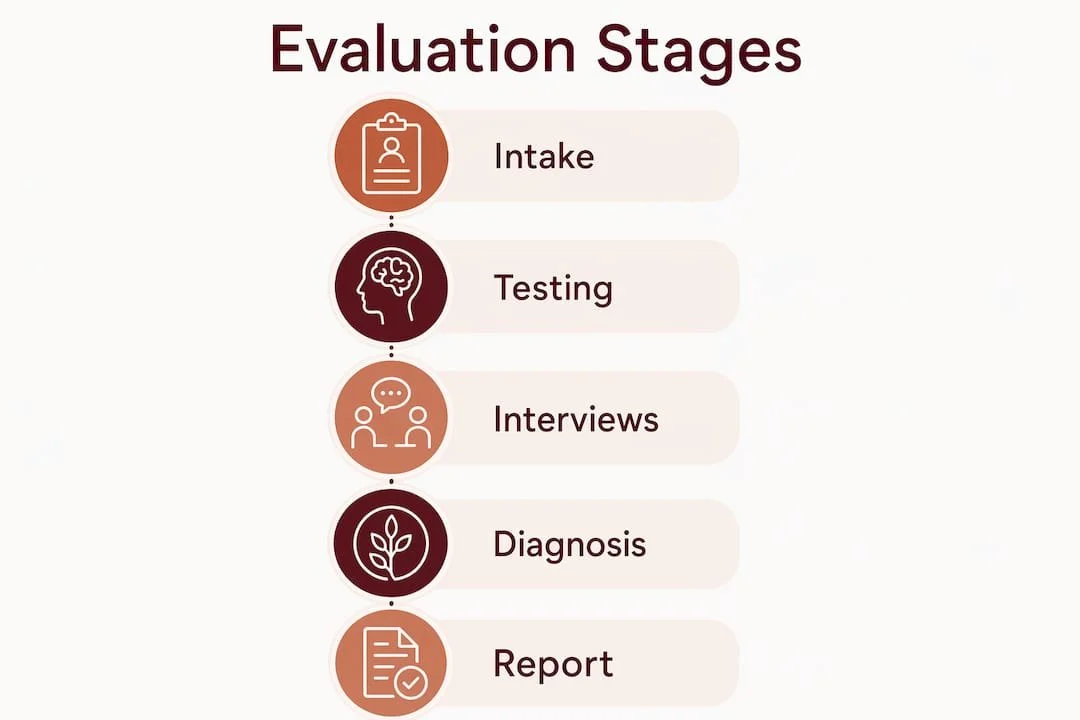
Evaluations include multiple stages: intake interview, psychological testing, collateral interviews, diagnosis, and report writing. Each stage builds on the last. Skipping or rushing any one of them weakens the final report.

Stage 1: Intake interview
The intake interview is the foundation of the entire evaluation. The evaluator collects your personal history, family background, medical history, and a detailed account of your immigration experience. This session can last two to three hours. You do not need to have perfect recall. The evaluator is trained to ask follow-up questions and will document your account carefully.
Stage 2: Psychological testing
Standardized tests measure the presence and severity of conditions like PTSD, depression, and anxiety. These are not pass-or-fail tests. They are validated instruments that give the evaluator objective data to support clinical observations made during the interview. Common tools assess symptom frequency, intensity, and functional impact on daily life.
Stage 3: Collateral interviews
The evaluator may contact a family member, close friend, or community member who can speak to your history and current functioning. Collateral interviews add a layer of verification that strengthens the report's credibility. Not every case requires them, but complex cases almost always benefit from this step.
Stage 4: Diagnosis using DSM-5 criteria
The evaluator assigns a diagnosis based on the Diagnostic and Statistical Manual of Mental Disorders, Fifth Edition (DSM-5). This is the clinical standard recognized by courts and adjudicators. A diagnosis of PTSD, major depressive disorder, or an anxiety disorder, when properly documented, directly supports arguments about extreme hardship or well-founded fear.
Stage 5: Report writing
Reports must meet clinical and legal standards, clearly presenting findings relevant to immigration adjudication. Attorneys often collaborate during this stage to confirm that the report addresses the specific legal questions in your case. A well-written report does not just list symptoms. It connects those symptoms to the legal standard your case must satisfy.
| Stage | What happens | Typical duration |
|---|---|---|
| Intake interview | Personal, medical, and immigration history | 2–3 hours |
| Psychological testing | Standardized PTSD, depression, and anxiety assessments | 1–2 hours |
| Collateral interviews | Statements from family or friends | 30–60 minutes |
| Diagnosis | DSM-5 classification of findings | Part of report writing |
| Report writing | Legally focused clinical document | 1–2 weeks after sessions |
Licensed clinicians typically conduct 1–3 sessions per evaluation, with duration varying by case complexity and the applicant's age. Plan for the full process to take two to four weeks from your first session to receiving the completed report.
Pro Tip: Request a draft review with your attorney before the report is finalized. Attorneys can flag missing legal connections without changing clinical findings.
What are the common challenges during immigration evaluations?
Common challenges include emotional difficulty recounting trauma and the need for clear communication to maintain evaluation integrity. Knowing these challenges in advance helps you prepare for them.
Emotional flooding: Recounting persecution, violence, or family separation can trigger intense emotional responses. A skilled evaluator will pace the interview and offer breaks. You are allowed to say you need a moment.
Underreporting symptoms: Many applicants minimize their distress out of cultural norms, fear of appearing weak, or concern about how their answers will be used. Underreporting produces an inaccurate picture and weakens your case.
Overreporting symptoms: Exaggerating symptoms, even unintentionally, undermines the report's credibility. Standardized tests include validity scales that detect inconsistency.
Confidentiality concerns: The evaluation is not confidential in the same way therapy is. The report goes to your attorney and the court. Clarify this with your evaluator at the start so there are no surprises.
Inadequate documentation: Arriving without supporting documents forces the evaluator to work from memory alone. Bring everything your attorney recommends.
Language barriers: If English is not your first language, request an evaluator who speaks your language or a qualified interpreter. Mistranslation of emotional states can distort findings significantly.
The best thing you can do is be honest, prepared, and willing to communicate openly with both your evaluator and your attorney throughout the process.
How do evaluation results influence immigration decisions?
Immigration evaluations act as civil forensic assessments bridging health service psychology and legal decisions. The report does not decide your case. It gives the adjudicator the clinical context needed to make a fully informed decision.
"Psychological evaluations provide objective data that increase application credibility and directly influence case outcomes. For asylum seekers, a documented diagnosis of PTSD or major depression tied to persecution in the home country substantiates the well-founded fear standard. For hardship waiver applicants, clinical evidence of extreme psychological harm to a qualifying relative can be the deciding factor between approval and denial."
For VAWA petitions and U and T visa applications, the evaluation documents the psychological consequences of abuse, crime, or trafficking. These findings give adjudicators concrete evidence that goes beyond what police reports or legal declarations alone can show.
The coordination between your evaluator and your attorney is not optional. It is the mechanism that ensures clinical findings translate into legally useful arguments. An evaluator who writes in pure clinical language, without connecting findings to the legal standard, produces a report that attorneys cannot use effectively. The role of therapists in immigration evaluations has grown precisely because this coordination requires specialized skill on both sides.
Alvaradotherapy's licensed clinicians work directly with immigration attorneys to produce reports that meet both clinical and legal standards, serving clients across California in English and Spanish.
My perspective on where immigration evaluations are heading
The demand for qualified immigration evaluators has grown faster than the supply of properly trained clinicians. I have seen cases where evaluations were conducted by well-meaning therapists who lacked forensic training, and the reports were dismissed or given minimal weight by adjudicators. That outcome is avoidable.
What concerns me most is the gap between clinical empathy and forensic objectivity. Both are necessary. An evaluator who is too emotionally invested may overstate findings. An evaluator who is too detached may miss the nuanced ways trauma presents in someone from a different cultural background. The immigration evaluation workflow demands both skills simultaneously, and that is genuinely difficult to train for.
Applicants often underestimate how much their own preparation matters. The evaluator can only document what you share. If you arrive without documents, without a clear account of your history, or without understanding why the evaluation matters to your case, the report will reflect those gaps. Preparation is not just logistical. It is a form of advocacy for yourself.
The ethical stakes are high. These evaluations influence life-altering decisions. That reality should drive every clinician in this field toward continuous training, cultural humility, and rigorous self-examination of their own biases.
— Juiced
Alvaradotherapy's support for your immigration evaluation
Alvaradotherapy is a California-based, trauma-informed practice offering immigration psychological evaluations in English and Spanish for asylum seekers, hardship waiver applicants, and VAWA, U, and T visa petitioners. The licensed clinicians at Alvaradotherapy coordinate directly with immigration attorneys to produce reports that meet both clinical and legal standards.
For applicants managing PTSD, complex trauma, or anxiety related to their immigration experience, Alvaradotherapy also offers online EMDR trauma therapy across California. Whether you need an evaluation, therapeutic support before or after the process, or a consultation to understand your options, Alvaradotherapy's bilingual team is ready to help you move forward with clarity.
FAQ
What is an immigration psychological evaluation?
An immigration psychological evaluation is a formal clinical assessment conducted by a licensed mental health professional. It documents the psychological impact of trauma, hardship, or persecution to support legal immigration proceedings.
Who qualifies to perform an immigration evaluation?
Licensed psychologists, clinical social workers, and physicians with psychiatric training are qualified to conduct immigration evaluations. Evaluators must also have training in trauma-informed care, cultural competence, and forensic assessment methods.
How many sessions does an immigration evaluation take?
Most evaluations require 1–3 sessions, depending on case complexity and the applicant's age. The full process, from the first session to the completed report, typically takes two to four weeks.
What immigration cases require a psychological evaluation?
Psychological evaluations are used in asylum cases, extreme hardship waiver applications, VAWA petitions, and U and T visa applications. Each pathway uses the evaluation to document specific psychological harms relevant to the legal standard.
Can an immigration evaluation improve my chances of approval?
A thorough, objective evaluation report provides clinical evidence that adjudicators cannot get from legal documents alone. Evaluations that clearly connect clinical findings to the legal standard strengthen application credibility and can directly influence case outcomes.
Key takeaways
A thorough immigration psychological evaluation, conducted by a licensed, forensically trained clinician and coordinated with your attorney, provides the clinical evidence that legal documents alone cannot supply.
| Point | Details |
|---|---|
| Evaluation purpose | Documents psychological impact of trauma to support asylum, hardship waiver, VAWA, and U and T visa cases. |
| Evaluator qualifications | Must be a licensed clinician with training in trauma-informed care, cultural competence, and forensic assessment. |
| Process stages | Intake interview, psychological testing, collateral interviews, DSM-5 diagnosis, and legally focused report writing. |
| Preparation matters | Bring immigration documents, medical records, and personal history to your first session to strengthen the report. |
| Legal coordination | Attorney and evaluator collaboration is required to connect clinical findings to the specific legal standard in your case. |
