
How therapists shape immigration evaluations in 2026

TL;DR:
A licensed, trained therapist’s psychological evaluation can significantly increase immigration approval chances.
Credible evaluations include detailed assessments, standardized testing, DSM-5 diagnoses, and legal links.
Objectivity, forensic training, and cultural competence are essential for a report that supports your case.
A single psychological evaluation can mean the difference between a granted immigration case and a denial. Approval rates jump from 40% to 80%+ when a licensed, trained therapist conducts the assessment. Yet many people assume any mental health professional can write a credible report. That assumption can cost you your case. This guide breaks down exactly what therapists do in immigration evaluations, why their training and ethics matter, and how to make sure your evaluation gives your case the strongest possible foundation.
Table of Contents
Key Takeaways
| Point | Details |
|---|---|
| Specialized training required | Only licensed therapists with forensic immigration training can produce credible evaluations. |
| Detailed reports matter | Comprehensive, evidence-based reports double the chance of case approval. |
| Ethical boundaries ensure success | Avoiding dual roles and focusing on cultural competence is essential for effective evaluations. |
| Forensic not therapeutic | Evaluations differ from therapy—they must be impartial and based on immigration criteria. |
What is a psychological immigration evaluation?
To lay the groundwork, let's first clarify what these evaluations entail and why their structure matters.
A psychological immigration evaluation is a formal clinical and forensic process in which a licensed mental health professional assesses your mental health and documents how it connects to your immigration situation. It is not a regular therapy session. It is a structured, legally relevant report used to support cases involving hardship waivers, asylum claims, VAWA petitions, cancellation of removal, and other forms of immigration relief.
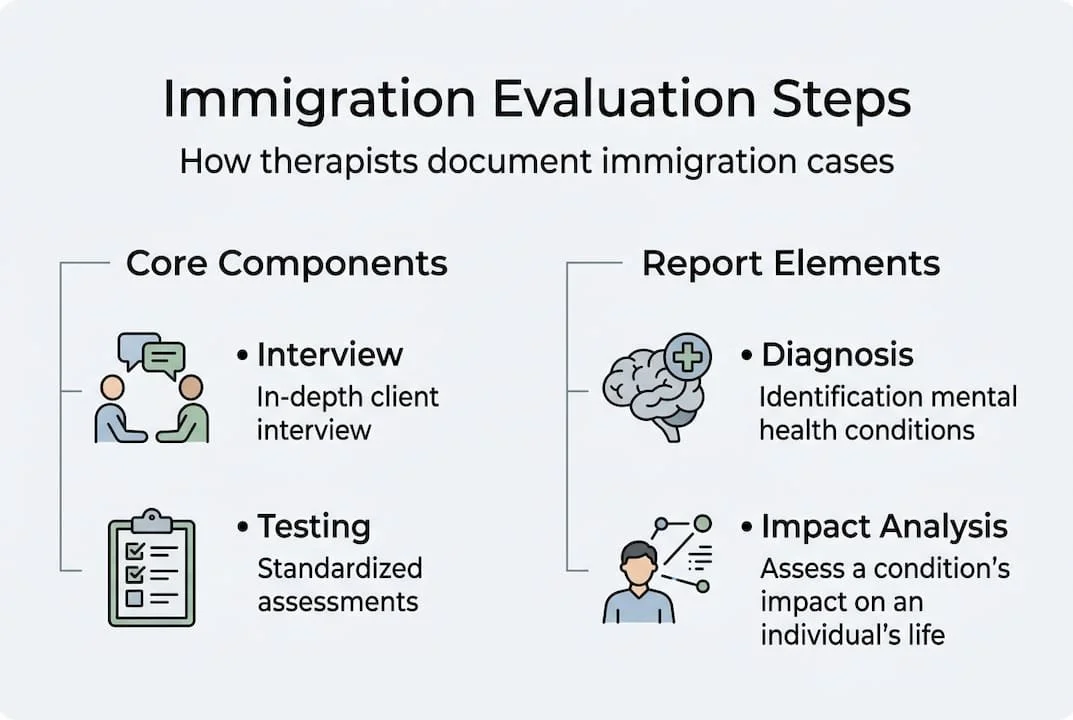
In California, licensed therapists who can conduct these evaluations include psychologists, Licensed Marriage and Family Therapists (LMFTs), and Licensed Clinical Social Workers (LCSWs), provided they have the right training. The immigration therapy process is emotionally demanding, and having a qualified evaluator who understands both clinical and legal contexts matters enormously.
According to forensic standards, a credible evaluation is 8 to 10+ pages and must include a clinical interview, objective psychological testing, a mental status exam, and a DSM-5 diagnosis. This level of detail is what separates a credible report from a letter that USCIS will dismiss. The role of mental health evaluations goes beyond documentation. It creates a clinical narrative that humanizes your experience within a legal framework.
Forensic mental health documentation is a specialized field, and immigration evaluations fall squarely within it. Here is what a complete evaluation covers:
Core components of a credible immigration evaluation:
Personal and immigration background history
Trauma and symptom history with cultural context
Standardized psychological test results
Mental status examination findings
DSM-5 diagnosis with clinical rationale
Functional impairment analysis (how symptoms affect daily life)
Direct linkage of findings to immigration legal criteria
Common uses by case type:
| Case type | What the evaluation documents |
|---|---|
| Hardship waiver | Psychological impact of separation on qualifying relatives |
| Asylum | Trauma, persecution, and fear of return |
| VAWA | Abuse history, trauma symptoms, and safety concerns |
| Cancellation of removal | Hardship, mental health impact, and family ties |
You can learn more about how these reports are structured through the immigration evaluations overview on our site.
Step-by-step: What therapists actually do during an immigration evaluation
Now that you know what an evaluation is, let's go step-by-step through what therapists actually do during this process.
A credible immigration evaluation follows a structured sequence. Each step builds on the last, and skipping any part weakens the final report. The immigration evaluation process is more involved than most clients expect, and understanding it helps you prepare.
The evaluation process, step by step:
Intake and background review. The therapist collects collateral information, reviews case documents, and aligns the evaluation goals with your legal situation.
Clinical interview. This is the heart of the evaluation. The therapist explores your trauma history, symptom patterns, and cultural background using structured, open-ended questions.
Standardized psychological testing. Tools like the PHQ-9, GAD-7, and PCL-5 measure depression, anxiety, and PTSD severity with objective scores.
Mental status examination. The therapist documents your current cognitive and emotional functioning in a standardized clinical format.
DSM-5 diagnosis. Based on all gathered data, a formal diagnosis is made with clear clinical reasoning.
Functional impairment analysis. This section explains how your symptoms affect your ability to work, parent, maintain relationships, and function daily.
Linkage to legal criteria. The therapist explicitly connects clinical findings to the legal standard required for your specific immigration relief.
Written report. The final document is 8 to 10+ pages, objective, evidence-based, and formatted for legal review.
Knowing what therapist qualification details look like helps you ask better questions before hiring an evaluator.
Template report vs. forensic report:
| Feature | Template report | Forensic report |
|---|---|---|
| Length | 1 to 3 pages | 8 to 10+ pages |
| Testing | Rarely included | Always included |
| DSM-5 diagnosis | Sometimes missing | Required |
| Legal linkage | Generic | Case-specific |
| USCIS outcome | Often triggers RFE | Supports approval |
Pro Tip: Short or template reports often trigger Requests for Evidence (RFEs), while detailed forensic reports improve your approval odds significantly. Always ask to see a sample report before committing to an evaluator.
Training, ethics, and cultural competence: What sets credible therapists apart
With an understanding of the process, it's vital to recognize what sets credible immigration therapists apart.
Not every licensed therapist is qualified to write an immigration evaluation. Licensure is the floor, not the ceiling. Therapists need specialized forensic and immigration training to produce reports that hold up under USCIS and court scrutiny. Without it, even a well-meaning report can hurt your case.
One of the most important ethical rules involves dual relationships. A therapist who is already treating you should not also write your evaluation. This separation protects both you and the integrity of the report. Mixing the two roles introduces bias and can undermine the evaluator's credibility if challenged.
"The APA guidelines emphasize that ethical, culturally sensitive immigration evaluations are essential. Shortcuts can harm cases and the people they are meant to help."
Cultural competence is not optional in this work. It is clinically and ethically necessary. A therapist who lacks cultural humility may misinterpret trauma responses that are normal within your cultural background. This can lead to underdiagnosis, missed hardship, or a report that fails to capture the full weight of your experience.
What separates a credible evaluator from an unqualified one:
Completed forensic or immigration evaluation training beyond basic licensure
No existing therapy relationship with the client being evaluated
Ability to administer and interpret standardized psychological tests
Knowledge of DSM-5 criteria and how to apply them in a legal context
Cultural humility and experience working with immigrant populations
Familiarity with USCIS standards and legal hardship criteria
A trauma assessment for immigrants requires understanding how trauma presents differently across cultures. Trauma-informed care builds the trust needed for clients to share experiences that are often painful and deeply personal. And cultural competence in therapy is directly linked to better outcomes, both clinically and legally.
How strong therapist evaluations improve immigration cases
So how exactly do these therapist evaluations impact your immigration case outcome and what does the evidence show?
The numbers are striking. Forensic evaluations boost approval rates to 80% or more, compared to a 40% average for cases without them. That is not a small difference. It is the difference between staying in the country and being forced to leave.
USCIS and immigration judges give significantly more weight to reports that clearly link mental health findings to legal criteria. A vague letter saying someone "seems depressed" does not meet that bar. A detailed forensic report with test scores, a DSM-5 diagnosis, and a section explaining how separation would cause severe psychological harm does.
What makes a therapist evaluation case-changing:
Objective test scores that validate subjective symptom reports
A DSM-5 diagnosis grounded in clinical evidence
A functional impairment section showing real-life impact
Direct language connecting findings to hardship or asylum criteria
A therapist with verifiable credentials and no conflict of interest
Templates or short reports typically lead to denials or Requests for Evidence, which delay your case and create additional stress. Investing in a qualified evaluator from the start protects your time, your money, and your future.
It is also worth noting that trauma-informed care supports faster PTSD healing, which means the evaluation process itself can be less retraumatizing when handled by a skilled clinician.
Pro Tip: Ask your attorney whether your therapist meets all qualifications and can serve as an objective forensic evaluator before scheduling the evaluation. This one conversation can save you months of delays.
A therapist's perspective: What most people miss about immigration evaluations
Having seen how evaluation quality can move the needle, here is a blunt take on what really matters.
Clients often walk in believing that any therapist who knows them well can write their evaluation. That comfort and familiarity feel reassuring, but they are actually red flags in a forensic context. The therapist who knows you best is often the least appropriate person to evaluate you, precisely because objectivity is what gives the report its legal credibility.
The biggest mistake we see is choosing an evaluator based on comfort rather than competence. A compassionate, well-meaning therapist without forensic training can produce a report that USCIS dismisses entirely. That outcome is worse than having no report at all.
What truly matters is the intersection of clinical skill, forensic knowledge, and cultural humility. These are not soft extras. They are the foundation of a report that holds up. Understanding the role of mental health evaluations in the broader healing journey helps clients see that a good evaluation does not just support a legal case. It also honors their story with the dignity it deserves.
How Alvarado Therapy supports you through immigration evaluations
If you're seeking help with an immigration evaluation, here's how specialized clinics can guide you step-by-step.
At Alvarado Therapy, our licensed therapists are trained specifically in immigration psychological evaluations and forensic clinical practice. We provide thorough, evidence-based reports for hardship waivers, asylum, VAWA, and other immigration relief applications. Every evaluation is conducted with cultural sensitivity and trauma-informed care, in both English and Spanish.

We offer virtual and in-person options across California, including Pasadena and Ventura. Whether you are just starting the process or need a second opinion on a previous report, we are here to help. Explore our immigration evaluations in CA to learn what we offer, find out what to expect during your evaluation, or schedule a consultation to take the next step with confidence.
Frequently asked questions
Who is qualified to perform immigration psychological evaluations in California?
Only licensed therapists with specialized forensic training and no existing therapy relationship with the client are qualified to conduct these evaluations in California.
What should a credible immigration evaluation report include?
A credible report includes a clinical interview, standardized psychological testing, a DSM-5 diagnosis, and a section that links findings to hardship or other immigration legal criteria.
Does the treating therapist need to conduct the immigration evaluation?
No. Using a separate evaluator avoids bias and protects the therapeutic relationship, as APA guidelines recommend separating therapy and forensic roles.
How do psychological evaluations impact immigration case success?
Forensic psychological evaluations double approval rates compared to standard case averages, moving grant rates from around 40% to over 80%.
Are virtual (online) immigration evaluations allowed in California?
Yes. Licensed therapists in California can conduct virtual immigration evaluations, making the process accessible regardless of where you are located in the state.
Recommended
Identity-affirming therapy: 60% better PTSD relief in 2026 — Alvarado Therapy
Why Cultural Competence in Therapy Leads to Better Outcomes — Alvarado Therapy
Role of mental health evaluations in trauma healing 2026 — Alvarado Therapy
Trauma-informed care: 40% faster PTSD healing in 2026 — Alvarado Therapy
