
Identity-affirming therapy: 60% better PTSD relief in 2026

Many people assume identity-affirming therapy only supports LGBTQ+ clients. That's wrong. This approach validates all layered identities including cultural backgrounds, neurodivergent experiences, and immigration stories. If you're seeking why seek identity-affirming therapy in California to heal trauma while honoring your whole self, this guide explains what it really means, why bilingual care matters, and how to access qualified therapists.
Table of Contents
Key takeaways
| Point | Details |
|---|---|
| Identity-affirming therapy centers validation of diverse client identities for better mental health | This approach integrates gender, sexuality, culture, and neurodivergence into trauma-informed care. |
| Bilingual and culturally responsive therapy improves trauma recovery outcomes significantly | Bilingual therapy improves PTSD symptom management by nearly 60% for Latinx clients. |
| Therapists need specialized training to provide ethical, effective identity-affirming care | Proper credentials reduce harm and ensure safe, non-coercive therapy environments. |
| Misconceptions about identity-affirming therapy limit access and effectiveness | It’s not about promoting lifestyles but creating respectful space for self-exploration. |
| Various therapy modalities can be adapted to identity-affirming principles | CBT, Narrative Therapy, EMDR, and Somatic approaches all integrate identity validation. |
Definition and core principles of identity-affirming therapy
Identity-affirming therapy centers psychotherapy on validating client identities across gender, sexuality, neurodiversity, and culture. It's not just rainbow flags in a therapist's office. This approach recognizes your personal identity as central to emotional healing and mental wellness.
The therapy integrates trauma-informed principles ensuring care is empowering, non-judgmental, and safe. Therapists respect your authentic self while addressing trauma, anxiety, and relationship struggles. Whether you're navigating complex trauma from immigration experiences, childhood wounds, or cultural disconnection, identity-affirming care meets you where you are.
Core principles include:
Validation of multiple identity facets simultaneously, not isolated characteristics
Safety through non-coercive, client-led exploration of self
Cultural humility paired with clinical expertise
Trauma-informed practices that acknowledge systemic oppression
Respect for clients' lived experiences and self-knowledge
To deliver this effectively, therapists combine clinical skills with ongoing cultural education. They understand how identity intersects with mental health symptoms. Your bilingual therapist, for example, doesn't just translate words. They understand cultural nuances around family, shame, and healing that shape your therapy journey.
Pro Tip: Ask potential therapists how they integrate identity affirmation into treatment plans. Specific examples reveal whether they truly practice this approach or just use it as marketing.
Role of bilingual and culturally responsive approaches
Language access transforms therapy outcomes. Bilingual therapy improves PTSD symptom management by nearly 60%, especially for Latinx clients processing trauma. Speaking your first language in therapy isn't a convenience. It's clinically necessary for deep emotional work.
Culturally responsive therapy leads to 30-40% higher retention and 25% faster symptom reductioncompared to standard care. These aren't small differences. They represent the gap between clients who heal and clients who drop out feeling misunderstood.
Why such dramatic improvements? Bilingual and culturally responsive therapy addresses:
Emotional expression that feels authentic, not translated
Cultural contexts around family dynamics, gender roles, and community expectations
Immigration trauma and acculturative stress that monolingual therapists often miss
Shame and stigma specific to cultural backgrounds
Trust-building through shared cultural reference points
These approaches build genuine therapeutic alliance. When your therapist understands familismo or respeto without explanation, you spend less time educating and more time healing. Trauma therapy for victims of violence or crime becomes more effective when cultural context shapes treatment.
Therapists with cultural humility recognize their own biases and continuously learn. They don't assume all Latinx experiences are identical or that speaking Spanish alone qualifies them. True cultural responsiveness means adapting evidence-based methods to honor your layered identities while maintaining clinical rigor.
PTSD symptom improvement with bilingual therapy: 60% better outcomes for Spanish-speaking Latinx clients

Therapist qualifications and ethical standards for identity-affirming care
Not every licensed therapist can deliver identity-affirming care ethically. Specialized training in LGBTQ+ competency, trauma-informed practices, and intersectional frameworks is essential. These credentials ensure therapists create safe, non-judgmental environments where you can explore identity without coercion.
Ethical identity-affirming therapy requires:
Ongoing education in LGBTQ+ mental health, not just a one-time workshop
Training in trauma's impact on identity development and self-concept
Understanding of systemic oppression and minority stress
Cultural humility practices and anti-racism work
Supervision or consultation on complex identity cases
Client autonomy sits at the center of ethical care. Your therapist guides exploration but never pushes you toward specific identity conclusions. They validate your current understanding while leaving space for evolution. This differs completely from conversion practices that pathologize identities.
Proper training reduces harm from uninformed therapy. Therapists who lack cultural competency can inadvertently shame clients, miss trauma symptoms rooted in identity-based discrimination, or apply interventions that clash with cultural values. The damage compounds when clients already face marginalization.
Therapists must continually update skills as identity discourse evolves. Language around gender, neurodivergence, and cultural identity changes. Ethical practitioners stay current through continuing education, community engagement, and client feedback.
Pro Tip: During consultations, ask therapists about their most recent training in identity-affirming care. Vague answers or training from five years ago signal outdated knowledge.
Common misconceptions and risks of non-affirming therapy
Identity-affirming therapy supports far more than LGBTQ+ clients. It affirms cultural identities, neurodivergent experiences, immigrant backgrounds, and intersectional identities. Limiting this approach to sexual orientation and gender identity ignores its broader healing power.
Common myths damage access:
Myth: Identity-affirming therapy promotes specific lifestyles or political agendas
Reality: It creates safe space for client self-exploration without persuasion
Myth: Only LGBTQ+ individuals need identity-affirming care
Reality: Anyone with marginalized or layered identities benefits
Myth: Affirming therapy lacks clinical rigor or evidence
Reality: It integrates proven modalities with identity validation
Patients often believe identity-affirming therapy means endorsing or promoting specific lifestyles. Correction: It means creating a safe space for client self-exploration and respect, not persuasion or advocacy for any agenda. Your therapist's job is supporting your journey, not directing it.
Non-affirming therapy carries real risks. Research shows 20-30% higher dropout rates among BIPOC clients in non-affirming settings. Symptoms worsen when therapists invalidate cultural experiences, pathologize normal identity development, or apply Western-centric frameworks without adaptation.
"When my first therapist dismissed my immigration trauma as 'just stress,' I stopped going. Finding an affirming bilingual therapist changed everything. She understood my whole story."
Understanding these distinctions helps you avoid therapy pitfalls. You deserve care that honors your complete self, not fragments you into digestible pieces for therapist comfort.
Comparison of therapy modalities for identity support
Multiple therapy types integrate identity-affirming principles effectively. Choosing the right modality depends on your specific symptoms, preferences, and healing goals. Here's how major approaches adapt:
| Therapy Type | Strengths for Identity Work | Best For | Typical Duration |
|---|---|---|---|
| Cognitive Behavioral Therapy (CBT) | Structured skill-building that validates identity-related anxiety triggers | Anxiety, depression with clear thought patterns | 12-20 sessions |
| Narrative Therapy | Centers identity reconstruction and reframing personal stories | Cultural identity exploration, life transitions | 15-25 sessions |
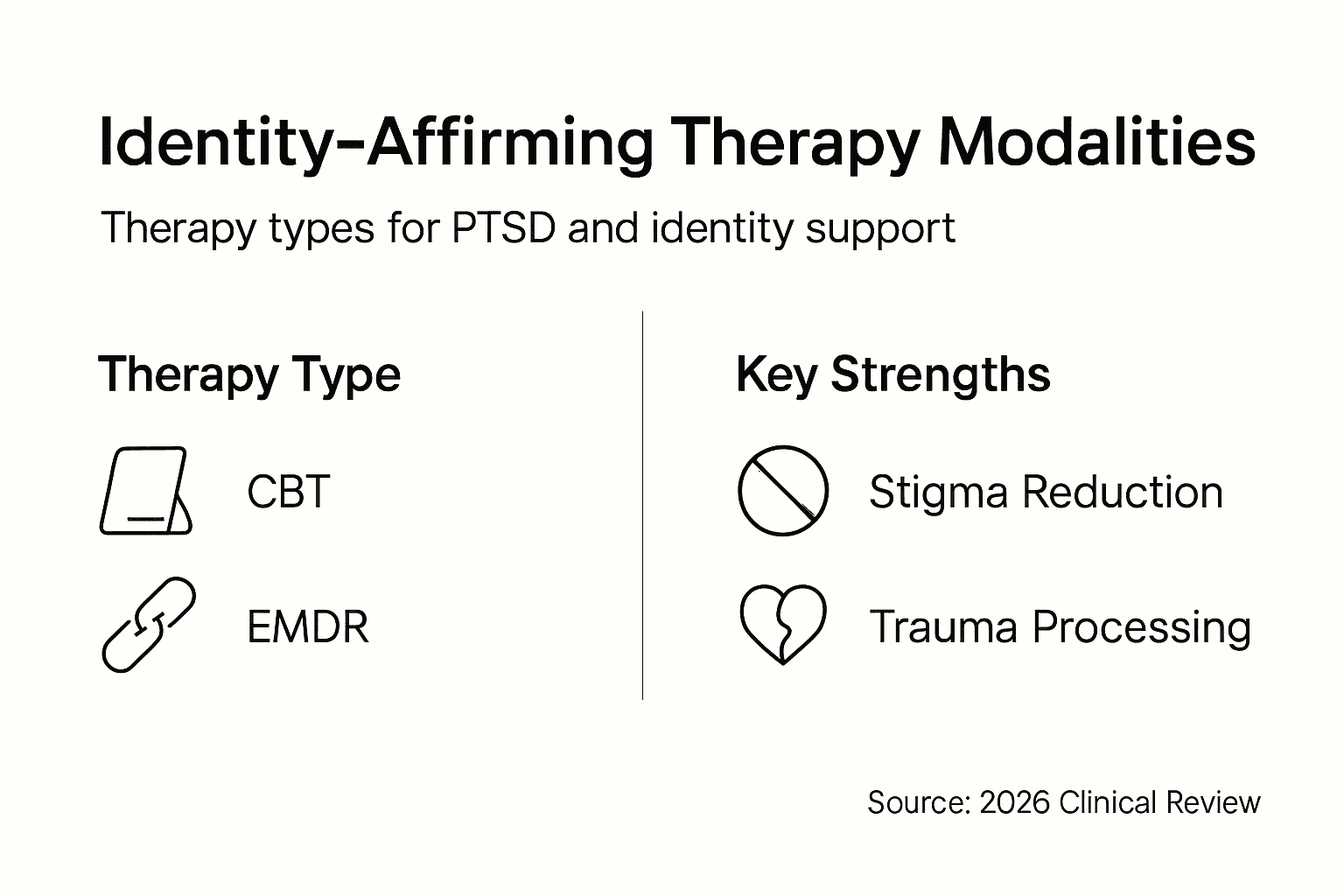
| EMDR | Directly processes trauma while validating identity-based experiences | PTSD, complex trauma, childhood wounds | 8-12 sessions or intensives |
| Somatic Therapy | Integrates body awareness with identity and trauma healing | Trauma stored in body, disconnection from self | Ongoing or 20+ sessions |
Cognitive Behavioral Therapy adapted with identity affirmation helps you challenge internalized stigma while building coping skills. Your therapist validates how discrimination creates real anxiety, then teaches tools to manage symptoms without denying your experiences.
Narrative Therapy shines for identity reconstruction. You externalize problems, separate them from your core self, and rewrite stories that honor your cultural background or neurodivergent experience. This approach particularly helps immigrants reconciling multiple cultural identities.
EMDR processes traumatic memories while your therapist affirms identity-related experiences. Whether you're healing from childhood trauma linked to cultural shame or PTSD from hate-based violence, EMDR reduces symptoms without erasing your identity.
Somatic therapies recognize trauma lives in your body. Culturally adapted somatic work respects different relationships with physical expression and touch boundaries across cultures.
Combining identity-affirming principles with these modalities personalizes your care. You get evidence-based treatment that actually fits your life.
Practical guide to accessing identity-affirming therapy in California
Finding the right therapist takes strategic effort. California offers many options, but quality varies. Follow these steps to locate qualified identity-affirming, bilingual therapists:
Define your specific needs: List your identities, preferred language, trauma types, and therapy goals before searching.
Use specialized directories: Search Psychology Today, Inclusive Therapists, or Therapy for Latinx filtering for LGBTQ+ affirming, bilingual, and trauma-informed credentials.
Verify credentials thoroughly: Check license status through California's Board of Behavioral Sciences and confirm specialized training.
Schedule consultations: Most therapists offer free 15-20 minute calls to assess fit and discuss their approach.
Ask direct questions: Inquire about their experience with your specific identities, cultural background, and trauma presentation.
Critical questions to ask during consultations:
How do you integrate identity affirmation into treatment planning?
What training have you completed in LGBTQ+ competency and cultural responsiveness?
How do you address the intersection of trauma and identity?
Are you fluent in Spanish or do you work with interpreters?
How do you stay current on evolving identity frameworks?
Consider language needs deeply. Bilingual therapists provide nuanced trauma care that interpreters cannot replicate. Emotional processing requires authentic expression in your first language.
Online therapy expands access significantly across California. Finding online therapists in California removes geographic barriers while maintaining quality. Accessing online therapy in California offers flexibility for busy schedules or mobility limitations.
Pro Tip: Red flags include therapists who claim to treat "everyone the same" or get defensive when asked about identity-affirming training. Trust your instincts about fit.
Use the practical guide to starting therapy in California for additional preparation steps and what to expect in initial sessions.
Start your journey with bilingual identity-affirming therapy at Alvarado Therapy
You deserve therapy that honors your complete identity while addressing trauma, anxiety, and relationship challenges. Alvarado Therapy offers specialized bilingual, identity-affirming care accessible online throughout California.
Our licensed therapists bring advanced training in trauma-informed, culturally responsive, and LGBTQ+ affirming approaches. We provide personalized treatment integrating identity validation with evidence-based methods like online EMDR trauma therapy. Whether you're healing from childhood wounds, PTSD and complex trauma, or navigating identity transitions, we create safe space for your whole self.
Free therapy consultations help you find the right therapist fit for your unique identity and healing goals. Schedule yours today.
Frequently asked questions about identity-affirming therapy
Who qualifies for identity-affirming therapy beyond LGBTQ+ individuals?
Anyone with marginalized or layered identities benefits from identity-affirming therapy. This includes immigrants, people of color, neurodivergent individuals, and those reconciling multiple cultural backgrounds. The approach validates how identity shapes mental health.
How does identity affirmation differ from lifestyle promotion?
Identity affirmation creates non-judgmental space for self-exploration without pushing specific outcomes. Therapists validate your experiences and support your autonomy. They don't advocate for particular identities or lifestyles but respect your self-knowledge and facilitate healing.
How can I assess a therapist's cultural and language competencies?
Ask about specific training credentials, recent continuing education, and experience with clients sharing your background. Request examples of how they adapt treatment for cultural contexts. True fluency means understanding cultural nuances, not just speaking the language.
What are the specific benefits of bilingual therapy for trauma?
Bilingual therapy enables authentic emotional expression in your first language, improving PTSD symptom management by up to 60%. It provides cultural context for trauma, reduces the cognitive load of translation, and builds stronger therapeutic alliance through shared linguistic and cultural frameworks.
How does identity-affirming therapy support relationship healing?
This approach examines how identity dynamics affect relationships, validates cultural differences in relationship expectations, and helps partners understand each other's identity experiences. It addresses conflicts rooted in identity invalidation while teaching communication skills that honor both partners' authentic selves.
