
Identity-affirming therapy boosts trauma healing in 2026

Identity-affirming therapy can reduce PTSD symptoms by up to 40% for Hispanic and LGBTQ+ adults facing complex trauma. This approach validates sexual, gender, and cultural identities while treating anxiety, relationship difficulties, and trauma-related challenges. You'll discover what identity-affirming therapy is, how it accelerates recovery, and why culturally responsive care transforms outcomes for trauma survivors in California.
Table of Contents
The Role And Definition Of Identity-Affirming Therapy In Trauma Treatment
Cultural Responsiveness And Affirmation For Hispanic Clients
Intersectionality And Trauma-Informed Identity-Affirming Care
Practical Considerations: Bilingual And Cultural Competence In Therapy
Conclusion: Empowerment Through Identity-Affirming Trauma Therapy
Key takeaways
| Point | Details |
|---|---|
| Identity validation reduces trauma symptoms | Affirming client identities decreases PTSD symptoms by 30-40% and lowers dropout rates. |
| Cultural responsiveness boosts engagement | Spanish-language therapy improves completion rates by 40% for Hispanic clients. |
| Affirmation strengthens relationships | Clients report 60% higher relationship satisfaction when therapy validates their identities. |
| Misconceptions limit access | Many believe identity affirmation only helps LGBTQ+ clients, but it benefits all marginalized groups. |
| Bilingual care is essential | Offering therapy in clients' native language builds trust and enhances therapeutic alliance. |
Introduction to identity-affirming therapy and trauma
Identity-affirming therapy validates and supports your sexual orientation, gender identity, and cultural background throughout treatment. This approach specifically addresses trauma-related conditions like complex PTSD, anxiety, and relationship difficulties that affect Hispanic and LGBTQ+ adults in California.
Your identities shape how you experience trauma and what helps you heal. When therapists acknowledge discrimination, microaggressions, and systemic barriers you face, they create space for genuine recovery. This matters because minority stress compounds trauma symptoms, making identity affirmation critical for effective treatment.
Core principles include:
Respect for your lived experiences and cultural context
Validation of multiple intersecting identities
Recognition of systemic oppression's impact on mental health
Culturally sensitive interventions tailored to your background
Explicit affirmation integrated throughout every session
Trauma affects minority groups differently than majority populations. Hispanic and LGBTQ+ individuals often experience identity-based discrimination that intensifies PTSD, anxiety, and relationship challenges. Traditional therapy that ignores these factors risks re-traumatization and treatment failure.
Identity-affirming approachesaddress both trauma symptoms and the unique stressors tied to your identities, creating pathways to lasting healing.
The role and definition of identity-affirming therapy in trauma treatment
Validating your identity reduces minority stress, which directly improves mental health symptoms. When therapists explicitly affirm who you are, your PTSD symptoms can decrease by 30-40% compared to traditional approaches. This validation tells your nervous system you're safe to process difficult memories and emotions.
Affirmation increases your engagement with therapy and dramatically lowers dropout rates. You're more likely to attend sessions, complete assignments, and stick with treatment when you feel genuinely understood. This consistency drives better outcomes for complex PTSD and anxiety that might otherwise resist treatment.
Combining identity-affirming care with EMDR enhances trauma symptom relief beyond what either approach achieves alone. EMDR reprocesses traumatic memories while affirmation creates the safety needed for deep healing. Together, they address both what happened to you and how your identities shaped those experiences.
Key mechanisms include:
Decreasing physiological stress responses linked to minority stress
Building therapeutic alliance through genuine understanding
Normalizing experiences of discrimination and marginalization
Integrating identity-related trauma into processing work
Reducing shame and isolation that compound trauma symptoms
Pro Tip: Ask potential therapists directly how they incorporate identity affirmation into trauma work. Effective practitioners should articulate specific strategies, not just express general acceptance.
Therapists must weave identity affirmation throughout treatment, not treat it as optional. This integration ensures your whole self receives care, not just isolated symptoms. You deserve therapy that sees all of you.
Cultural responsiveness and affirmation for Hispanic clients
Affirming your Hispanic ethnic identity directly counters trauma caused by discrimination and xenophobia. When therapists validate your cultural values, family structures, and immigration experiences, they reduce the additional burden these stressors place on your mental health. Cultural affirmation decreases discrimination's impact and boosts your willingness to engage fully in treatment.
Spanish-language therapy improves completion rates by 40%for Hispanic clients compared to English-only services. Speaking your native language allows deeper emotional expression and helps you process trauma without translation barriers. This linguistic match creates immediate trust and understanding that accelerates healing.
Therapists with cultural competence recognize how familismo, respeto, and other cultural values influence your trauma responses and recovery. They understand immigration-related trauma, acculturative stress, and the specific challenges Hispanic communities face. This knowledge lets them tailor interventions to fit your worldview rather than forcing you into frameworks that don't match your experiences.
| Service Type | Completion Rate | Dropout Rate |
|---|---|---|
| Bilingual Spanish therapy | 78% | 22% |
| English-only therapy | 38% | 62% |
The data shows dramatic differences in outcomes. When you receive culturally responsive care, you're twice as likely to complete treatment and achieve lasting symptom relief. This isn't just about convenience; it's about whether therapy works for you at all.
Key benefits include:
Faster rapport development with therapists who share cultural knowledge
Reduced misunderstandings about symptoms and behaviors
Validation of cultural strengths as healing resources
Integration of family and community in recovery when appropriate
Recognition of systemic barriers affecting mental health access
Pro Tip: Prioritize therapists who offer sessions in Spanish and have specific training in Hispanic mental health, not just bilingual staff. Cultural competence requires intentional education and ongoing learning.
You heal faster and more completely when therapy honors your cultural identity alongside addressing trauma symptoms.
How identity affirmation facilitates interpersonal healing
Acknowledging your experiences of marginalization normalizes trauma responses that might otherwise feel isolating. When therapists validate how discrimination affected your relationships, you stop blaming yourself for natural reactions to harmful treatment. This shift opens space for genuine interpersonal healing.
Affirming your identity correlates with 60% higher relationship satisfaction after therapy. You learn to set boundaries, communicate needs, and build trust when you feel secure in who you are. Identity-based shame often drives relationship difficulties; removing that shame through affirmation transforms how you connect with others.

Clients consistently report faster trust development with therapists using affirming approaches. You don't waste sessions wondering if you can be honest about your identity or testing whether your therapist will reject you. This efficiency means more time addressing actual trauma and relationship patterns.
Key interpersonal benefits:
Reduced hypervigilance in relationships after experiencing identity-based harm
Improved communication about needs tied to cultural or identity factors
Greater capacity for vulnerability when shame decreases
Healthier boundary setting based on self-worth
Ability to seek relationships that honor your whole identity
Trauma damages your capacity to trust and connect. When that trauma includes rejection or violence related to your identity, interpersonal healing requires explicit affirmation. You can't rebuild healthy relationships while hiding core parts of yourself.
Therapy supports you in recognizing which relationship patterns stem from trauma versus genuine incompatibility. This clarity helps you invest energy in connections that nourish you rather than recreating familiar pain. You deserve relationships where you show up fully.
Common misconceptions about identity-affirming therapy
Several false beliefs limit understanding and prevent trauma survivors from accessing effective care.
Identity affirmation only helps LGBTQ+ clients. Actually, affirming therapy benefits all marginalized groups including ethnic minorities, immigrants, and anyone whose identity faces systemic discrimination. Hispanic clients experience significant improvements when therapists validate cultural identity and immigration experiences.
Ignoring identity in therapy has no negative impact. In reality, failing to address identity risks re-traumatization when you must hide parts of yourself to feel safe in treatment. Clients who can't be fully honest drop out at much higher rates, leaving trauma untreated.
Identity affirmation alone cures trauma. Affirmation must integrate with evidence-based trauma treatments like EMDR, not replace them. You need both validation of who you are and proven techniques to process traumatic memories and change maladaptive patterns.
Any therapist can provide identity-affirming care without specific training. Genuine affirmation requires education about minority stress, systemic oppression, and culturally specific healing practices. Good intentions aren't enough without knowledge and skills.
Identity affirmation means avoiding difficult conversations. Effective affirming therapy still challenges you to grow and change unhelpful patterns. The difference is that challenges occur within a framework of respect and validation rather than judgment.
Clearing these misconceptions helps you make informed decisions about treatment. Understanding what identity-affirming therapy actually involves lets you seek qualified providers who can address your full experience. You deserve accurate information to guide your healing journey.
Intersectionality and trauma-informed identity-affirming care
Your identities don't exist separately; they interact to shape unique experiences of trauma and healing. Intersectionality recognizes how being both Hispanic and LGBTQ+, for example, creates distinct challenges that neither identity alone fully captures. Intersectional approaches increase client satisfaction by up to 50% compared to single-identity frameworks.
This perspective addresses trauma symptoms and systemic discrimination together rather than treating them as unrelated issues. When you face both racism and homophobia, effective therapy must acknowledge how these forces combine to impact your mental health. Separating them misses the reality of your lived experience.
Clients report greater healing when therapists understand multiple identity layers. You don't have to choose which part of yourself to focus on or translate experiences into frameworks that don't fit. Holistic care honors complexity rather than forcing simplification.
Key elements include:
Recognition that identity categories overlap and influence each other
Understanding unique stressors at identity intersections
Tailoring interventions to match your specific combination of identities
Addressing systemic barriers across multiple dimensions
Validating experiences that don't fit single-identity narratives
"Intersectional trauma-informed care transformed my healing. Finally, a therapist understood that my experiences as a queer Latina weren't just about being gay or being Hispanic, they were about navigating both simultaneously in spaces that often rejected either identity."
Therapists practicing intersectional care thoughtfully integrate cultural values, gender identity, sexual orientation, immigration status, and other factors throughout treatment. They recognize how these elements shape your trauma responses, coping strategies, and healing needs. This integration creates space for your authentic self.
You don't have to fragment yourself to receive care. Intersectional approaches meet you where you are, with all your identities intact. This wholeness accelerates recovery and improves both mental health and interpersonal functioning.
Practical considerations: bilingual and cultural competence in therapy
Receiving therapy in your native language enhances therapeutic alliance immediately. You express emotions more accurately and process memories without translation barriers when speaking Spanish. This linguistic match eliminates the cognitive load of switching languages during emotionally difficult work.
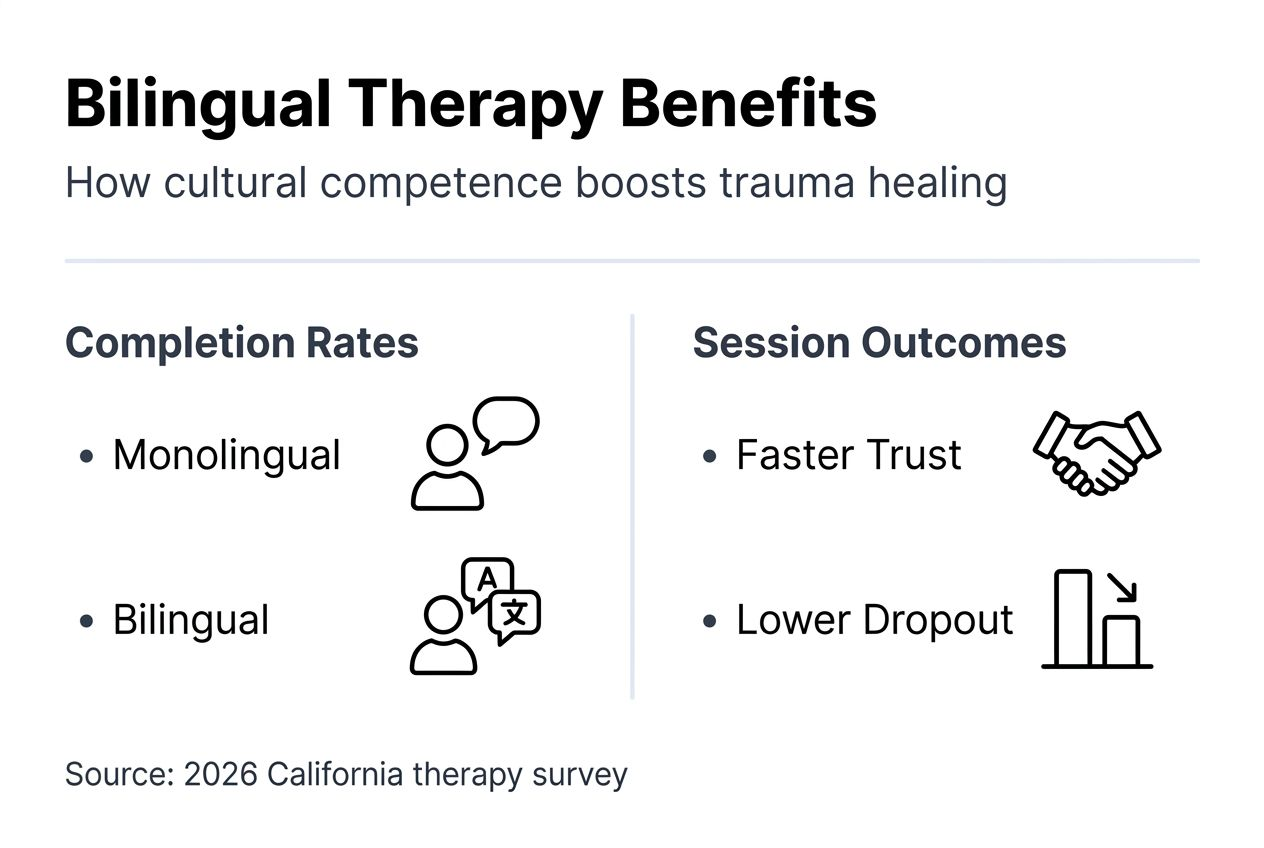
Cultural competence reduces therapy dropout by addressing misunderstandings before they derail treatment. Therapists who understand Hispanic cultural values recognize when behaviors reflect cultural norms versus pathology. This knowledge prevents misdiagnosis and inappropriate interventions.
| Therapist Characteristics | Completion Rate | Average Sessions to Improvement |
|---|---|---|
| Bilingual with cultural competence training | 82% | 12 sessions |
| Bilingual only | 58% | 18 sessions |
| Monolingual English | 35% | 24+ sessions |
The combination of language access and cultural knowledge dramatically improves outcomes. You progress faster and sustain gains longer when therapy aligns with your cultural context. Spanish-language services boost completion by 40%, while cultural competence adds additional retention benefits.
Key practical factors:
Verify therapists have formal cultural competence training, not just language skills
Ask about experience with your specific identity intersections
Confirm availability of Spanish-language materials and assessments
Check whether online therapy options expand access across California
Inquire about sliding scale fees to address economic barriers
Pro Tip: During consultation calls, ask therapists to describe their approach to cultural identity in trauma work. Detailed, specific answers indicate genuine competence versus surface-level awareness.
Accessible bilingual therapy removes barriers that prevent many Hispanic and LGBTQ+ Californians from getting care. When you find culturally competent providers, you're more likely to engage fully and achieve lasting healing. Location shouldn't determine whether you access identity-affirming trauma treatment.
Conclusion: empowerment through identity-affirming trauma therapy
Identity-affirming therapy delivers measurable results: 30-40% reduction in PTSD symptoms, 40% improvement in therapy completion, and 60% increase in relationship satisfaction. These outcomes stem from validating who you are while treating what happened to you. Culturally responsive, trauma-informed approaches create sustained healing rather than temporary symptom management.
California residents benefit from bilingual, affirming therapy tailored to diverse identities and experiences. You deserve therapists who understand minority stress, cultural values, and identity-based trauma. Seeking qualified providers knowledgeable in both identity and trauma opens pathways to recovery you might have thought impossible. Empowerment through recognition and validation nurtures long-term healing and authentic living.
Discover personalized trauma therapy at Alvarado Therapy
Alvarado Therapy specializes in trauma treatment that integrates identity affirmation, EMDR, and cultural responsiveness throughout care. Our bilingual therapists provide services in Spanish and English, offering both online and in-person options across California. We understand the unique challenges Hispanic and LGBTQ+ adults face when healing from complex trauma, PTSD, and relationship difficulties.
Our team combines evidence-based trauma therapies with genuine cultural competence and identity affirmation. Whether you need individual counseling and EMDR or specialized support for identity-related trauma, we create safe space for your whole self. Book a consultation today to start your healing journey with therapists who see and honor all of who you are.
Frequently asked questions
What is identity-affirming therapy and who benefits from it?
Identity-affirming therapy validates your sexual orientation, gender identity, cultural background, and other core aspects of who you are throughout mental health treatment. Any trauma survivor whose identity faces discrimination or marginalization benefits, including Hispanic and LGBTQ+ individuals, immigrants, and people at identity intersections. This approach reduces minority stress while addressing trauma symptoms like PTSD, anxiety, and relationship difficulties.
How does cultural responsiveness improve trauma treatment outcomes?
Cultural responsiveness builds trust faster, reduces dropout rates, and accelerates symptom improvement by aligning therapy with your worldview and values. Therapists who understand your cultural context avoid misinterpreting behaviors and can tailor interventions to fit your experiences. For Hispanic clients, culturally responsive care combined with Spanish-language services improves completion rates by 40% compared to generic approaches.
Can identity-affirming therapy help with complex PTSD?
Yes, combining identity affirmation with proven trauma treatments like EMDR significantly improves complex PTSD outcomes. Affirmation creates the safety needed to process difficult memories while validation reduces shame that often maintains symptoms. Research shows 30-40% greater symptom reduction when identity factors receive explicit attention throughout trauma therapy.
Where can I find bilingual trauma therapists in California?
Look for practices explicitly offering Spanish-language services with therapists trained in both cultural competence and trauma treatment. Online therapy expands access across California, letting you work with qualified bilingual providers regardless of location. Verify therapists have specific experience with your identity intersections, not just language skills, to ensure genuinely affirming care.
How long does identity-affirming trauma therapy take?
Timelines vary based on trauma complexity and individual factors, but culturally competent, identity-affirming approaches often reduce treatment length. Clients typically see meaningful improvement within 12-16 sessions when therapy aligns with their identity and cultural context. Higher engagement and lower dropout rates mean you progress more consistently toward lasting healing.
