
Trauma-informed care: 40% faster PTSD healing in 2026

Trauma-informed care: 40% faster PTSD healing in 2026
Culturally responsive trauma therapy reduces PTSD symptoms up to 40% faster than standard approaches while dramatically improving client retention. For California adults healing from complex trauma, grief, or PTSD, understanding how trauma-informed care integrates cultural identity, bilingual support, and empowerment principles can transform recovery outcomes. This guide explains core trauma-informed principles, clarifies common misconceptions, and provides practical steps to access culturally competent therapy tailored to your unique healing journey.
Table of Contents
Key takeaways
| Point | Details |
|---|---|
| Core principles | Trauma-informed care prioritizes safety, trust, empowerment, and collaboration rather than traditional symptom-focused approaches. |
| Cultural benefits | Bilingual and culturally responsive therapy yields 30-40% higher retention and 25% faster symptom relief for diverse populations. |
| Identity affirmation | Validating cultural, ethnic, and LGBTQ+ identities accelerates trauma recovery by up to 40% and significantly reduces dropout rates. |
| Access criteria | Evaluate therapists on cultural competence, trauma-specific training, client empowerment practices, and bilingual service availability. |
| Broad applications | Trauma-informed care effectively addresses PTSD, complex trauma, and grief through personalized, culturally tailored interventions. |
Understanding trauma-informed care: principles and mechanisms
Trauma-informed care shifts therapeutic focusfrom asking what is wrong with you to exploring what happened to you. This fundamental reframing creates environments where safety, trust, and collaboration replace judgment and pathology. Rather than treating symptoms in isolation, therapists recognize how past trauma shapes current responses and build healing relationships that prevent re-traumatization.
Four core principles guide this approach. Safety ensures physical and emotional security in therapeutic spaces. Trustworthiness establishes consistent, transparent communication between therapist and client. Empowerment restores choice and control to individuals whose trauma often involved powerlessness. Collaboration makes clients active partners in treatment decisions rather than passive recipients of care.
Updated APA guidelines emphasizethat effective PTSD treatment requires personalized, trauma-informed approaches addressing broad trauma effects beyond symptoms. This represents a significant shift from earlier models that focused narrowly on symptom reduction. Trauma-informed care recognizes that healing involves rebuilding trust, processingcomplex trauma impact, and addressing systemic factors that maintain distress.Trauma-informed programs decrease re-traumatizationand promote consumer empowerment by integrating trauma knowledge into policies across service systems. This organizational culture shift extends beyond individual therapy rooms into intake procedures, scheduling practices, and staff training. When entire systems adopt trauma-informed principles, clients experience consistent safety and respect at every touchpoint.
Pro Tip: Ask potential therapists how they incorporate safety and empowerment into session structure. Strong answers include client-led pacing, clear explanation of techniques before use, and regular check-ins about comfort levels.
Why cultural responsiveness and bilingual therapy matter
Cultural context influences trauma symptom expression; care that respects cultural values facilitates better symptom management. For Latinx and BIPOC adults in California, family structure, spiritual beliefs, community connections, and immigration experiences directly shape how trauma manifests and how healing unfolds. Therapists who understand these cultural dimensions tailor interventions to align with clients' worldviews rather than imposing mainstream treatment models.
The data demonstrates remarkable benefits of culturally responsive therapy:
30-40% higher retention rates compared to standard care
25% faster symptom relief when therapy aligns with cultural values
Nearly 60% improvement in PTSD symptom management for Latinx adults receiving bilingual care
Stronger therapeutic alliances and increased trust when cultural identity receives validation
Trauma Recovery Centers in Californiaserving predominantly communities of color offer culturally sensitive bilingual therapy with evidence of better outcomes. These specialized centers demonstrate how cultural tailoring extends beyond language translation.Bilingual therapistsunderstand cultural concepts of mental health, family obligations, and community stigma that affect treatment engagement.
Acculturation levels matter significantly. Recent immigrants may experience trauma differently than second-generation individuals. Therapists trained in cultural responsiveness recognize these distinctions and adjust approaches accordingly. Finding culturally sensitive therapists who understand your specific cultural context increases the likelihood you will stay engaged and experience meaningful improvement.

Common misconceptions about trauma-informed care
Widespread confusion about trauma-informed care prevents many people from recognizing appropriate services. Clarifying these misunderstandings helps you evaluate providers accurately and set realistic expectations.
Trauma-informed care equals trauma-focused therapy. Trauma-informed care is a comprehensive framework changing service delivery culture to prioritize safety and reduce re-traumatization, not merely a therapy technique. Organizations adopt trauma-informed principles across all operations, from reception staff interactions to billing practices. Trauma-focused therapy represents one specific intervention within this broader framework.
Bilingual therapy just means translating words. Effective bilingual therapy involves cultural identity affirmation and understanding systemic contexts affecting your community. Language serves as a vehicle for cultural concepts that do not translate directly. Therapists must grasp underlying meanings, values, and experiences that words represent.
All trauma survivors show identical symptoms. Trauma impacts vary widely based on timing, type, cultural context, and individual resilience factors. Culturally responsive therapy tailors assessment and treatment to your unique presentation rather than assuming uniform responses.
Identity-affirming therapy only benefits LGBTQ+ clients. While crucial for LGBTQ+ individuals, identity affirmation significantly aids various marginalized groups including ethnic minorities, immigrants, and religious communities. Validating any core identity component that faced invalidation or oppression supports healing.
Trauma-informed care replaces medical treatment. Trauma-informed principles complement professional diagnosis and medical interventions. Comprehensive care often integrates therapy, medication, peer support, and other evidence-based treatments.
Role of identity-affirming therapy in trauma healing
Identity-affirming therapy leads to 30-40% symptom reductionwith lower dropout rates and higher relationship satisfaction. When therapists validate rather than pathologize your cultural background, sexual orientation, gender identity, or religious beliefs, therapeutic alliance strengthens dramatically. This validation proves especially critical for individuals whose trauma involved identity-based discrimination, family rejection, or systemic oppression.
Affirmation operates through several mechanisms:
Safety creation: Knowing your therapist respects your identity allows authentic sharing without fear of judgment
Trust building: Validation demonstrates genuine understanding, fostering deeper therapeutic relationships
Empowerment restoration: Affirming identity counters internalized shame often resulting from discrimination
Cultural integration: Therapy goals align with cultural values rather than conflicting with community connections
For Hispanic adults, identity affirmation might include respecting familismo values, understanding immigration trauma, or integrating spiritual practices. For LGBTQ+ individuals, it involves using correct pronouns, understanding minority stress, and validating chosen family structures. Intersectional identities require therapists who recognize how multiple marginalized identities compound trauma exposure and shape healing needs.
Trauma-sensitive therapythat affirms identity reduces therapy dropout by building consistent safety. You stay engaged because sessions feel relevant to your actual life rather than imposing external frameworks. This sustained engagement allows deeper processing and more substantial healing over time.
Pro Tip: During initial consultations, share key identity components important to your healing. Notice whether therapists respond with curiosity, validation, and relevant knowledge about your communities. Authentic affirmation feels natural, not performative.
Application of trauma-informed care to PTSD, complex trauma, and grief
Trauma-informed principles adapt effectively across different trauma presentations. APA guidelines expand PTSD treatment scope to include personalized trauma-informed interventions addressing broader effects. This recognition validates what trauma survivors have long known: trauma impacts extend far beyond diagnostic criteria.
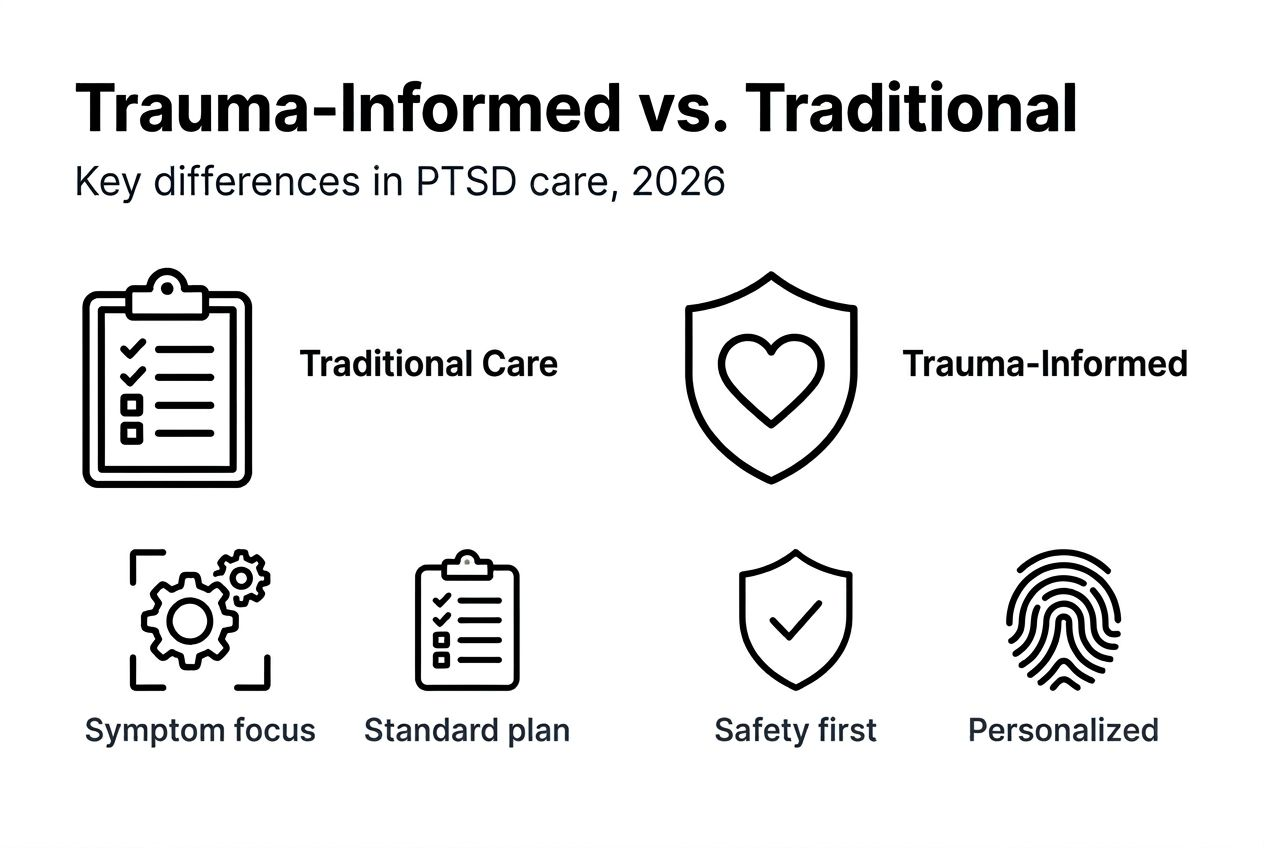
| Aspect | Traditional Approach | Trauma-Informed Approach |
|---|---|---|
| Focus | Symptom reduction | Holistic healing including safety, empowerment, and meaning-making |
| Client role | Passive recipient of treatment | Active collaborator in treatment decisions |
| Cultural factors | Often overlooked or standardized | Centered as essential to understanding and healing |
| Timeline | Fixed treatment duration | Flexible pacing honoring individual healing rhythms |
| Success metrics | Symptom checklists | Improved functioning, relationships, and quality of life |
For PTSD and complex trauma, trauma-informed care recognizes that complex presentations require extended timelines and relationship-focused healing. Rather than rushing to exposure techniques, therapists build safety and stabilization first. This sequencing prevents overwhelming clients whose trauma involved sustained interpersonal violations.
Grief intertwined with trauma requires specialized approaches. Culturally responsive grief therapy acknowledges how loss manifests differently across cultures while addressing trauma symptoms linked to the loss circumstances. For immigrants grieving family members in home countries, therapy might explore cultural mourning practices alongside trauma from separation or inability to attend funerals.
Complex trauma effects often include attachment disruptions, emotional regulation difficulties, and identity confusion. Trauma-informed care addresses these foundational impacts through consistent therapeutic relationships that model secure attachment and co-regulation. Over time, you internalize these relational patterns, improving functioning beyond therapy sessions.
Accessing trauma-informed care in California: resources and evaluation
Trauma Recovery Centers in California offer specialized bilingual, culturally sensitive trauma therapy with superior outcomes. These centers serve crime victims and others affected by violence, providing coordinated services including therapy, case management, and resource navigation. Many operate on sliding scale fees, reducing financial barriers.
When evaluating potential therapists, assess these key criteria:
Cultural competence: Does the therapist demonstrate understanding of your specific cultural context, not just general diversity awareness?
Trauma-specific training: Look for credentials in EMDR, CPT, prolonged exposure, or other evidence-based trauma treatments
Empowerment practices: Effective trauma-informed care requires clients' active participation and choice to foster engagement
Bilingual capability: If relevant, verify the therapist's fluency in your preferred language and cultural concepts
Collaborative approach: Therapists should explain treatment options clearly and involve you in decisions
Access online trauma therapythroughout California for flexible scheduling and geographic accessibility. Online platforms expand options beyond local providers while maintaining treatment effectiveness. This proves especially valuable for rural residents or those with transportation barriers.Finding trauma-informed EMDR therapistsprovides numerous qualified options. EMDR represents one evidence-based approach within trauma-informed frameworks. Other effective modalities include cognitive processing therapy, somatic experiencing, and internal family systems therapy. The specific technique matters less than the therapist's skill and cultural competence.
Pro Tip: Starting therapy in California involves practical steps like verifying insurance coverage, preparing questions for initial consultations, and clarifying your healing goals. Taking time to find the right fit increases treatment success significantly.
Summary and practical steps for healing
Trauma-informed care centered on cultural responsiveness, bilingual support, and identity affirmation accelerates recovery for California adults healing from PTSD, complex trauma, and grief. Research consistently demonstrates that these integrated approaches produce superior outcomes compared to standard treatment models. Understanding core principles of safety, trust, empowerment, and collaboration helps you recognize quality care and advocate for your needs.
Practical steps to begin your healing journey:
Research therapists specializing in trauma-informed care with cultural competence relevant to your background
Schedule consultations with multiple providers to assess fit and comfort
Ask specific questions about trauma training, cultural approach, and treatment philosophy
Verify bilingual capabilities if language concordance matters to you
Clarify logistical factors including insurance acceptance, fees, and session availability
Trust your instincts about safety and connection during initial interactions
Healing from trauma takes time and courage. Choosing trauma-informed care that honors your cultural identity and provides genuine partnership gives you the best foundation for sustained recovery. You deserve therapy that sees your wholeness, respects your experiences, and supports your empowerment.
Pro Tip: Expect therapy to feel challenging at times, but it should never feel unsafe or re-traumatizing. If you experience increased distress without corresponding support, discuss pacing adjustments with your therapist or consider alternative providers.
Explore trauma-informed therapy options at Alvarado Therapy
If you are ready to begin trauma-informed healing with culturally responsive, bilingual support, Alvarado Therapy offers specialized services throughout California. We understand how cultural identity, language, and systemic factors shape your trauma experiences and recovery needs.
Our PTSD and complex trauma services integrate evidence-based approaches with cultural affirmation and empowerment principles. Whether you prefer in-person sessions in Pasadena or Ventura, or online EMDR trauma therapy from anywhere in California, we tailor treatment to your unique circumstances. Schedule a consultation to discuss your healing goals and explore how trauma-informed care can support your journey toward safety, clarity, and empowerment.
Frequently asked questions
How does trauma-informed care differ from standard therapy?
Trauma-informed care shifts focus from symptom reduction to creating safe, empowering therapeutic relationships that prevent re-traumatization. It emphasizes collaboration, client choice, and understanding how trauma shapes current responses rather than pathologizing behaviors. Standard therapy may address symptoms without recognizing underlying trauma mechanisms or building the safety foundation essential for healing.
What benefits does bilingual and culturally responsive trauma therapy provide?
Bilingual and culturally responsive therapy yields 30-40% higher retention rates and 25% faster symptom relief compared to standard approaches. These benefits result from therapists understanding cultural concepts of mental health, family dynamics, and community contexts that shape trauma expression and healing. Language concordance combined with cultural validation strengthens therapeutic alliance and increases treatment engagement.
How can I identify qualified trauma-informed therapists?
Evaluate therapists based on trauma-specific training credentials like EMDR or CPT certification, demonstrated cultural competence relevant to your background, and collaborative treatment philosophy. Ask how they incorporate empowerment and client choice into sessions. Strong candidates explain techniques clearly, respect your pacing preferences, and show genuine understanding of cultural factors affecting your healing.
Why does identity affirmation support trauma healing?
Validating cultural, ethnic, sexual orientation, or other core identities creates safety that allows authentic sharing and deeper processing. Identity affirmation counters internalized shame from discrimination, strengthens therapeutic alliance, and ensures treatment goals align with your values rather than conflicting with community connections. This validation proves especially crucial when trauma involved identity-based oppression or rejection.
What steps should I take to start trauma-informed therapy in California?
Research therapists with relevant cultural competence and trauma specialization, then schedule consultations with multiple providers to assess fit. Prepare questions about their approach, training, and cultural understanding. Verify practical factors like insurance acceptance and bilingual capability if relevant. Trust your instincts about safety and connection, as strong therapeutic relationships form the foundation of effective trauma-informed care.
