
Bilingual therapy boosts trauma recovery in California

Many believe therapy outcomes are identical regardless of the language used, but research shows this assumption costs Spanish-speaking adults in California critical healing opportunities. Bilingual therapy improves patient outcomes significantly for those recovering from trauma, anxiety, and relationship challenges by removing language barriers and honoring cultural identity. When therapists speak your native language and understand your cultural context, the entire therapeutic process transforms. This guide reveals how bilingual approaches accelerate trauma recovery, strengthen the therapeutic bond, and provide practical pathways for finding culturally responsive care in California.
Table of Contents
Navigating Challenges And Best Practices In Bilingual Therapy
Applying Bilingual Therapy For Trauma Recovery In California
Explore Bilingual Trauma Therapy Services With Alvarado Therapy
Key takeaways
| Point | Details | |-------|---------|| | Enhanced emotional expression | Bilingual therapy allows Spanish speakers to access deeper feelings and memories in their native language, improving trauma processing. | | Stronger therapeutic alliance | Language and cultural congruence build trust faster, leading to better engagement and symptom relief in PTSD and anxiety treatment. | | Culturally responsive care | Therapists address unique experiences like immigration trauma and discrimination, reducing dropout rates by recognizing client identity. | | Improved treatment completion | Native language therapy increases session attendance and treatment adherence, directly impacting recovery success rates. | | Flexible therapeutic approaches | Bilingual therapists customize interventions by switching languages strategically to meet emotional and cognitive needs. |
How bilingual therapy improves trauma recovery outcomes
Spanish-speaking adults in California face distinct challenges when seeking trauma recovery for Spanish speakers, particularly when language barriers prevent full emotional expression during therapy sessions. Research demonstrates that bilingual therapy can improve therapeutic outcomes for adults managing PTSD, anxiety, and relationship difficulties through culturally sensitive support that addresses these obstacles directly.
The impact extends beyond basic communication. Clients who receive therapy in their native language show significantly reduced PTSD and anxiety symptoms compared to those working through interpreters or struggling in a second language. This difference stems from the brain's ability to access traumatic memories and emotions more authentically when processing in the language where those experiences originally occurred.
Key benefits include:
Deeper emotional exploration without the cognitive burden of translating feelings into a second language
Increased disclosure of sensitive information related to trauma, family dynamics, and cultural shame
Higher therapy completion rates as clients feel understood and validated in their cultural context
Faster rapport building between therapist and client, accelerating the healing timeline
Better symptom management through interventions tailored to cultural healing practices and values
Culturally sensitive approaches recognize that trauma for Spanish-speaking communities often connects to immigration experiences, discrimination, family separation, and identity conflicts. When therapists share linguistic and cultural backgrounds, they grasp these nuances without lengthy explanations, allowing sessions to focus on healing rather than cultural education. This efficiency matters enormously for adults juggling work, family responsibilities, and the exhausting process of trauma recovery.
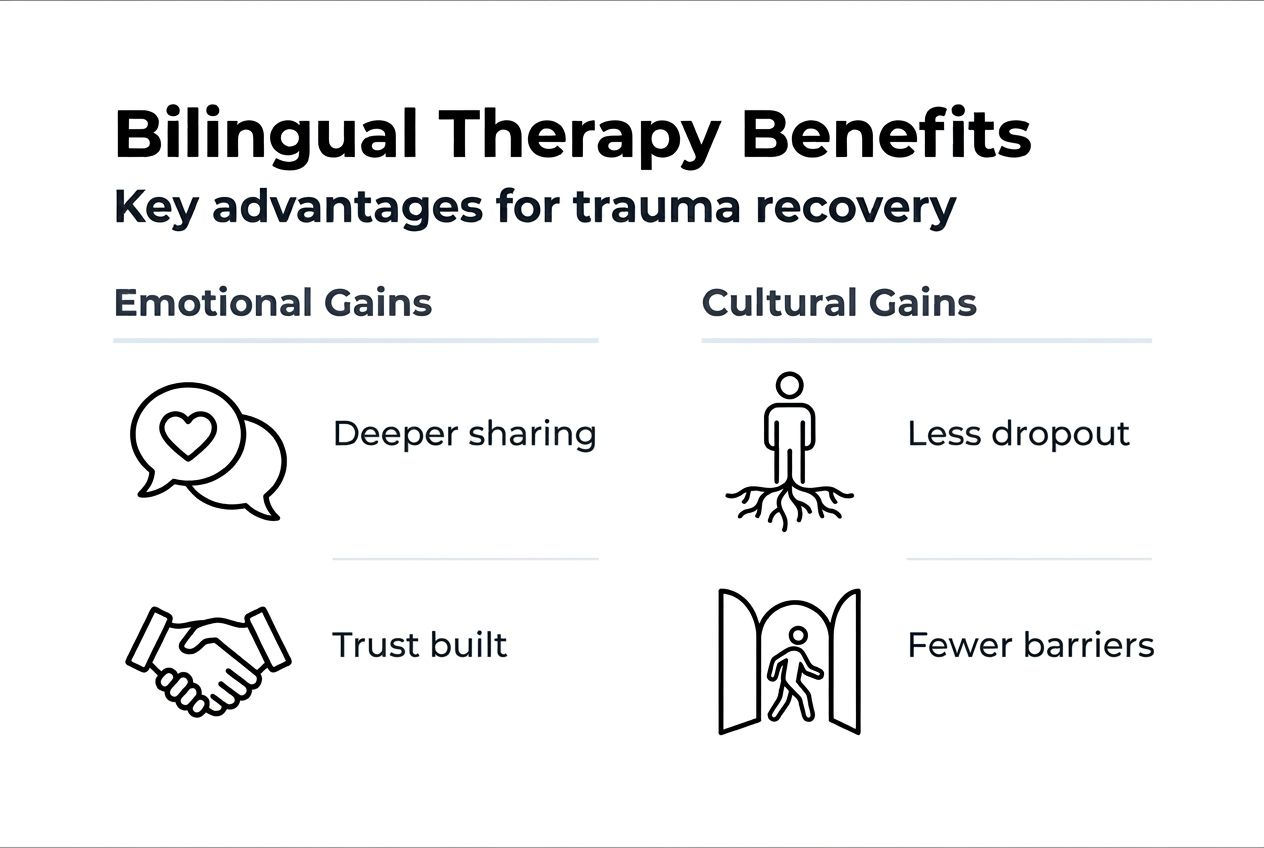
The role of bilingual therapists becomes particularly critical when addressing complex trauma that intertwines with cultural identity. Language access creates safety, and safety enables the vulnerability required for genuine therapeutic progress.
The role of language and culture in therapeutic alliance
The strength of your relationship with your therapist predicts treatment success more reliably than the specific therapeutic technique used. Language use enhances therapeutic alliance by enabling deeper exploration of emotions and experiences, creating the foundation for meaningful symptom change.
When you speak your native language in therapy, subtle emotional tones and cultural references come through naturally. A phrase that carries generations of family wisdom or a specific trauma experience loses its power when filtered through translation. Your therapist catches these nuances immediately when working bilingually, responding with culturally attuned interventions that resonate with your worldview.
"The therapeutic alliance strengthens dramatically when clients can express themselves in the language of their heart, not just the language of their daily survival."
Cultural understanding allows therapists to tailor interventions respecting your identity rather than imposing one-size-fits-all approaches. For Spanish-speaking adults navigating mental health needs as Latine immigrants, this recognition of cultural context reduces the alienation many feel in traditional therapy settings.
Critical alliance factors include:
Trust building through shared cultural reference points and values around family, spirituality, and community
Safety creation when discussing sensitive topics like immigration status, discrimination experiences, or intergenerational trauma
Validation of experiences that mainstream therapy might minimize or misunderstand
Reduced defensiveness as cultural behaviors receive appropriate context rather than pathologization
Enhanced therapist credibility when demonstrating genuine cultural competence beyond surface-level awareness
Language nuances affect therapy dynamics in unexpected ways. Certain emotions exist more powerfully in Spanish than English for native speakers. Describing anxiety as "angustia" or grief as "pena" carries emotional weight that English equivalents cannot replicate. These linguistic subtleties shape how you process trauma and respond to interventions.

Linguistic and cultural congruence reduces misunderstandings that lead to premature dropout. When your therapist shares your language and cultural framework, you spend less energy explaining context and more energy healing. This efficiency accelerates progress and maintains motivation during difficult treatment phases.
Navigating challenges and best practices in bilingual therapy
Bilingual therapy's effectiveness depends heavily on therapist qualifications beyond simple language fluency. Therapist proficiency critical in bilingual therapy includes both linguistic ability and cultural competence, requiring therapists to navigate language switching and cultural differences skillfully throughout treatment.
Professional bilingual therapists possess fluency in both languages at a clinical level, understanding psychological terminology and therapeutic concepts in each language. Casual conversational fluency does not equal clinical competence. Effective therapists also maintain deep cultural knowledge, recognizing how Spanish-speaking communities conceptualize mental health, family roles, and healing practices.
Common pitfalls to avoid:
Misinterpretations due to linguistic nuances affecting diagnosis or treatment planning
Therapist biases influencing therapy when cultural differences trigger unconscious assumptions
Over-reliance on one language when strategic switching could enhance therapeutic progress
Failure to address acculturation stress and bicultural identity conflicts in treatment
Inadequate understanding of immigration-related trauma and its unique manifestations
Avoiding pitfalls in bilingual therapy requires active self-awareness from therapists who continuously examine their own biases and cultural assumptions. Expert therapists engage in ongoing cultural humility training, recognizing that cultural competence represents a lifelong learning process rather than a checkbox to complete.
Best practices include flexible language use balancing your preferences with therapeutic needs. Some clients benefit from processing trauma in their native language while discussing practical coping strategies in English. Others need consistency in one language to maintain emotional coherence. Skilled therapists assess these needs individually rather than applying rigid protocols.
Pro Tip: Ask potential therapists specific questions about their bilingual training and cultural background during initial consultations. Inquire how they handle language switching, manage cultural differences in therapy, and address immigration-related trauma. Their answers reveal whether they possess genuine expertise or surface-level familiarity.
Effective bilingual therapy requires ongoing training beyond initial licensure. Therapists committed to excellence participate in continuing education focused on culturally responsive therapy benefits, staying current with research on bilingual mental health interventions and evolving community needs.
Applying bilingual therapy for trauma recovery in California
California offers numerous bilingual therapy options, but knowing how to evaluate and access these services maximizes your recovery potential. Several evidence-based therapy types adapt effectively to bilingual delivery for trauma treatment, each offering distinct advantages for Spanish-speaking adults.
EMDR (Eye Movement Desensitization and Reprocessing) works exceptionally well bilingually because it relies less on verbal processing and more on accessing traumatic memories through bilateral stimulation. CBT (Cognitive Behavioral Therapy) succeeds when therapists understand cultural thought patterns and can reframe cognitive distortions within your cultural context. Trauma-focused approaches incorporating family systems theory honor the collectivist values common in Spanish-speaking cultures.
Evaluating therapist qualifications:
Verify professional licensure in California and specific trauma therapy training
Confirm native or near-native fluency in both Spanish and English
Ask about cultural background and experience serving Spanish-speaking communities
Inquire about specific approaches to immigration trauma and acculturation stress
Request information about their understanding of culturally sensitive bilingual therapy for trauma
California's geography and infrastructure support both in-person and online bilingual therapy options, each with distinct benefits:
| Delivery Method | Advantages | Considerations |
|---|---|---|
| In-person therapy | Face-to-face connection, nonverbal communication, traditional therapy setting | Geographic limitations, transportation barriers, scheduling constraints |
| Online therapy | Accessibility across California, flexible scheduling, reduced travel burden, privacy in home environment | Technology requirements, internet stability, some insurance limitations |
Online EMDR trauma therapy has proven equally effective as in-person treatment for many trauma types, offering Spanish-speaking adults in rural or underserved California areas access to specialized bilingual providers. This flexibility particularly benefits those managing work schedules, childcare responsibilities, or transportation challenges.
Culturally responsive care reduces dropout and improves recovery rates by addressing the whole person within their cultural context. Research on community health interventions for Latine populations demonstrates that culturally tailored approaches significantly outperform generic treatments in engagement and outcomes.
Available resources throughout California include community mental health centers with bilingual staff, specialized trauma programs at university medical centers, and private practices focusing on Spanish-speaking populations. Many accept insurance plans common in California, including Medi-Cal coverage for qualifying individuals.
Pro Tip: When finding culturally sensitive therapists in California, prioritize providers offering free consultations. These brief conversations reveal whether the therapist's communication style, cultural understanding, and approach align with your needs before committing to treatment.
Specialized services addressing PTSD and complex trauma through bilingual delivery recognize that trauma recovery involves more than symptom reduction. Effective treatment honors your cultural identity, validates immigration experiences, and builds on cultural strengths rather than viewing cultural differences as obstacles to overcome.
Explore bilingual trauma therapy services with Alvarado Therapy
Finding the right bilingual therapist transforms your trauma recovery journey from overwhelming to manageable. Alvarado Therapy specializes in evidence-based PTSD and complex trauma therapy delivered by bilingual professionals who understand the unique challenges Spanish-speaking adults face in California. The practice offers culturally responsive EMDR therapy, individual counseling, and comprehensive trauma treatment in both English and Spanish.
Accessible online EMDR trauma therapy brings specialized care to clients throughout California, eliminating geographic barriers while maintaining the deep cultural sensitivity essential for effective treatment. Whether you're managing PTSD, anxiety, relationship challenges, or immigration-related trauma, bilingual therapists tailor interventions to your specific cultural context and healing needs. Free therapy consultations help you explore treatment options, ask questions about the bilingual approach, and determine the best path forward for your unique situation.
Frequently asked questions
What is bilingual therapy and how does it work?
Bilingual therapy provides mental health treatment in a client's native language to enhance understanding, emotional expression, and therapeutic connection. Therapists fluent in both Spanish and English conduct sessions primarily or entirely in the client's preferred language, switching strategically when beneficial for processing specific experiences or concepts. This approach works by removing language barriers that prevent full engagement, allowing clients to access memories and emotions in the language where they originally occurred. For trauma recovery, bilingual therapy creates the safety and authenticity necessary for genuine healing.
Why is cultural sensitivity important in bilingual therapy?
Cultural sensitivity ensures therapy respects your identity, values, and unique experiences shaped by your cultural background. It improves trust between you and your therapist by demonstrating genuine understanding of cultural factors affecting mental health, family dynamics, and healing approaches. Research shows culturally sensitive bilingual therapy significantly improves engagement and symptom relief in trauma treatment by validating experiences mainstream therapy might overlook or misinterpret.
How can I find a qualified bilingual therapist in California?
Search specialized directories or practice websites offering language and cultural competence filters for Spanish-speaking providers. Ask potential therapists directly about their bilingual training, cultural background, and specific experience treating Spanish-speaking clients with trauma. Consider recommendations from community organizations, healthcare providers, or trusted friends who share your cultural background. Visit resources like find bilingual therapists in California for guidance on evaluating therapist qualifications beyond basic language ability.
What types of trauma can bilingual therapy address effectively?
Bilingual therapy effectively addresses PTSD, anxiety disorders, relationship challenges, childhood trauma, and complex trauma involving multiple traumatic experiences over time. It particularly excels with immigration-related trauma, discrimination experiences, acculturation stress, and identity conflicts common among Spanish-speaking adults in California. The approach proves especially powerful for trauma types treated with bilingual therapy that intertwine with cultural identity, family dynamics, and experiences specific to immigrant or bicultural communities.
