
Trauma and relationship repair: a guide for healing
TL;DR:
Trauma influences relationships by rewiring trust, communication, and emotional safety, often causing distance and misinterpretation.
Effective repair requires structured therapy focusing on emotional safety, accountability, and gradual trust rebuilding, rather than quick fixes.
Trauma doesn't just live inside one person. It moves through relationships, quietly reshaping how two people communicate, trust, and reach for each other. If you've noticed your connection with a partner becoming more distant, reactive, or simply exhausting since a painful experience, you're not imagining it. Trauma and relationship repair go hand in hand because healing one without addressing the other rarely works. The good news is that evidence-based approaches, from trauma-focused Cognitive Behavioral Therapy (CBT) to structured couples work, give you real tools to rebuild what felt broken. This guide explains how and why they work.
Table of Contents
Setting realistic expectations for healing and relationship repair
Evidence-based approaches to repairing relationships affected by trauma
Comparing trauma-focused therapies and alternative interventions
Practical steps for supporting relationship repair after trauma
Why typical recovery expectations can stall true relationship repair
Understanding trauma's impact on relationships
Trauma rewires the way your nervous system responds to perceived threat. Inside a relationship, this shows up in ways that can feel deeply personal, even when they aren't. A partner who shuts down during conflict may not be punishing you. They may be in a freeze response, a survival mechanism that predates your relationship entirely.
Trauma's effects on relationships tend to cluster around three core disruptions:
Trust: Trauma, especially relational trauma like betrayal or childhood abuse, makes the nervous system treat closeness as danger. Trust doesn't feel safe to extend, even toward someone who has earned it.
Communication: Hypervigilance, a state of constant alertness common after trauma, distorts how you interpret a partner's tone, silence, or facial expression. Neutral messages read as hostile.
Emotional safety: When someone doesn't feel safe inside their own body, they can't feel safe inside a relationship. Emotional withdrawal often follows.
One of the most misunderstood dynamics in this space is avoidance. It feels protective, like not talking about painful events keeps everyone calmer. But avoiding trauma memories and feelings can worsen distress and relationship dynamics over time, not reduce them. The pain doesn't disappear. It relocates into distance, resentment, and misreading each other's intentions.
Understanding these responses doesn't excuse harmful behavior in a relationship, but it does create the empathy required to stay curious instead of reactive. That shift, from blame to understanding, is often where meaningful repair begins.
Setting realistic expectations for healing and relationship repair
Here's the expectation that stalls most people: that healing from trauma follows a predictable schedule. It doesn't. Someone might feel significantly better within a few weeks, while another person navigating the same type of event takes much longer. Both are normal.
There is no fixed timeline for trauma recovery. Gradual improvement over weeks suggests natural healing, but persistent or worsening distress signals the need for professional support. Watching for the difference matters.
Signs that natural recovery may be occurring:
Emotional reactions gradually becoming less intense
Returning ability to sleep or concentrate
Noticing moments of connection with your partner again
Gradual reduction in intrusive thoughts or memories
Feeling less on edge in situations that previously triggered a strong response
Signs that professional support is needed:
Symptoms intensifying or staying the same after several weeks
Nightmares, flashbacks, or severe anxiety consistent with PTSD
Increasing use of alcohol or other substances to manage feelings
Either partner withdrawing from the relationship entirely
Tracking healing milestones after trauma gives you a concrete way to assess progress rather than relying on a vague sense of "getting better." Even subtle shifts, like going one day without a flashback or having one calm conversation, are meaningful data points.
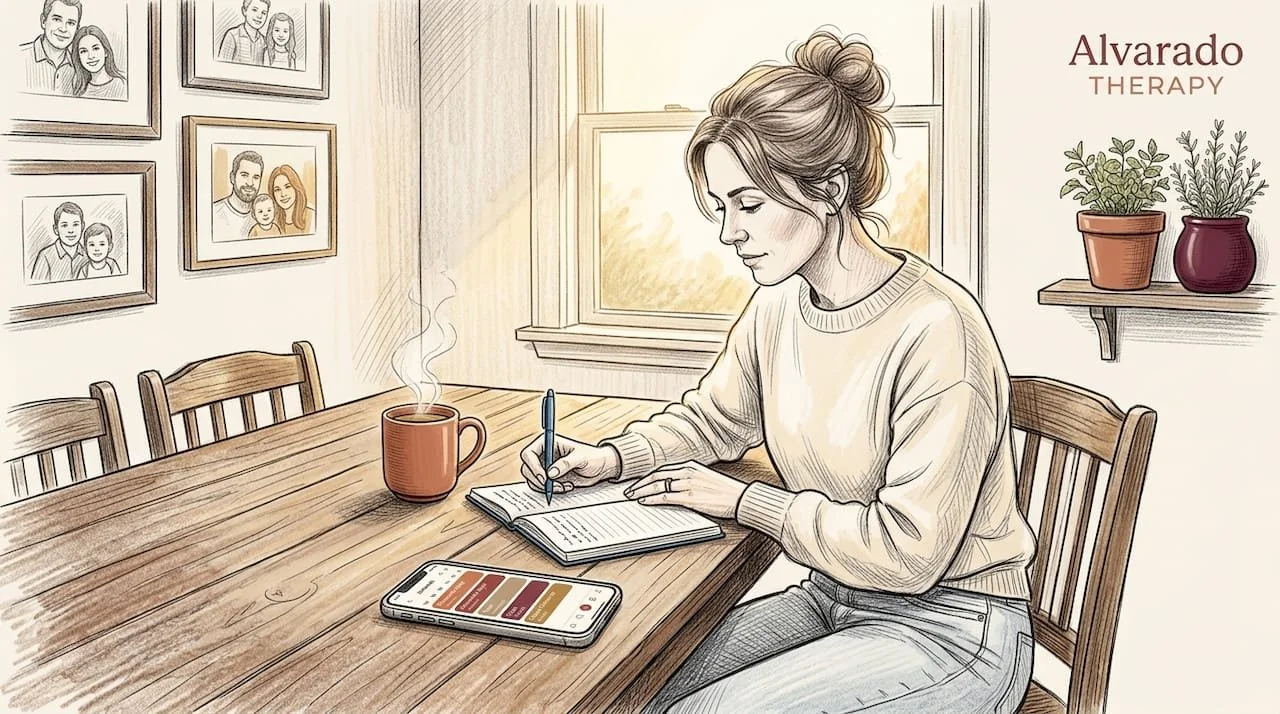
Pro Tip: Keep a brief daily log of your emotional state and notable interactions with your partner. After two weeks, patterns become visible. You'll see real evidence of change (or stagnation) that your memory alone won't give you.
For practical starting points, the emotional healing tips after trauma resource covers foundational daily strategies worth building into your routine early in the process.
Evidence-based approaches to repairing relationships affected by trauma
When trauma fractures the trust and safety inside a relationship, generic advice like "just communicate more" misses the actual problem. The pathway back requires structure.
Skilled couples therapy creates emotional safety, accountability, and practical steps for repair that go well beyond apologies, particularly in cases of betrayal trauma. Here's what that looks like in practice:
Emotional safety first. Before any productive conversation about the trauma can happen, both partners need to believe they can express pain or confusion without being shut down, attacked, or dismissed. This isn't automatic. It's a condition a skilled therapist helps create and maintain.
Accountability without re-traumatization. Especially in cases involving infidelity or breach of trust, the partner who caused harm needs to demonstrate consistent, trustworthy behavior over time. Not one dramatic gesture. Not a single apology. Repeated, reliable actions that slowly shift what the nervous system learns to expect.
Structured dialogue. Open-ended "we need to talk" conversations often spiral because neither partner has the emotional regulation tools to stay in them without escalating. Scheduled, structured conversations with agreed-upon guidelines reduce the chaos.
| Approach | Best for | What it addresses |
|---|---|---|
| Trauma-focused CBT | Individuals with PTSD | Intrusive thoughts, avoidance, negative beliefs |
| EMDR therapy | Individuals and couples | Stored traumatic memory, hyperarousal |
| Structured couples therapy | Both partners | Trust, communication, emotional safety |
| Gottman Method | Couples in conflict | Conflict patterns, connection rituals |
For deeper reading on this, couples therapy for rebuilding trust walks through how therapeutic structure changes the conditions under which repair becomes possible.
Pro Tip: If you're unsure whether to start individual therapy or couples therapy first, ask your therapist to assess for PTSD symptoms before beginning joint sessions. Attempting couples work before individual stabilization can re-traumatize both partners.
When infidelity is the wound, the infidelity healing step-by-step guide and the broader framework for couples therapy in trauma recovery both offer grounded, realistic pathways rather than false promises.
Comparing trauma-focused therapies and alternative interventions
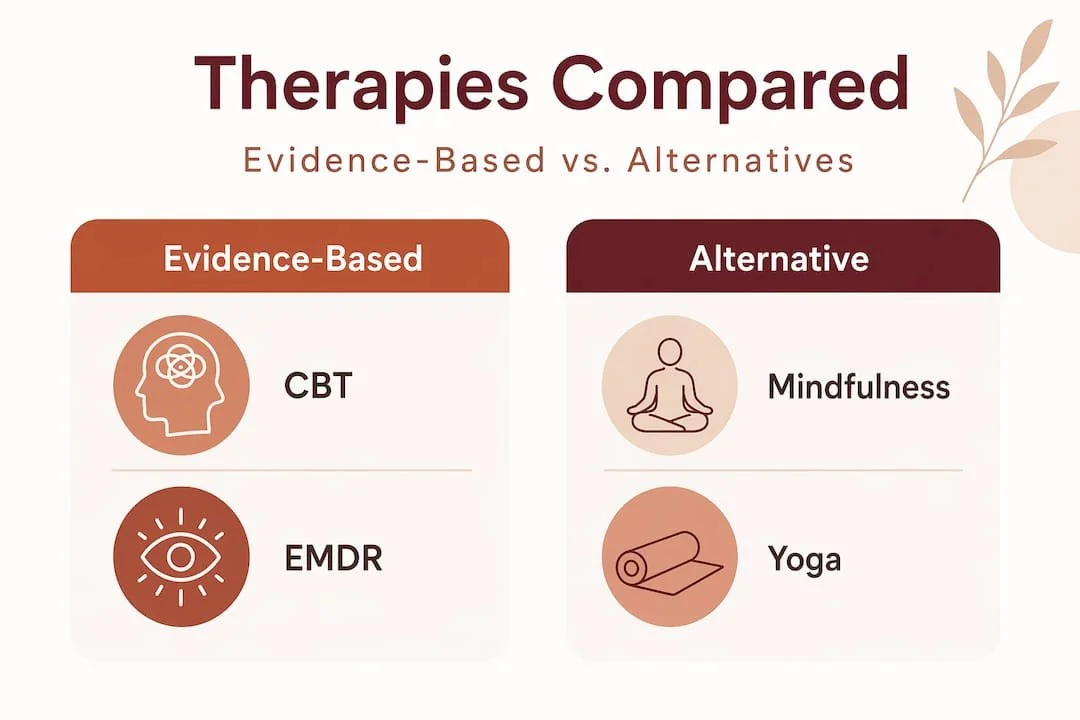
Not all therapies for trauma carry the same weight of evidence. Knowing the difference protects you from investing time and money in approaches that won't address what's actually driving the distress in your relationship.
| Intervention | Evidence level | Notes |
|---|---|---|
| Trauma-focused CBT | Strong | First-line treatment for PTSD |
| EMDR | Strong | Particularly effective for single-incident trauma |
| Prolonged Exposure (PE) | Strong | Reduces avoidance through gradual processing |
| Acupuncture | Limited | May reduce general stress; not proven for PTSD |
| Mindfulness-based practices | Moderate | Useful as a complement, not a standalone treatment |
| Internet/mobile therapy apps | Inconsistent | Moderate short-term gains for civilians only |
Trauma-focused CBT and related protocols are evidence-based first-line treatments for PTSD and its chronic effects on relationships. That's not a marketing claim. It's the clinical consensus backed by decades of research.
Complementary approaches like mindfulness in relationship repair, yoga, and acupuncture show promise for managing the physical symptoms of stress and improving present-moment awareness, but they haven't demonstrated consistent results when used in isolation for trauma-specific symptoms.
Digital therapy is worth addressing directly. Internet and mobile interventions show small-to-negligible benefits for military populations and only moderate, not sustained, benefits for civilians. Apps can support skill practice between sessions, but they are not a substitute for working with a trained clinician when trauma is actively destabilizing your relationships.
For a broader breakdown of expert therapies for trauma recovery, including how EMDR differs from traditional talk therapy, that resource explains the clinical distinctions in plain language.
Practical steps for supporting relationship repair after trauma
Knowing what therapy offers is one thing. Knowing what to do between sessions, or before you've started, is what most people actually need day to day. These steps draw on trauma-informed relationship strategies that clinicians use and teach directly.
Establish predictable daily rituals. Consistency is what the traumatized nervous system craves above almost everything else. A morning check-in, a shared meal, or a brief evening walk creates a relational anchor point that builds trust without requiring big conversations.
Create space for pain without pressure to resolve it. Emotional healing in relationships requires that both partners feel free to express difficulty without the other immediately rushing to fix it. Ask "what do you need right now?" instead of launching into solutions.
Schedule your hard conversations. Spontaneous discussions about trauma impact rarely go well when both partners are already depleted. Setting a specific time, for example Tuesday evenings for 30 minutes, reduces the fear that the topic will ambush either person at the wrong moment.
Identify and reduce isolation. Trauma pulls people inward. Re-establishing routines and staying connected to support networks accelerate recovery and reduce long-term avoidance. This includes friends, family, community, and your therapist.
Avoid using substances to cope. Alcohol, in particular, disrupts sleep architecture and emotional regulation, two things already compromised by trauma. It delays healing even when it feels like relief.
Additional practices that support overcoming past trauma within the relational space:
Practice naming your emotional state before a conversation ("I'm feeling defensive right now") so your partner understands the context
Use physical grounding techniques, like slow breathing or cold water on the wrists, before difficult discussions
Acknowledge small moments of connection out loud; they reinforce what's working
For a fuller set of relationship recovery techniques tailored specifically for survivors, the relationship healing tips for trauma survivors resource offers concrete, session-ready strategies.
Pro Tip: Build one low-stakes positive interaction into each day. It doesn't have to be meaningful. A shared joke, a coffee brought without asking, a simple "I noticed." Repeated small kindnesses do more for building trust after trauma than any single conversation about the past.
Why typical recovery expectations can stall true relationship repair
Here's what most articles on this topic won't say plainly: the expectation of a breakthrough moment is one of the most common ways people accidentally undermine their own healing.
Couples often come into therapy hoping for a turning point. A conversation that finally makes everything make sense. A session where the partner "gets it" and everything shifts. That moment rarely arrives, and waiting for it creates a quiet despair that can feel worse than the original wound.
The role of trauma in relationships is cumulative. The damage didn't happen in a single event (even when it technically did), because trauma changes the nervous system's baseline. Repair has to be equally cumulative, built from dozens of ordinary interactions that gradually teach both partners' nervous systems that safety is real.
The other stalling pattern: avoidance without skill-building can stall healing and actively complicate communication in couples. Simply reducing avoidance, without learning how to tolerate the discomfort of actually being present, often creates more chaos before it creates relief. That's why trauma-informed relationship strategies emphasize teaching emotional regulation before encouraging deeper disclosure.
Real repair is less cinematic than people expect. It looks like a partner staying calm when they could have escalated. It looks like showing up on time, twice in a row, when reliability has been broken. It looks like learning to ask "what do I actually need right now?" and being honest about the answer. The work is quiet, repetitive, and profoundly effective when sustained.
Get professional support for trauma and relationship repair
If this guide has brought clarity to what you're navigating, the natural next step is connecting with a therapist who specializes in exactly this kind of work.
At Alvarado Therapy, our licensed therapists across California offer PTSD and complex trauma therapy, structured online couples therapy, and tailored treatment plans for betrayal trauma, childhood trauma, PTSD, and relationship repair. We work in English and Spanish, and we serve clients throughout California via secure telehealth. Whether you're just beginning to understand how trauma has shaped your relationship or you're ready to do focused repair work with your partner, we're here to help. Schedule a therapy consultation to find the right path forward for your specific situation.
Frequently asked questions
Is there a set timeline for healing from trauma in relationships?
No fixed timeline exists. As research confirms, there's no set timeframe for recovering from trauma, and gradual improvement over weeks is a natural sign of healing. Worsening or persistent symptoms signal that professional support is needed.
How does avoidance affect trauma recovery in relationships?
Avoidance feels protective but consistently backfires. Avoiding memories and feelings has been shown to worsen distress and impede resilience, making open, supported processing a far more effective path for both individuals and couples.
What types of therapy are most effective for trauma-related relationship repair?
Trauma-focused CBT and structured couples therapy are the most evidence-backed options. Both build emotional safety and accountability, and evidence-based trauma-focused psychotherapies like these are recognized as first-line treatments for PTSD and its relational consequences.
Are online or mobile therapies effective for PTSD and relationship trauma?
They offer limited and inconsistent results. Internet and mobile interventions show small-to-negligible benefits for Veterans and only moderate, short-term gains for civilians, making them a supplement to, not a replacement for, working with a trained therapist.
