
How to choose a trauma therapist in California in 2026

Finding a trauma therapist in California can feel overwhelming when you're already struggling with PTSD, anxiety, or past trauma. With hundreds of options across the state and varying specializations, cultural backgrounds, and therapy approaches, many Californians don't know where to start. This guide walks you through a clear, structured process to confidently choose a specialized, trauma-informed therapist who matches your cultural, linguistic, and healing needs.
Table of Contents
Prerequisites: What You Need Before Choosing A Trauma Therapist
Where And How To Find Qualified Trauma Therapists In California
Common Mistakes And Warnings When Choosing A Trauma Therapist
Next Steps And Resources For Californians Seeking Trauma Therapy
Explore Specialized Trauma Therapy Options With Alvarado Therapy
Key takeaways
| Point | Details |
|---|---|
| Specialized trauma therapies matter | EMDR therapy shows 77–90% effectiveness in PTSD symptom reduction within 12 sessions, outperforming general talk therapy. |
| Cultural and language match improves outcomes | Bilingual and culturally responsive therapy increases client retention by up to 30% and accelerates healing. |
| Verify credentials through California resources | Always confirm therapist licenses through state boards and check for trauma-specific certifications like EMDR or trauma-focused CBT training. |
| Ask targeted screening questions | Direct questions about experience, cultural competence, and treatment approach help identify the right therapist fit. |
| Watch for red flags during consultations | Therapists who minimize trauma, ignore cultural needs, or lack clear treatment plans should be avoided. |
Understanding trauma therapy and its specializations
Trauma therapy isn't just talk therapy with a different label. Specialized trauma approaches use evidence-based techniques designed specifically to process traumatic memories and reduce symptoms safely. EMDR therapy shows 77-90% effectiveness in PTSD symptom reduction within 12 sessions, making it one of the most researched trauma treatments available today.
The most common trauma-specific therapies include:
EMDR (Eye Movement Desensitization and Reprocessing), which uses bilateral stimulation to help your brain reprocess traumatic memories
Trauma-focused CBT (Cognitive Behavioral Therapy), which addresses negative thought patterns connected to trauma
Somatic therapy approaches that work with how trauma lives in your body
Narrative therapy techniques that help you reframe your trauma story
These specialized modalities work faster and more effectively than general counseling because they target how trauma gets stored in your brain and nervous system. Understanding the differences between EMDR and talk therapy helps you make informed decisions about which approach might serve you best.
Trauma-informed care goes beyond therapy techniques. It's a framework ensuring your therapist creates safety, builds trust, and empowers you throughout treatment. This approach recognizes that trauma affects every aspect of your life and requires sensitivity at every step.
Pro Tip: Look for therapists who explicitly mention trauma-informed care principles in their profiles. This signals they understand the foundational safety and trust-building necessary before diving into trauma processing work.
Trauma certification matters because it demonstrates your therapist has received specialized training beyond their basic license. While all licensed therapists can technically treat trauma, those with specific credentials in EMDR, trauma-focused CBT, or other trauma modalities have invested extra time mastering these complex approaches.
Prerequisites: what you need before choosing a trauma therapist
Before starting your therapist search, spend time understanding your own trauma symptoms and therapy goals. Can you name specific triggers? Do you experience flashbacks, nightmares, or avoidance behaviors? Articulating these experiences helps you communicate clearly with potential therapists and ensures they understand what you need.
For California's diverse population, cultural and linguistic considerations aren't optional extras. Research shows bilingual therapists significantly improve engagement and outcomes for clients who feel more comfortable processing trauma in their native language. When trauma memories surface, being able to express yourself fully in your preferred language makes healing safer and more effective.
Prepare these essentials before your search:
A clear understanding of your trauma symptoms and what triggers them
Awareness of your cultural background and how it shapes your healing needs
Knowledge of your language preferences for therapy sessions
Basic familiarity with California licensing boards and therapist verification resources
A list of questions tailored to your specific trauma and cultural needs
California's Board of Behavioral Sciences regulates licensed therapists, and you can verify any therapist's credentials through their online database. Knowing how to use this resource protects you from unlicensed practitioners and gives you confidence in your choices.

Culturally responsive therapy benefits extend beyond language. Therapists who understand your cultural background recognize how trauma intersects with identity, family dynamics, immigration experiences, and community contexts. This awareness creates space for healing that honors your whole identity.
Reflecting on what cultural competence means for you personally helps narrow your search. Do you need a therapist who shares your ethnic background? Someone familiar with immigration trauma? A practitioner who understands specific cultural attitudes toward mental health? Clarifying these preferences saves time and increases your chances of finding the right match.
Where and how to find qualified trauma therapists in California
California offers multiple pathways to finding therapists who specialize in trauma work. Start with directories specifically designed for trauma and culturally responsive care rather than general therapist listings.
These California-specific resources prioritize trauma specialization:
Psychology Today's California directory with filters for trauma, EMDR, and bilingual services
EMDRIA (EMDR International Association) directory for certified EMDR therapists
The California Association of Marriage and Family Therapists (CAMFT) directory
NAMI California chapters offering local therapist referrals
Culturally sensitive therapist directories focused on diverse communities
| Directory | Trauma Filter | Bilingual Options | Verification Level |
|---|---|---|---|
| Psychology Today | Yes | Extensive | Self-reported |
| EMDRIA | EMDR-specific | Limited | Certified training |
| CAMFT | Yes | Moderate | Licensed members |
| NAMI California | Limited | Varies by chapter | Vetted referrals |
After identifying potential therapists, verify their credentials through California's Board of Behavioral Sciences website. Search their license number and check for any disciplinary actions or complaints. This step takes five minutes but protects you from practitioners with problematic histories.
Pro Tip: Cross-reference therapists across multiple directories. If someone appears in both general listings and specialized trauma directories, they're more likely to genuinely prioritize trauma work in their practice.
Client reviews provide additional insight, but read them carefully. Look for patterns mentioning safety, cultural sensitivity, and clear treatment approaches rather than just positive feelings. Reviews mentioning specific trauma modalities or cultural competence give you more useful information than generic praise.
Prioritize therapists who list trauma as a primary specialization rather than one item in a long list of issues they treat. Generalists can help with many concerns, but trauma work requires focused expertise. Your healing deserves a specialist.
Key questions to ask when screening trauma therapists
Before committing to a therapist, schedule consultation calls with your top three choices. Most therapists offer brief phone consultations to determine fit. Use this time to ask targeted questions that reveal their experience, approach, and cultural competence.
Essential screening questions include:
What percentage of your clients seek treatment for trauma or PTSD?
Which trauma-specific modalities are you trained and certified in?
How many years have you practiced trauma therapy specifically?
Can you describe your approach to building safety before trauma processing?
How do you incorporate cultural considerations into trauma treatment?
Are you fluent in [your preferred language] for therapy sessions?
What does your typical treatment timeline look like for complex trauma?
How do you measure progress and adjust treatment plans?
Pay attention to how therapists answer, not just what they say. Do they give specific examples? Do they ask about your needs? Do they explain concepts clearly without jargon? These communication patterns tell you how they'll interact with you in therapy.
For bilingual clients, assess language comfort directly. Ask the therapist to explain their trauma approach in your preferred language during the consultation. This reveals whether they truly practice therapy bilingually or just speak the language socially. Assessing bilingual therapists requires testing their professional vocabulary in both languages.
Pro Tip: Notice if therapists acknowledge the courage it takes to seek trauma help. This awareness signals trauma-informed thinking and sets the tone for a respectful therapeutic relationship.
Discuss creating therapy treatment plans collaboratively. Strong trauma therapists involve you in goal setting and explain their treatment approach transparently. If a therapist seems secretive about their methods or dismisses your input, that's a red flag.
Red flags during screening include:
Minimizing your trauma or suggesting you should be "over it" by now
Rushing into trauma processing without discussing safety and coping skills
Avoiding questions about cultural competence or seeming defensive
Unable to explain their treatment approach in clear terms
No clear structure or timeline for therapy
Common mistakes and warnings when choosing a trauma therapist
Many Californians choose therapists based on convenience or cost alone, overlooking critical factors that determine therapy success. Understanding common mistakes helps you avoid setbacks that can retraumatize or waste valuable time.
The biggest mistake is selecting therapists without verified trauma credentials. A licensed therapist isn't automatically qualified for trauma work. Look for specific training in EMDR, trauma-focused CBT, or other evidence-based trauma modalities. Generic counseling training doesn't prepare therapists for the complexity of trauma treatment.
Cultural and linguistic mismatches lead to dropout rates up to 45% higher than culturally matched therapy. When you can't fully express yourself or feel misunderstood culturally, you're less likely to continue treatment. Avoid cultural competence mistakes by prioritizing this factor from the start.
Other critical mistakes include:
Skipping the consultation call and booking immediately based on website appeal
Not asking direct questions about trauma experience and approach
Ignoring gut feelings about safety or comfort during initial contact
Choosing therapists who list trauma as one of 20+ specializations
Failing to verify licenses through official California boards
Warning: If a therapist pressures you to commit to long-term treatment before explaining their approach or pushes you to process trauma before building coping skills, find someone else. Ethical trauma therapy always prioritizes your safety and readiness.
Warning signs that should end your therapist search with a particular provider:
Dismissing or minimizing your trauma experiences
Lack of clear treatment plan or vague answers about approach
Unwillingness to discuss cultural factors in your healing
No mention of safety planning or coping skills before trauma work
Defensive responses to your questions about their qualifications
Statistics show therapy dropouts spike when clients feel culturally misunderstood or when therapists lack trauma-specific training. Protecting yourself from these mistakes increases your chances of successful trauma recovery significantly.
Expected therapy timelines, costs, and outcomes
Realistic expectations about trauma therapy duration, investment, and progress help you commit to the healing process. Trauma therapy typically requires more sessions than general counseling, but specialized approaches work efficiently.
EMDR therapy typically achieves significant PTSD symptom reduction in about 12 sessions for single-incident trauma. Complex trauma from childhood or multiple traumatic events usually requires 20 to 40 sessions depending on severity and your specific needs.
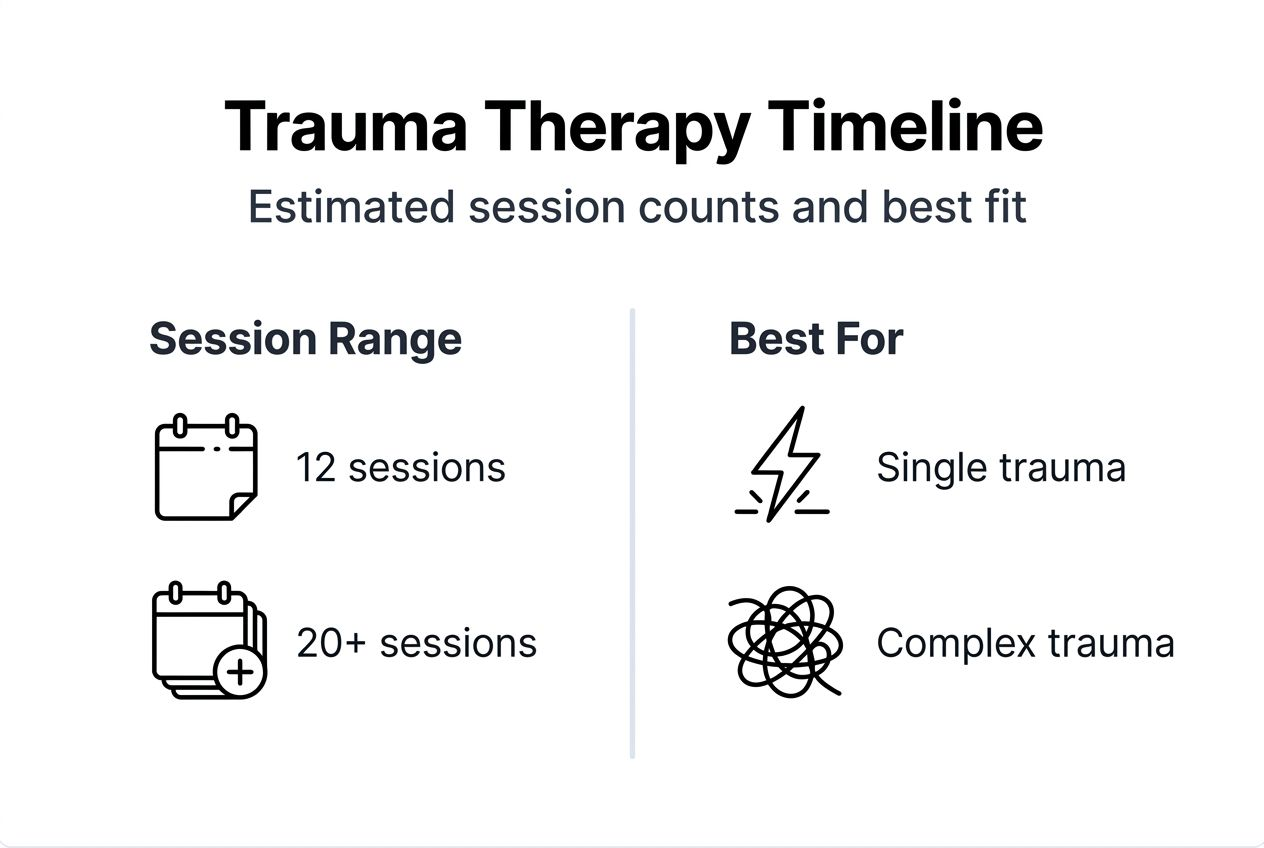
| Therapy Approach | Typical Session Range | Timeline | Best For |
|---|---|---|---|
| EMDR | 8–15 sessions | 2–4 months | Single-incident trauma, PTSD |
| Trauma-focused CBT | 12–20 sessions | 3–5 months | PTSD, anxiety with trauma |
| Complex trauma treatment | 20–40+ sessions | 6–12 months | Childhood trauma, multiple traumas |
| EMDR Intensive | 2–5 full days | 1–2 weeks | Accelerated processing |
California trauma therapy costs vary significantly by location and therapist experience. Expect to pay between $150 and $300 per session in most areas, with higher rates in Los Angeles and San Francisco. Many therapists offer sliding scale fees based on income, and some accept insurance for trauma treatment.
Measurable outcomes to track during therapy:
Reduced frequency and intensity of trauma symptoms like flashbacks or nightmares
Improved ability to stay present rather than dissociating
Better emotional regulation and decreased anxiety
Increased sense of safety in your body and relationships
Greater empowerment and agency in your daily life
Progress in trauma therapy isn't always linear. You might experience temporary increases in symptoms as you process difficult memories. Understanding trauma therapy timelines and outcomes helps you recognize healing even when it feels messy.
Insurance coverage for trauma therapy varies by plan. Many California insurers cover EMDR and trauma-focused CBT when medically necessary for PTSD diagnosis. Check your benefits before starting treatment, and ask therapists about their insurance participation during screening.
Next steps and resources for Californians seeking trauma therapy
You now have a structured framework for choosing a trauma therapist who meets your needs. Taking action starts with applying these steps systematically rather than feeling overwhelmed by options.
Begin your therapy journey with these concrete actions:
Review your trauma symptoms and articulate your therapy goals clearly
Identify your cultural and linguistic needs for therapy
Search California trauma directories using the resources provided
Verify top therapist choices through state licensing boards
Schedule consultation calls with three qualified therapists
Ask your prepared screening questions and assess responses
Choose the therapist who best matches your needs and start scheduling
California offers additional trauma support resources beyond individual therapy. NAMI California chapters provide peer support groups, educational programs, and community resources. The California Victim Compensation Board offers financial assistance for crime victims seeking trauma therapy.
For starting therapy in California, downloadable preparation guides help you maximize your first sessions. These tools teach you how to communicate effectively with your therapist, set clear goals, and track your progress throughout treatment.
Access trauma therapy resources in California specifically designed for victims of crime, including information about VOCA (Victims of Crime Act) funding that covers therapy costs for eligible individuals.
Remember that choosing a culturally appropriate, trauma-specialized therapist sets the foundation for your entire healing journey. Investing time in this selection process increases your chances of successful recovery and helps you avoid the costly mistake of working with the wrong therapist.
Explore specialized trauma therapy options with Alvarado Therapy
If you're searching for trauma-specialized care that honors the cultural and linguistic considerations outlined in this guide, Alvarado Therapy offers exactly that expertise. Our California-based practice specializes in PTSD & complex trauma services using evidence-based approaches like EMDR therapy.

We provide bilingual individual EMDR therapy services in both English and Spanish, ensuring you can process trauma in the language where you feel most comfortable. Our trauma-informed approach prioritizes safety, cultural responsiveness, and collaborative treatment planning throughout your healing journey.
Serving clients across Pasadena, Ventura, and online throughout California, our licensed therapists bring specialized training in trauma treatment modalities discussed in this guide. Schedule a consultation to discuss your specific needs and find the right therapist match for your trauma recovery.
Frequently asked questions
What qualifications should a trauma therapist have?
Licensed mental health professionals treating trauma should hold California licenses as LCSWs, LMFTs, or psychologists, plus trauma-specific certifications. Look for bilingual trauma therapist qualifications including EMDR training, trauma-focused CBT certification, or specialized trauma therapy coursework. Verify credentials through California's Board of Behavioral Sciences and check for active participation in trauma therapy professional associations.
How can I verify a trauma therapist's cultural and linguistic competence?
Ask direct questions during consultation calls about their experience with your cultural background and request they explain their approach in your preferred language. Verify cultural competence by using California directories specializing in culturally responsive therapists and checking if they explicitly list bilingual services. Strong culturally competent therapists discuss how identity intersects with trauma without you having to prompt the conversation.
What should I expect during the first few therapy sessions?
Initial sessions focus on building safety and trust before processing trauma directly. Your therapist will gather your trauma history, explain their treatment approach, and collaboratively set goals. First therapy sessions expectations include learning coping skills and grounding techniques that keep you stable during deeper trauma work. You should feel increasingly safe and empowered, never pressured into trauma processing before you're ready.
How long does trauma therapy typically take in California?
Trauma therapy duration varies based on trauma complexity and the modality used. EMDR therapy for single-incident trauma often shows significant results in 8 to 15 sessions over two to four months. Complex trauma from childhood or multiple events typically requires 20 to 40 sessions spanning six months to a year. Your therapist should discuss expected timelines during initial sessions and adjust as your treatment progresses.
Does insurance cover trauma therapy in California?
Many California insurance plans cover trauma therapy when medically necessary for PTSD or trauma-related diagnoses. Coverage typically includes evidence-based treatments like EMDR and trauma-focused CBT. Check your specific plan's mental health benefits and ask potential therapists about their insurance participation during screening calls. Some therapists offer sliding scale fees or payment plans if insurance doesn't cover their services.
