
Mental health support: healing trauma in California

TL;DR:
Trauma affects inner responses, leading to emotional and physical symptoms that can persist long-term.
Trauma-informed therapy significantly improves recovery, with an 82% healing rate when appropriately applied.
Culturally competent and bilingual care in California enhances trust and outcomes for diverse trauma survivors.
Many adults quietly carry the weight of trauma without realizing it has a name. Childhood experiences, grief, anxiety, and PTSD don't always look dramatic from the outside, but they shape how you think, feel, and connect with others every single day. There's a common misconception that mental health support is only for people in crisis. The truth is, trauma touches far more lives than most people acknowledge, and getting support earlier leads to better, longer-lasting healing. This article walks you through what trauma really means, why professional support changes outcomes, and how to find trauma-informed, bilingual care right here in California.
Table of Contents
Key Takeaways
| Point | Details |
|---|---|
| Trauma affects everyone | Many California adults experience trauma that impacts mental health, regardless of background. |
| Support drives healing | Trauma-informed mental health support dramatically increases recovery and resilience rates. |
| Choose culturally competent care | Seeking providers sensitive to trauma and culture leads to better outcomes, especially with bilingual options. |
| Access is practical | There are clear steps for finding trauma-informed and bilingual support in California. |
| Next step: connect | You can start healing today by reaching out to trauma-sensitive mental health providers. |
Understanding trauma and its impact on mental health
Trauma isn't just what happens to you. It's what happens inside you as a result of an overwhelming experience. When something frightens, harms, or destabilizes you beyond your ability to cope, your nervous system responds in ways that can linger for months or even years. That response is trauma.
For mental health for trauma survivors, understanding the different forms trauma takes is the first step toward healing. Trauma isn't one-size-fits-all:
Single-incident trauma: A car accident, assault, natural disaster, or sudden loss
Complex trauma: Repeated or prolonged exposure to harmful experiences, often in childhood
Developmental trauma: Trauma that occurs during critical growth stages, shaping how the brain and nervous system develop
Grief-related trauma: Loss of a loved one, a relationship, or a sense of safety that disrupts daily functioning
Common symptoms include hypervigilance (feeling constantly on edge), emotional numbness, intrusive memories, sleep disruption, difficulty trusting others, and chronic physical tension. These aren't character flaws. They are your body's learned survival responses.
Left unaddressed, trauma can quietly erode your relationships, your sense of self, and your physical health. Research on mental health evaluations shows that untreated trauma often underlies anxiety disorders, depression, substance use, and chronic pain. The connection between past experiences and present suffering is real, and it's measurable.
"Trauma is not what happens to you. It's what happens inside you as a result of what happens to you." — Gabor Maté
The encouraging news is that the brain is adaptable. With the right support, healing is not just possible. It is likely. Studies on trauma-sensitive counseling outcomes show an 82% healing rate when clients engage with trauma-informed care. That number matters. It means most people who seek the right help do get better.
Pro Tip: If you're unsure whether what you've experienced qualifies as trauma, trust your body. Persistent anxiety, emotional reactivity, or a sense of being stuck are all worth exploring with a professional.
Why seeking support is life-changing
Understanding trauma's effects is one thing. Knowing that support can genuinely change your life is another. Many people wait years before reaching out, often because they believe they should be able to handle things on their own. But healing from trauma isn't about willpower. It's about having the right tools and the right relationship with a skilled clinician.
Here's what the data shows about outcomes:
| Outcome | Without trauma-informed care | With trauma-informed care |
|---|---|---|
| PTSD symptom reduction | ~30% improvement | ~75–82% improvement |
| Anxiety management | Moderate, inconsistent | Significant and sustained |
| Grief processing | Prolonged, often unresolved | Structured and supported |
| Daily functioning | Frequently impaired | Markedly improved |
The 82% healing rate associated with trauma-sensitive counseling isn’t a marketing claim. It reflects what happens when therapy is designed around how trauma actually works in the body and mind.
So what does seeking support actually look like? Here's a typical progression:
Initial assessment: A clinician gathers your history, identifies trauma responses, and listens without judgment
Goal-setting: Together, you define what healing looks like for you, whether that's reducing anxiety, processing grief, or rebuilding trust
Active therapy: Using evidence-based approaches like EMDR (Eye Movement Desensitization and Reprocessing), your therapist helps you reprocess traumatic memories safely
Coping strategy development: You build practical tools to manage triggers, regulate emotions, and strengthen resilience
Integration and maintenance: Healing becomes part of your daily life, supported by self-care tips and ongoing check-ins as needed
One thing people often don't expect: therapy can feel hard before it feels better. That's normal. Growth happens at the edge of comfort, and a skilled trauma-informed therapist will pace the work so you never feel overwhelmed.
Using a self-care checklist alongside therapy can also reinforce progress between sessions, helping you stay grounded and consistent in your healing.
Choosing trauma-informed and culturally competent care in California
Not all therapy is created equal. A therapist who doesn't understand trauma may accidentally retraumatize a client by moving too fast, minimizing experiences, or applying techniques that aren't suited to trauma survivors. That's why the distinction between standard counseling and trauma-informed care matters so much.
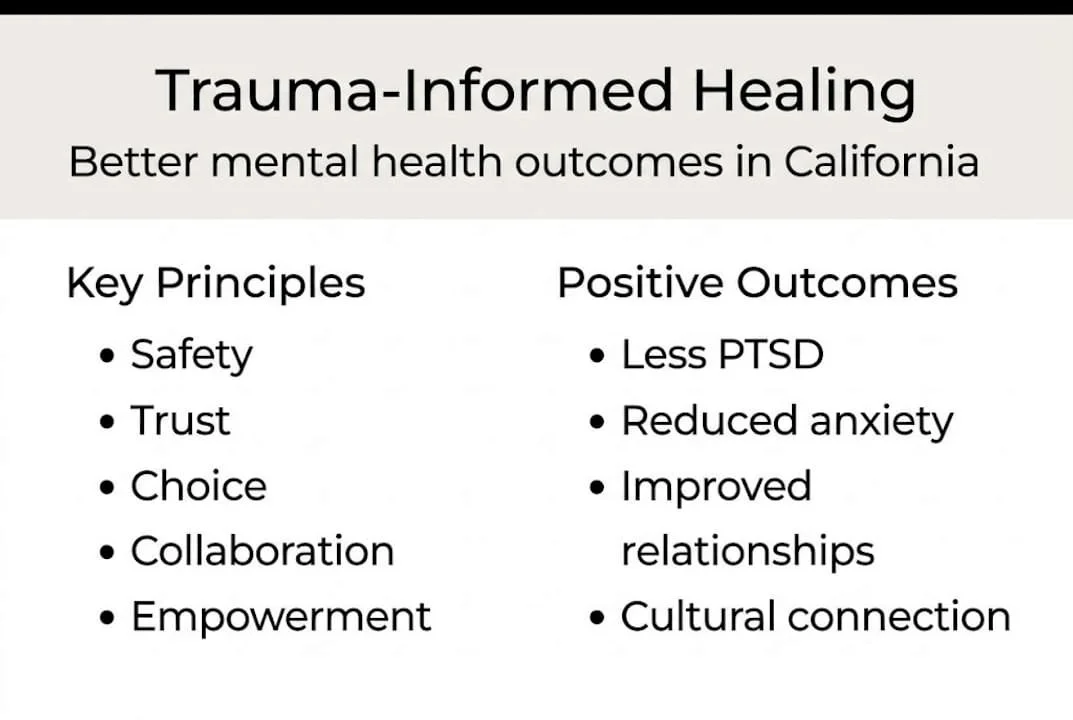
Trauma-informed care is built on five principles: safety, trustworthiness, choice, collaboration, and empowerment. Every session is designed with your nervous system in mind. Culturally competent care adds another layer, recognizing that your identity, background, language, and lived experience shape how you experience and heal from trauma.

| Feature | Standard counseling | Trauma-informed and culturally competent care |
|---|---|---|
| Pacing | Set by protocol | Guided by client’s nervous system |
| Cultural context | Often minimal | Central to the therapeutic approach |
| Language support | English-only, typically | Bilingual options available |
| Trauma history | May not be addressed | Foundational to assessment and treatment |
| Safety focus | General | Explicit and ongoing |
In California, where cultural competence in therapy leads to 73% better outcomes, choosing a provider who understands your cultural background isn’t a bonus. It’s a clinical necessity. For Spanish-speaking clients, bilingual therapy removes a significant barrier to honest, deep communication. Healing happens in your first language.
Exploring California mental health resources can help you identify providers who specialize in both trauma and cultural responsiveness. You can also review a bilingual therapist profile to understand what culturally sensitive, trauma-informed practice actually looks like in action.
Pro Tip: Before your first session, ask these three questions: "What is your approach to trauma-informed care?" "Do you offer services in Spanish?" and "How do you incorporate cultural identity into therapy?" The answers will tell you a lot.
Practical steps to access mental health support
Knowing you need support and actually finding it are two different challenges. The process can feel overwhelming, especially when you're already dealing with the weight of trauma. Here's a clear, step-by-step path forward.
Acknowledge the need: Recognize that what you're experiencing deserves professional attention, not just more time or willpower
Research providers: Use local support options to find trauma-informed therapists in your area or online throughout California
Check for cultural and language fit: Confirm the provider offers bilingual services if needed and has experience with your specific type of trauma
Schedule a consultation: Most trauma-informed practices offer an initial call to assess fit before committing to ongoing therapy
Prepare for your first session: Write down key experiences, current symptoms, and your goals for therapy
Stay consistent: Healing is cumulative. Regular sessions build momentum that sporadic appointments cannot
What to bring or prepare before your first appointment:
A brief timeline of significant life events or traumas
A list of current symptoms (sleep, mood, relationships, physical health)
Questions about the therapist's approach and experience
Any previous therapy history or diagnoses
Your insurance information or questions about sliding-scale fees
For those navigating major life transitions, like a divorce, immigration, or loss, relationship transition guidance can also be a helpful complement to individual therapy.
Pro Tip: If cost is a concern, ask directly about sliding-scale fees or VOCA (Victims of Crime Act) funding. Many trauma-informed practices in California have options to make care accessible regardless of income.
The truth about trauma-informed support: What most guides miss
Most articles about mental health support focus on symptoms and solutions. What they rarely address is the relational quality of healing. Trauma, at its core, often involves a rupture in trust. A betrayal, a loss, an experience that made the world feel unsafe. That means healing isn't just about processing memories. It's about rebuilding the capacity for safety within a relationship.
We've seen this consistently with California clients: the most significant breakthroughs happen not because of a specific technique, but because the therapeutic relationship itself becomes proof that trust is possible again. Technique matters, but connection is the container.
Another thing guides often skip: cultural identity isn't separate from trauma. It's woven through it. For many clients, especially those from immigrant communities or communities that have experienced systemic harm, the role of mental health evaluations extends beyond symptom tracking. It includes validating experiences that the broader culture may have minimized or dismissed.
Tools like a PTSD recovery journal can support this process between sessions, but they work best when paired with a therapeutic relationship that truly sees you.
Next steps: Connect with trauma-informed support at Alvarado Therapy
If this article resonated with you, that recognition itself is meaningful. It means part of you is ready to move toward healing.
At Alvarado Therapy, we offer trauma-informed, bilingual, and culturally responsive care for adults across California. Whether you're navigating PTSD, childhood trauma, grief, or anxiety, our licensed therapists are here to meet you where you are. You can learn more about trauma therapy expectations before your first visit, explore our approach to complex trauma therapy, or book a free therapy consultation to find the right fit. Healing is not a luxury. It's something you deserve, and we're here to help you get there.
Frequently asked questions
How does trauma-informed therapy differ from standard counseling?
Trauma-informed therapy emphasizes safety, trust, and sensitivity to trauma history throughout every session. Standard counseling may address surface-level concerns without recognizing or treating the underlying trauma driving them, which is why culturally competent approaches consistently produce better outcomes.
What types of trauma are most common among California adults?
Many California adults experience childhood trauma, PTSD from accidents or violence, grief from loss, and anxiety tied to major life transitions. Understanding why mental health matters for survivors helps clarify why each of these deserves dedicated, specialized support.
How do I find bilingual trauma-informed therapists in California?
Start with mental health resource directories that allow you to filter by language and specialty. Look specifically for providers who list bilingual services and trauma-informed care as core parts of their practice, not just add-ons.
Is mental health support effective for anxiety and grief, not just PTSD?
Absolutely. Trauma-informed support is designed to address the full range of trauma responses, including anxiety, grief, and emotional dysregulation. The 82% healing rate in trauma-sensitive counseling applies across these presentations, not only to formal PTSD diagnoses.
What questions should I ask when seeking trauma-informed support?
Ask about the provider's experience with your specific type of trauma, their approach to cultural competence, and whether they offer bilingual services. Reviewing a bilingual therapist profile beforehand can also help you understand what to expect from a trauma-informed, culturally responsive clinician.
Recommended
California relationship transition support: Heal in 3-4 years — Alvarado Therapy
Step-by-step trauma healing: EMDR guide for Californians — Alvarado Therapy
Practical Guide to Starting Therapy for Healing in California — Alvarado Therapy
Cultural responsiveness in therapy: trauma recovery in CA — Alvarado Therapy
