
Immigration psychological evaluations in California: 81.6% win rate

TL;DR:
A psychological evaluation is a formal, objective report that can significantly influence immigration outcomes.
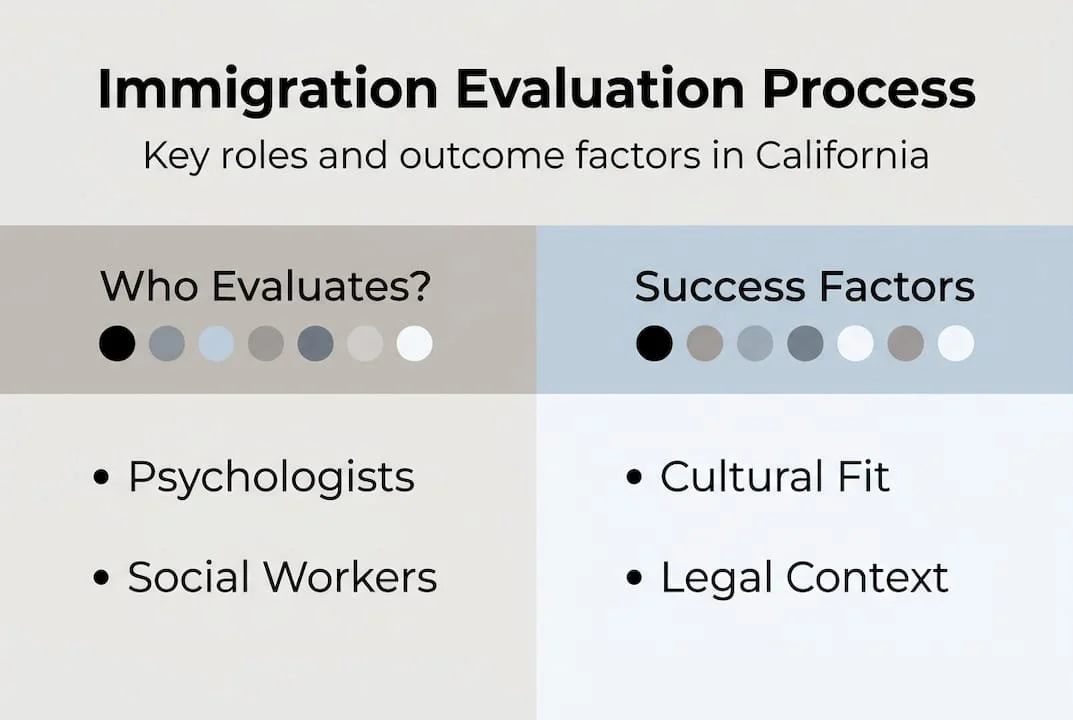
Qualified evaluators include licensed psychologists, psychiatrists, and clinical social workers trained in legal standards.
Quality, culturally competent, trauma-informed reports can double asylum approval odds.
Most people assume a psychological evaluation for immigration is just another form to check off. It isn't. Grant rates reach 81.6% when a forensic mental health report is included, compared to a 42.4% national baseline for asylum cases. That gap is not a coincidence. A well-written, trauma-informed evaluation can be the single most powerful document in your immigration file. This article breaks down what these evaluations are, who conducts them, how the process works, and what specific challenges California immigrants should prepare for before their case moves forward.
Table of Contents
Key Takeaways
| Point | Details |
|---|---|
| Objective, not therapy | Immigration psychological evaluations are formal, forensic assessments—not therapy sessions. |
| Right provider matters | Choosing a culturally competent, licensed provider dramatically improves your case’s credibility. |
| Attention to detail | Detailed and specific reports are crucial for success, especially in California’s diverse communities. |
| Trauma is nuanced | Trained clinicians can explain trauma-related memory gaps to support your legal narrative. |
| Doubles success rate | Including a high-quality mental health report can more than double the chance of a positive outcome. |
What is an immigration psychological evaluation?
An immigration psychological evaluation is a formal written report prepared by a licensed mental health professional. It documents how the outcome of an immigration case would affect a person's psychological wellbeing, or how past trauma relates to their current mental health. This is not a therapy session, and it is not a quick questionnaire. It is a structured, objective process designed to meet the standards of immigration courts and agencies.
These evaluations serve several distinct legal purposes. The most common types include:
Asylum cases: Documenting trauma, persecution, and PTSD to support credibility
Hardship waivers (I-601/I-601A): Showing the extreme psychological impact on a qualifying U.S. relative
VAWA petitions: Establishing abuse-related trauma for survivors of domestic violence
Cancellation of removal: Demonstrating emotional and psychological hardship
N-648 disability waivers: Certifying that a medical or mental condition prevents an applicant from meeting naturalization requirements
The immigration evaluation process typically involves a detailed clinical interview, a review of supporting documents, and sometimes standardized psychological tests. The clinician then writes a report that connects the findings to the specific legal standard required for the case.
One of the most common misconceptions is that any therapist can fill out a form and call it an evaluation. That is not how it works. Evaluations must be objective and grounded in clinical findings. Generic templates or brief, vague reports significantly increase the risk of a Request for Evidence or outright denial.
Here is a quick overview of common evaluation types and their purposes:
| Evaluation type | Legal context | Primary focus |
|---|---|---|
| Asylum evaluation | Immigration court | Trauma, PTSD, credibility |
| Hardship waiver | USCIS petition | Impact on U.S. relative |
| VAWA evaluation | Abuse survivor petition | Abuse history, trauma symptoms |
| N-648 waiver | Naturalization | Cognitive or mental disability |
| Cancellation of removal | Immigration court | Psychological hardship |
Understanding the role of therapists in evaluations is a good first step before selecting the right provider for your specific case.
Who conducts immigration psychological evaluations in California?
Knowing what an evaluation is leads to the next critical step: understanding who is actually qualified to provide one. Not every mental health professional is equipped for this work.
In California, immigration psychological evaluations can be conducted by:
Licensed psychologists (PhD or PsyD)
Psychiatrists (MD)
Licensed clinical social workers (LCSW) in many case types
There is one important exception. For N-648 disability waivers, only an MD or licensed psychologist is accepted. A licensed clinical social worker cannot sign off on this specific form, regardless of their experience level.
Beyond credentials, cultural competence and trauma-informed care are not optional add-ons. California is home to some of the most diverse immigrant communities in the country, speaking dozens of languages and carrying deeply varied cultural frameworks around mental health, family, and disclosure. A clinician who does not understand these realities can produce a report that misrepresents the client's experience, even with good intentions.

The APA has emphasized cultural humility as a core standard for clinicians working with immigrant populations. This means the evaluator should not just translate words but genuinely understand the cultural context behind the client's story.
Here is how a general therapist compares to a forensic immigration evaluation specialist:
| Factor | General therapist | Forensic immigration specialist |
|---|---|---|
| Report format | Clinical progress notes | Legal-standard written report |
| Objectivity | Therapeutic alliance focus | Objective, evidence-based findings |
| Legal knowledge | Limited | Familiar with immigration standards |
| Cultural competence | Varies | Emphasized as essential |
| Language access | May not be bilingual | Often bilingual or uses interpreters |
Pro Tip: Before booking, ask your evaluator directly how many immigration evaluations they have completed, whether they have experience with your specific case type, and whether they can conduct the session in your preferred language.
Choosing someone who understands both the legal framework and cultural context matters enormously. Resources on finding culturally sensitive therapists in California and cultural competence in therapy can help you ask the right questions when selecting a provider.
What does the evaluation process look like?
Once you have identified a qualified provider, the process itself typically follows a clear sequence. Knowing what to expect can reduce anxiety and help you prepare.
Referral. Your immigration attorney or legal advocate usually initiates the request. They provide the evaluator with relevant case documents and the specific legal standard to address.
Intake and scheduling. You complete intake paperwork covering your personal history, immigration background, and current mental health status.
Clinical interview. This is the heart of the process. The evaluator asks detailed questions about your life history, trauma experiences, family, and how you are functioning today. Sessions typically run one to three hours, sometimes spread across two appointments.
Psychological testing. Depending on the case, the evaluator may use standardized assessment tools to measure symptoms of PTSD, depression, or anxiety. These add objectivity to the report.
Document review. The evaluator reviews medical records, legal documents, school records, or other supporting materials provided by you or your attorney.
Report writing. The clinician integrates all findings into a detailed written report. Evaluations must avoid generic templates and must be specific to your case and legal context.
Delivery. The final report goes directly to your attorney or the court, not just to you. Your attorney uses it to build or strengthen your legal argument.
In California, turnaround time can range from one to three weeks depending on case complexity, the evaluator's schedule, and how quickly supporting documents are received. If your hearing date is approaching, communicate that urgency early in the process.
For more on navigating the emotional side of this journey, the resource on healing the emotional impact of immigration offers helpful context alongside the legal process.
Key challenges and considerations for California immigrants
Understanding the process is essential, but anticipating specific challenges is what separates a strong case from a vulnerable one. California immigrants face a set of unique hurdles that deserve honest attention.
Trauma and memory gaps. One of the most misunderstood issues in immigration evaluations is inconsistent or fragmented memory. Trauma does not produce clean, linear stories. It disrupts how the brain stores and retrieves information. Trauma causes memory fragmentation, and a skilled evaluator explains this scientifically in the report rather than allowing inconsistencies to undermine credibility. Malingering tests may also be used to demonstrate that the person is not fabricating symptoms.
"The scientific explanation of trauma-related memory gaps is not a weakness in a case. In the hands of a skilled clinician, it becomes evidence of genuine psychological injury."
Special considerations also apply to children and to individuals who have experienced severe or prolonged trauma. Evaluations for minors require age-appropriate interview techniques and extra sensitivity around disclosure.
Post-migration stressors add another layer. Living with an uncertain immigration status, fear of deportation, or time spent in detention can worsen PTSD and anxiety symptoms significantly. These ongoing stressors are clinically relevant and should be documented in the report.
Access barriers also affect many California immigrants:
Language: Not all providers offer evaluations in languages other than English
Cost: Evaluations range widely in price and are rarely covered by insurance
Geographic access: Rural and inland California communities often have fewer qualified providers
Trust: Fear of how information will be used can limit honest disclosure
If you are in this situation, ask providers directly about sliding scale fees, language access, and confidentiality protections. Resources on culturally responsive therapy and trauma-informed care can help you find providers who understand both the clinical and human dimensions of your experience. It also helps to understand how cultural identity shapes trauma therapy results so you know what to ask for.
Our perspective: What most people get wrong about immigration psychological evaluations
Here is something we see consistently: people treat the psychological evaluation as a task to get done rather than a document that can change the outcome of their case. That mindset leads to rushed, generic reports that immigration judges see through immediately.
The assumption that any licensed therapist can produce a court-ready evaluation misses how specialized this work actually is. Forensic immigration evaluations require knowledge of specific legal standards, familiarity with trauma presentations across cultures, and the clinical skill to translate psychological suffering into legally meaningful language. That is a narrow skill set.
Access to quality evaluations remains genuinely difficult for low-income immigrants. That is a real problem, and one the field has not solved. But the evidence is clear that a thorough, trauma-informed report can be decisive, especially for the hardest cases. The evaluator's job is not to advocate for the client but to tell the psychological truth in a way the legal system can hear. When done well, that is powerful advocacy in itself. Understanding why culturally responsive therapy matters is part of what separates a report that lands from one that gets filed away.
Immigration psychological evaluations and support you can trust
If your immigration case requires a psychological evaluation, the quality of that report matters more than most people realize. Alvarado Therapy provides trauma-informed, culturally responsive immigration evaluations for clients across California, including asylum, hardship waiver, VAWA, and other immigration contexts. Our bilingual team brings both clinical expertise and genuine cultural understanding to each evaluation.
You do not have to navigate this alone. Whether you are at the beginning of the process or working against a deadline, we are here to help you get a thorough, legally sound report. Schedule a consultation to talk through your situation, or explore our trauma therapy expertise if you also need ongoing support during this difficult time.
Frequently asked questions
Who qualifies to conduct a psychological evaluation for immigration in California?
Licensed psychologists, psychiatrists, or clinical social workers can conduct most immigration evaluations, but N-648 disability waivers specifically require an MD or licensed clinical psychologist.
What documents or information should I bring to my immigration psychological evaluation?
Bring your immigration paperwork, any legal notices or court documents, medical records, and a clear account of your personal history, including any trauma or experiences relevant to your case.
Will my psychological evaluation include therapy?
No. Immigration evaluations are objective assessments, not therapy sessions. The clinician's role is to document findings, not to provide treatment.
How can trauma or memory gaps affect my case?
Skilled evaluators explain memory fragmentation scientifically, turning what might appear as inconsistency into clinical evidence of genuine trauma.
Does having an evaluation improve my chances in court?
Yes. Research shows asylum grant rates reach 81.6% with a forensic mental health report included, compared to a 42.4% national baseline without one.
