
What Is Identity-Affirming Therapy? A Guide to Healing

Imagine discovering that the right therapeutic approach could improve your PTSD symptoms by 60% simply because your therapist truly sees and validates who you are. For many Californians navigating trauma, anxiety, and relationship challenges, identity-affirming therapy outcomes represent a fundamental shift in mental health care. This guide explores what identity-affirming therapy actually means, how it works, who benefits most, and how to find culturally responsive providers in California who integrate your lived experience into every aspect of treatment.
Table of Contents
How identity-affirming therapy works: Principles and methods
Is identity-affirming therapy right for everyone? Criticisms and ethical debates
Who benefits most? Finding culturally responsive, trauma-informed therapists in California
Explore trauma-informed, identity-affirming therapy options in California
Key Takeaways
| Point | Details |
|---|---|
| Identity-centered care matters | Validating all aspects of your identity in therapy supports effective healing from trauma and anxiety. |
| Methods are evidence-based | Practices like CBT, EMDR, and AFFIRM are adapted to be culturally and identity responsive for best results. |
| Better outcomes for many | Research shows 60% better PTSD relief and improved well-being with identity-affirming, culturally sensitive therapy in California. |
| Provider fit is crucial | Choosing a provider who is both trauma-informed and affirming increases satisfaction and reduces drop-out. |
| Debate continues | While most benefit, some edge cases demand cautious, exploratory approaches and ongoing ethical attention. |
What does identity-affirming therapy mean?
Identity-affirming therapy validates and integrates your personal, cultural, racial, sexual, and gender identity components throughout mental health treatment. Unlike traditional approaches that claim neutrality, this framework recognizes that your identity shapes how you experience trauma, anxiety, and relationships.
Think of it this way: a therapist using a neutral approach might treat your anxiety symptoms without acknowledging how discrimination, cultural expectations, or identity-based stress contributes to those symptoms. An identity-affirming therapist actively explores these connections.
Core elements of identity-affirming therapy include:
Explicit validation of your identity and lived experiences
Recognition of systemic oppression and minority stress
Cultural adaptation of evidence-based treatments
Collaborative goal-setting that honors your values
Integration of identity into treatment planning
For those seeking identity-affirming care in California, this approach means working with providers who understand how your background influences your mental health journey.
"Affirmation isn't just about acceptance. It's about actively centering your identity in the healing process, recognizing that who you are fundamentally shapes how you experience and recover from trauma."
The distinction matters because research shows therapies adapted for identity affirmation lead to significantly better outcomes, particularly for people facing identity-based trauma or systemic marginalization.
How identity-affirming therapy works: Principles and methods
Identity-affirming therapy combines evidence-based techniques with cultural responsiveness and trauma-informed principles. Your therapist might use CBT, EMDR, IFS, somatic therapy, or narrative approaches, all adapted to honor your identity.
The AFFIRM framework exemplifies this integration. This structured program uses cognitive-behavioral techniques in both group and individual formats, specifically designed for diverse populations. The AFFIRM program reduced depression and anxiety with sustained gains at one-year follow-up.
How sessions typically unfold:
Assessment phase: Your therapist explores how identity intersects with your presenting concerns
Collaborative planning: Together, you identify goals that align with your values and cultural context
Adapted interventions: Evidence-based techniques are modified to reflect your lived experience
Ongoing validation: Your therapist consistently acknowledges identity-related stressors and strengths
Empowerment focus: Treatment emphasizes agency, resilience, and community connection
| Therapeutic Approach | Identity-Affirming Adaptation | Primary Benefit |
|---|---|---|
| EMDR | Incorporates cultural trauma and identity-based memories | Processes discrimination-related PTSD |
| CBT | Addresses minority stress and systemic barriers | Reduces anxiety from external oppression |
| IFS | Validates identity-related parts and protective responses | Heals internalized shame |
| Somatic Therapy | Recognizes body-based identity experiences | Releases trauma stored physically |
For clients exploring trauma-informed care overview, these adaptations create safety and trust. Your therapist understands that healing happens when you feel genuinely seen.
Practical impacts extend beyond symptom reduction. Participants in identity-affirming programs report increased hope, stronger social support networks, and improved stress reappraisal skills. These gains matter especially for relationship healing, where feeling understood by your therapist models the validation you seek in personal connections.

Pro Tip: Ask potential therapists specific questions about how they integrate identity into treatment. Vague answers about "respecting everyone" differ significantly from concrete examples of cultural adaptation.
Whether you're addressing LGBTQ trauma recovery or other identity-related concerns, understanding these methods helps you evaluate whether a provider truly practices affirmation or simply claims to.
Key benefits: For PTSD, anxiety, and relationship healing
The evidence for identity-affirming therapy's effectiveness is compelling, particularly for California's diverse populations facing trauma and anxiety.
Research demonstrates 60% better PTSD outcomes for bilingual and culturally responsive populations using affirmative frameworks. These improvements aren't marginal. They represent the difference between ongoing suffering and meaningful recovery.
Documented benefits include:
Sustained depression and anxiety reduction at one-year follow-up
Increased hopefulness and future orientation
Strengthened social support networks
Improved relationship satisfaction and communication
Enhanced ability to reappraise stressors
Reduced therapy dropout rates
60% improvement in PTSD symptoms when therapy affirms rather than ignores identity-based trauma experiences.
For those pursuing culturally responsive trauma recovery, these outcomes reflect what happens when treatment addresses root causes rather than surface symptoms. Your anxiety might stem partly from navigating a world that doesn't affirm your identity. Therapy that acknowledges this reality proves more effective.
Relationship healing particularly benefits from identity-affirming approaches. When your therapist validates how identity shapes your relational patterns, you gain insight into dynamics you might have blamed entirely on yourself. Group outcomes include strengthened social support and hope, crucial for both trauma recovery and building healthier connections.
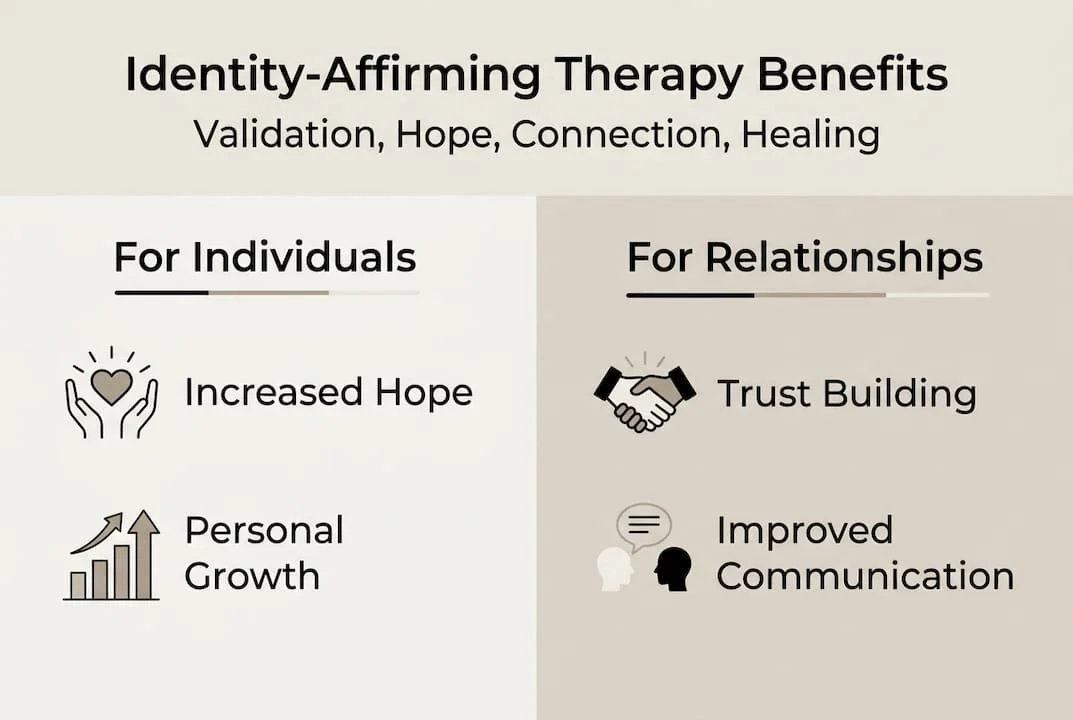
The applicability spans individual and group work, making these benefits accessible whether you prefer one-on-one sessions or community-based healing. For Californians exploring trauma healing with affirmative care, these statistics translate to real hope for recovery.
Is identity-affirming therapy right for everyone? Criticisms and ethical debates
While benefits are clear for many, legitimate questions exist about limitations and appropriate application of identity-affirming approaches.
The primary debate centers on affirmative versus exploratory therapy models. Affirmative approaches validate and support identity as presented. Exploratory approaches encourage questioning and examination before affirmation. Critics raise concerns about potential neglect of underlying trauma, ideological capture, and risks with pediatric cases.
| Consideration | Affirmative Approach | Exploratory Approach |
|---|---|---|
| Primary focus | Validate presented identity | Examine identity development |
| Best suited for | Adults with established identity | Complex or emerging cases |
| Potential risk | Missing deeper issues | Invalidation and harm |
| Ethical concern | Ideological bias | Conversion therapy parallels |
Some researchers highlight that affirmative and exploratory approaches each carry risks. Overly affirmative care might miss underlying trauma driving identity distress. Overly exploratory care can replicate harmful invalidation.
When identity-affirming therapy works best:
You have established identity and seek validation
Identity-based trauma significantly impacts your mental health
You face ongoing discrimination or minority stress
Previous neutral therapy felt invalidating or ineffective
When caution or alternative approaches might apply:
Complex diagnostic pictures require careful assessment
Rapid identity shifts suggest deeper exploration needed
Pediatric cases require developmental considerations
Comorbid conditions might be primary drivers
Pro Tip: Effective therapists maintain flexibility, balancing affirmation with clinical judgment. They affirm your identity while still exploring how trauma, family dynamics, or other factors influence your experience.
For those researching cultural competence in therapy, understanding these debates helps you find providers who practice thoughtful affirmation rather than rigid ideology. The goal is healing, not adherence to any particular framework.
Who benefits most? Finding culturally responsive, trauma-informed therapists in California
Certain indicators suggest identity-affirming therapy will particularly benefit your healing journey.
You're likely a strong candidate if you experience high baseline distress related to identity, face discrimination or minority stress, or hold multiple marginalized identities. Research shows therapeutic alliance and affirmation link to better satisfaction and retention, especially for highly distressed or oppressed clients.
Practical criteria for choosing a California provider:
Verify cultural responsiveness: Ask how they adapt treatment for your specific background
Confirm trauma-informed training: Ensure they understand identity-based trauma
Assess systemic awareness: They should recognize oppression's impact on mental health
Check intersectional competence: Can they address multiple identity dimensions simultaneously?
Review their language: Do they use affirming terminology naturally and correctly?
Warning signs of non-affirming providers:
Dismissing identity as irrelevant to treatment
Using outdated or offensive terminology
Suggesting you're "too focused" on identity
Lacking knowledge about identity-specific stressors
Treating all clients identically regardless of background
For those seeking trauma-sensitive therapy, verification matters. Ask potential therapists about their training, experience with clients sharing your identities, and specific examples of how they integrate affirmation into treatment.
Pro Tip: During initial consultations, notice how you feel. Do you sense genuine understanding, or are they performing affirmation superficially? Your gut reaction often reveals whether a provider truly practices identity-affirming care.
Intersectionality significantly shifts outcomes. A therapist affirming your racial identity but dismissing your sexual orientation provides incomplete care. Seek providers who understand how your multiple identities interact and compound both stressors and strengths.
Explore trauma-informed, identity-affirming therapy options in California
If you're ready to experience therapy that truly sees you, connecting with providers who integrate cultural responsiveness and trauma-informed care makes all the difference.
Alvarado Therapy offers bilingual, identity-affirming services throughout California, specializing in trauma and PTSD therapy for individuals navigating complex trauma, anxiety, and relationship challenges. Our therapists understand how identity shapes your healing journey and adapt evidence-based approaches like EMDR to honor your lived experience.
Whether you're exploring what to expect from therapy or ready to begin individual EMDR counseling, our team provides the culturally responsive, trauma-sensitive care that research shows leads to better outcomes. We serve clients across Pasadena, Ventura, and online throughout California, offering services in both English and Spanish.
Taking the first step toward identity-affirming care means choosing a provider who recognizes that your identity isn't separate from your healing. It's central to it.
Frequently asked questions
How is identity-affirming therapy different from traditional therapy?
Identity-affirming therapy centers your lived experience, actively integrating cultural, racial, sexual, and gender identity in treatment, while traditional therapy may assume neutrality that overlooks identity-based stressors.
Can identity-affirming therapy help with PTSD from cultural, racial, or LGBTQ-based trauma?
Research shows affirming approaches improve PTSD outcomes by 60%, especially for clients facing discrimination or minority stress that traditional therapy might minimize.
Is there a risk to starting therapy if my provider isn't identity-affirming?
Non-affirming therapy increases dropout rates, with 22% of terminations linked to lack of understanding, while affirmation significantly improves retention and healing.
Are there any downsides to identity-affirming therapy?
Some critics question application in complex cases and urge balance between affirmation and exploring deeper issues, though debate exists around risks of ideology versus risks of invalidation.
How do I find an identity-affirming, trauma-informed therapist in California?
Look for providers highlighting cultural competence, trauma awareness, and integration of client identities, as culturally responsive therapists deliver 30% better mental health outcomes than standard approaches.
